I'm giving a talk Monday where the topic of zeugma avoidance is going to come up. I'd like to give a familiar quote -- preferably from a famous song, play, novel, or movie -- that contains a zeugma, which is to say "The use of a word to modify or govern two or more words when it is ... appropriate to each but in a different way, as in to wage war and peace or On his fishing trip, he caught three trout and a cold."
As you might gather from my question, custom-made examples such as the ones in this quote don't satisfy me; I want something that's already relatively well-known. The only such example I could find in a quick Google search was "You held your breath and the door for me" from Alanis Morissette's Head Over Feet, but I'm looking for something even better known (or at least even cooler). So if you could pass some along, I'd be much obliged. Thanks!
Politicoreports that Robert F. Kennedy Jr. may be "too controversial" a pick to head the Environmental Protection Agency.
Some energy and environmental lobbyists are worried that Robert F. Kennedy Jr.’s controversial past would thwart his Senate confirmation if President-elect Barack Obama tapped him to be administrator of the Environmental Protection Agency.
A well-respected climate lawyer, Kennedy has also been in the spotlight for his controversial environmental statements.
As reported by Politico, the issue with RFK Jr. is simply that he shoots his mouth off occasionally, such as by calling global warming skeptics "traitors" or suggesting factory farms are a bigger threat to the American way of life than Islamist terrorists. It also notes he occasionally lets his personal preferences get in the way of sound environmental policy, as when he opposed the Cape Wind offshore wind power project.
Yet the problems with RFK Jr. as the head of a powerful regulatory agency go much deeper. As Walter Olson notes, appointing RFK Jr. would make a mockery of President-elect Obama's campaign pledges to reduce the politicization of science. Among other things, RFK Jr. has endorsed scientifically discredited claims alleging a vaccine-autism link and labels those who dare to disagree with him crooks and traitors. So it should be no surprise that a wide range of science bloggers, from ORAC to P.Z. Myers to Mark Hoofnagle, among others, oppose an RFK nomination. It should say something when folks who generally share Kennedy's political views still find him an unacceptable choice to head the nation's primary environmental regulatory agency.
There are plenty of well-qualified, left-leaning, pro-regulatory environmental leaders capable of heading EPA. RFK Jr. is just not one of them.
Does Civility Make You an Apologist For Lawlessness? One More Round With Glenn Greenwald:
Glenn Greenwald has a new post (see item 8) taking issue with the many bloggers and commenters who disagreed with his description of me as an "aplogist . . . for many lawless and radical Bush policies." They are wrong and he is right, he is insisting, and he offers a new explanation of why:
My description the other day of Law Professor Orin Kerr as a leading apologist for radical and lawless Bush policies — a description I documented in the update to the post — spawned all sorts of consternation among his friends and admirers. You see, he's so reasonable and civil and polite in how he conducts himself that it's really wrong to say anything so critical about him.
But, as one of his own commenters pointed out so adeptly, that is precisely the point: "Whether or not the policies are radical in terms of popular or political support, [Greenwald] believes them to be a radical departure from our constitutional principles. If you believed as he does, outrage would indeed be the proper response — one of his objections to what's been going on is precisely the willingness to discuss outrageous policies (torture, unlimited executive authority) as if they were reasonable. The argument is simple: constitutional constraint depends on elites and ordinary citizens not merely *disapproving* of governmental overreach but *hating* it, being *outraged* by it — if constitutional violations become merely one area of policy disagreement to be traded off against others, republican government is doomed." That's exactly the point. The Bush administration was able to get away with its extremism and lawlessness over the past eight years because elites and "experts" sat around oh-so-civilly and self-importantly and reasonably debating these actions as though they were legitimate, as though support for those policies was worthy of serious and respectful consideration, as though the advocates of these policies were Serious People within our political mainstream, and — most of all — as though outrage and anger and revulsion over what the Bush administration was doing was only for the shrill, irresponsible and uncouth rabble.
What a curious perspective on the world. If I understand Greenwald correctly, I deserve condemnation for taking arguments seriously: in his words, I "reasonably debat[ed] these actions as though they were legitimate, as though support for those policies was worthy of serious and respectful consideration." In other words, I was an apologist for lawless and radical Bush policies even when writing posts that rejected them. By rejecting positions through reason rather than invective, I legitimated the positions I rejected.
I think Greenwald has it exactly backwards, though. If you actually want to persuade folks who haven't made up their mind already on ideological grounds — that is, the crowd that is open to persuasion --invective won't cut it. You need real arguments, and you need credibility, and you can get that only by taking arguments seriously and evaluating them on the merits free of insults and abuse. You don't need to express "outrage" to make the point; in fact, outrage only takes away from it. My approach doesn't sell a lot of books, I realize, but I think it does get to the bottom of things.
In any event, if Greenwald's indictment is that I treated arguments with respect, argued ideas rather than people, and reached the merits without dismissing opponents out of hand, then I happily plead guilty.
Will the Obama administration repudiate Bush-era legal opinions?
A lot of wishful thinkers hope so; visions of perp-walking Bushies dance in their head. There are plenty of reasons for thinking that this won’t happen, however.
1. Those opinions are for the most part grounded in Clinton-era legal opinions and predecessors. Though there are distinctions, they go to degree, and it would be difficult to repudiate Bush-era presidential powers jurisprudence in general without dismantling long-standing executive-branch claims going back to FDR and beyond.
2. Symbolic and real action that would mollify critics of U.S. war-on-terror tactics do not require repudiation of Bush-era legal thinking. Obama could shut Guantanamo Bay for policy reasons without saying that Guantanamo Bay was ever illegal. Taking the next step and saying it was illegal in the first place would create an infinite headache for the Obama administration without creating any additional political return.
3. Veterans of the Clinton era know full well that unexpected circumstances require executive action where existing statutory authority is inadequate and adequate statutory authority is unforthcoming. Why tie Obama’s hands by repudiating the flexible standards that Bush lawyers have labored to enlarge? Obama should treasure this gift from the Bush administration rather than return it: it will come in handy when Republicans complain of executive overreaching over the next 4-8 years.
4. What about Obama’s allies? Surely they will force his hand? This is highly unlikely. Democrats want Obama to act, not to provide legal excuses for inaction.
5. And Obama himself, the constitutional lawyer? All of our greatest and most conscientious presidents have expanded executive power; none has ceded it.
There are a small number of pointy heads, ideologues, Bush critics who have not yet shaken off the reflexes of the last eight years, let-justice-be-done-though-the-heavens-fall types, nostalgists for an imagined eighteenth century, and others whose political influence would not fill a thimble. For their sake, Obama will cede power—and to whom, exactly? A despised, passive, and weak Congress? Bankrupt state governments? The Bush-dominated judiciary? Dream on!
Leaders of the Mormon Church urged their followers to contribute to a constitutional ban on marriage for gay families, a call that apparently resulted in the bulk of the donations to that effort in California. Religious leaders and their adherents are of course free to oppose gay marriage. But when you enter the political fray, you are not exempt from public criticism and protest just because you are a religion or have religious reasons for your advocacy. It's not anti-religious bigotry to call attention, loudly and angrily, to what you have done.
Moreover, despite the focus on a few extremists whose words have indeed crossed the line into religious (and racist) bigotry over the past few days, the anti-Prop 8 rallies have been peaceful and mostly respectful. Frankly, if marriage had been denied to blacks, Mormons, Catholics, or almost any other group, it's hard to imagine the reaction would have been as mild as it's been.
Nevertheless, I am uncomfortable with pickets directed at specific places of worship like the Mormon church in Los Angeles. It's too easy for such protests to degenerate into the kinds of ugly religious intolerance this country has long endured. Mormons, in particular, have historically suffered rank prejudice and even violence. Epithets and taunts directed at individuals are especially abhorrent. Individual Mormons (and blacks and others) bravely and publicly opposed Prop 8. Even those who supported Prop 8 are not all anti-gay bigots, though I saw plenty of anti-gay bigotry when I was in California last week. As I've repeatedly argued, there are genuine concerns about making a change like this to an important social institution. Those concerns are misplaced and overwrought, but they are not necessarily bigoted.
Here's my advice to righteously furious gay-marriage supporters: Stop the focus on the Mormon Church. Stop it now. We just lost a ballot fight in which we were falsely but effectively portrayed as attacking religion. So now some of us attack a religion? People were warned that churches would lose their tax-exempt status, which was untrue. So now we have (frivolous) calls for the Mormon Church to lose its tax-exempt status? It's rather selective indignation, anyway, since lots of demographic groups gave us Prop 8 in different ways — some with money and others with votes. I understand the frustration, but this particular expression of it is wrong and counter-productive.
Public protest against a constitutional ban on marriage for gay families is entirely justified. More than a mere vote, protests communicate intensity of feelings. They're valuable in a democracy. Something incredibly precious was lost on Tuesday. Those who lost it should not be expected to go back quietly to producing great art and show tunes for everybody's amusement.
I understand a rally is planned for the state capitol in Sacramento. That's more like it.
If a more intense physical expression of anger and frustration is needed, why not have sit-ins at marriage-license bureaus in California? It could be modeled on the sit-ins at segregated lunch counters in the 1960s. The demonstrations would be targeted at government buildings — rather than at churches. And after all, it's government policy we're legitimately protesting, not religious doctrine. Let people get arrested as they sing "We Shall Overcome." The protesters themselves — gay and straight, single and married, black and white, Mormon and Catholic, Republicans and Democrats, moms and dads raising kids — would suffer and accept the legal consequences of their acts. Rather than instilling fear and resentment in others, rather than dividing people on religious and racial lines, they would literally be putting their own bodies on the line for the good of their relationships, their families, their friends, and for a just cause whose time has come. We've had enough of lawyers, courts, focus groups, and media handlers. Let peaceful protesters by the thousands be dragged away just because they want to marry. It would be good old-fashioned civil disobedience, an American protest tradition.
The Post provided a lot of good campaign coverage, but readers have been consistently critical of the lack of probing issues coverage and what they saw as a tilt toward Democrat Barack Obama. My surveys, which ended on Election Day, show that they are right on both counts.
According to Howell, the Post's coverage was too poll-drive and "horse-race" news stories outnumbered issues-oriented stories over the past year by two-to-one. The balance of positive and negative coverage of the two candidates was equally lopsided in both the news and op-ed pages. Howell offers this explanation:
Post reporters, photographers and editors -- like most of the national news media -- found the candidacy of Obama, the first African American major-party nominee, more newsworthy and historic. Journalists love the new; McCain, 25 years older than Obama, was already well known and had more scars from his longer career in politics.
Because Post reporters "love the new" they offered favorable coverage of Sarah Palin, right? Not exactly. Here's Howell's take on the Post's coverage of the veep candidates:
One gaping hole in coverage involved Joe Biden, Obama's running mate. When Gov. Sarah Palin was nominated for vice president, reporters were booking the next flight to Alaska. Some readers thought The Post went over Palin with a fine-tooth comb and neglected Biden. They are right; it was a serious omission. However, I do not agree with those readers who thought The Post did only hatchet jobs on her. There were several good stories on her, the best on page 1 by Sally Jenkins on how Palin grew up in Alaska.
Sen. Kyl Threatens Filibuster of Court Nominations:
The Phoenix Buisness Journal reports that Senator Jon Kyl (R-AZ) warned that he would attempt to filibuster any Supreme Court nominations that he deemed too liberal.
Kyl, Arizona’s junior senator, expects Obama to appoint judges in the mold of U.S Supreme Court Justices Ruth Bader Ginsburg, David Souter and Stephen Breyer. Those justices take a liberal view on cases related to social, law and order and business issues, Kyl said.
“He believes in justices that have empathy,” said Kyl, . . .
Kyl said if Obama goes with empathetic judges who do not base their decisions on the rule of law and legal precedents but instead the factors in each case, he would try to block those picks via filibuster. . . .
Kyl said Obama needs to appoint judges that look at the merits of each case and said filibusters were not inevitable, even for more liberal judges if their decisions have a sound legal basis.
As longtime VC readers know, I'm generally opposed to the obstruction of judicial nominees of either party. Even though Barack Obama, as a Senator, voted to filibuster several Bush nominations (including that of Samuel Alito to the Supreme Court), I do not believe this justifies Republicans responding in kind.
While I oppose the filibuster of judicial nominees, one practical benefit of a Republican filibuster of an Obama nominee could be the end of judicial filibusters. If Republicans were able to hold their caucus together, perhaps Senate Democrats would be prompted to cut a deal promising to forego any judicial filibusters in the future. Alternatively, perhaps a GOP filibuster would prompt Senate Democrats to invoke the nuclear option, ending judicial filibusters once and for all. Indeed, I would feel better about any GOP filibuster threats if filibustering GOP senators would commit to voting to support the nuclear option if it were invoked. In this way, GOP Senators could maintain a principled opposition to the filibuster of judicial nominations without unilaterally disarming themselves against Senate Democrats (and a President) who have supported such filibusters in the past.
InstaPundit, OverLawyered, and Coyote point to the Obama transition site, which says:
The Obama Administration will call on Americans to serve in order to meet the nation’s challenges. President-Elect Obama will expand national service programs like AmeriCorps and Peace Corps and will create a new Classroom Corps to help teachers in underserved schools, as well as a new Health Corps, Clean Energy Corps, and Veterans Corps. Obama will call on citizens of all ages to serve America, by developing a plan to require 50 hours of community service in middle school and high school and 100 hours of community service in college every year. Obama will encourage retiring Americans to serve by improving programs available for individuals over age 55, while at the same time promoting youth programs such as Youth Build and Head Start.
This sounds like mandatory community service ("require") for millions of 12-to-20-something-year-olds, but whether it's mandatory or voluntary, I'm curious: How would unions react to this? I take it this means somewhat fewer jobs and less overtime for their members, especially since many government organizations of the sort in which these community servants will serve are unionized workplaces.
If, for instance, college students help out in schools, I take it there'd be fewer jobs for teacher's aides. Moreover, the loss of such possible union jobs will be roughly proportional to the public value that the community servants will provide: If the college students require more supervision than they provide value, that might mean more union jobs, but it will also mean that they won't do much good to the institution they're supposedly serving.
Is this a political difficulty that has already been resolved with past community service proposals? Is there some obvious way of finessing it, for instance by making sure that the community servants will only go to institutions that unions are for some reason not interested in organizing? (For instance, say what you will about mandatory military service, it's unlikely to run into this sort of particular obstacle, at least so long as the military sticks with military service and doesn't take over traditionally unionized civilian programs.)
I should stress that this need not be a normative argument against the propriety of mandatory community service (though I'm certainly open to such normative arguments), but only a question about the likely politics of the matter. I should also stress that these questions really are just questions — I'm not remotely expert on the subject, and it might well be that there are very simple and satisfactory answers to them that I just haven't thought of.
UPDATE: After I posted this, the site was changed to read, in relevant part, "Obama will call on citizens of all ages to serve America, by setting a goal that all middle school and high school students do 50 hours of community service a year and by developing a plan so that all college students who conduct 100 hours of community service receive a universal and fully refundable tax credit ensuring that the first $4,000 of their college education is completely free." This might or might not mean the service isn't mandatory -- but, as I said, the question about likely union reaction seems to me to be relevant even when the service isn't mandatory.
I've know and much liked Dan since the early 1990s, when we both lived in D.C., and I'm delighted to see that he's making a splash, even in the limited arenas of Arkansas politics and Reason magazine. Check out the story about his campaign against Arkansas' interior designer licensing scheme, and more, at Reason.
So let me get this right--those who are upset about the passage of Proposition 8 in California have decided that the thing to do is to pick on the Mormons? So one marginalized group decides that the way to go is to vent their outrage against another marginalized group in society? Unbelieveable.
Relying on Exit Polls are dicey, of course. But according to the Exit Polls, the decisive difference in Proposition 8's passage was two reasons. First, 70% of black voters supported it. There were 10,357,002 votes case on Prop 8. The winning margin was 492,830 votes. And they were 10% of the electorate. So that means there were 1,035,700 votes cast by black voters. That right there provided a difference of 414,280 votes. If I'm doing my math right, that is 84% of the winning margin. There was an article in the Washington Post on this today. A majority of Hispanic voters also supported Proposition 8.
The second group that strongly supported Prop 8 appear to be Married people with children under the age of 18. Married people were 62% of the vote and voted 60-40 in favor; people with children under the age of 18 were 40% of the electorate and voted 64-36 in favor. 31 percent identified themselves as "Married with Children" (it doesn't say whether that is minor children) and they voted 68-32 in support.
So if the protestors want to vent their outrage, maybe they oughta go over to the local black church and call them "bigots" and chant "shame on you." But then again, that wouldn't be very politically correct, would it? Whereas who is going to stick up for the Mormons? Other than that vast and powerful well-oiled Mormon political machine that launched Mitt Romney into the White House this year, of course.
This is utterly shameful behavior. I understand why the losers on Proposition 8 are frustrated. But scapegoating the Mormons simply because it is politically-correct to single them out is really over the line. Read the linked story for the sorts of Mormon-bashing advertisements that were being run by the anti-Prop 8 groups.
This is certainly an interesing definition of "tolerance" of those who don't agree with you. I hope that these folks calm down and think a little about whether this is the best way of advancing their cause.
Whatever one thinks of same-sex marriage, this is a question on which thoughtful people of goodwill can and do disagree. It is a perfectly reasonable and good-faith position to believe that marriage is a unique institution formed around childrearing. And to see same-sex relationships as fundamentally a bilateral partnership between two adults that can be governed by legal institutions like civil unions that create and preseve rights and obligations between two adults and to give the opportunity to form a long-lasting mutually-supportive loving bond without it being centered on the fundamental organizational principle of childrearing. And it is significant that married people with children apparently simply see this issue differently from everyone else--I speak from experience that marriage and children simply can and should change you as a person and your worldview. Maybe one disagrees with this argument or these people. But it is a perfectly compassionate and coherent position and it simply is not necessarily bigotry or gay-bashing to believe that. Barack Obama says he is against same-sex marriage--does that make him a bigot?
That's not to say that some anti-gay bigots voted for Prop 8. But apparently the pro-8 side does not have a monopoly on bigotry.
Update:
I should have noted that given the unusual history of Mormons in the United States and their periodic struggles with polygamist schism groups, it is easy to understand why the mainstream Mormon Church would have a particular interest in opposing efforts to weaken the traditional definition of marriage.
Update:
Via Glenn, I see that I spoke too soon--apparently blacks are getting their share of the wrath as well as reported here:
It was like being at a klan rally except the klansmen were wearing Abercrombie polos and Birkenstocks. YOU NIGGER, one man shouted at men. If your people want to call me a FAGGOT, I will call you a nigger. Someone else said same thing to me on the next block near the temple...me and my friend were walking, he is also gay but Korean, and a young WeHo clone said after last night the niggers better not come to West Hollywood if they knew what was BEST for them.
My apologies--I hadn't seen this aspect of the story reported previously. Looks like political correctness is not a restraint after all.
David Hoffman at Concurring Opinions ponders why so many law professors (particularly those of us who blog) assume that they (we?) have the ability to offer interesting and worthwhile political commentary. Among other things, he thinks law professor bloggers have drawn "the wrong lesson from their students' willingness to write down every word they say." He adds:
Not everything a professor says is interesting. When 40, 60, 100, or more students laugh at your jokes, I guess it becomes easy to forget. Generally, people add value by writing and talking about things they know something about. . . . Most law professors have no personal experience with the innards of a modern political campaign (serving as an consultant on a committee about a substantive legal issue isn't the same at all). We aren't well positioned to know what commercial will appeal to lower-middle-class voters, or what song will inspire youth turnout. But we've blogged about it anyway.
This is pure speculation, but if I had to guess, I'd predict Sarah Palin will not run for President in 2012. For personal reasons. Let's face it--a person with 5 kids, including a special-needs child, can take off two months of her life and run for Vice-President. And let's further face it--Vice-President is not that hard of a job. But taking off two years away from home to trudge around Iowa and New Hampshire? Honestly, I don't know why anyone would want to do that--I read that Chris Dodd actually enrolled his kids in Iowa schools when he was running for President. That's pretty weird, if you ask me. You have to be relatively unusual person (ok, "sick" is the word I'm really thinking of) to undertake the project of running for President.
As for Palin, of course I don't know that much about her or what makes her tick. But for all her quirks and controversy, she seems like a basically sane, balanced person and a dedicated and fulfilled mother. And she and her family appear to really like living in Alaska (Tina Fey's jokes beside the point). So it seems to me that going through this maelstrom for 2 months as a Vice-Presidential candidate traveling with her family in the high style of a national presidential campaign is one thing. But for two years on the rubber-chicken circuit? It is hard for me to believe that she'd put herself and her family through that. But that's just a guess.
If McCain had won, that might be a different story. She could presumably could have balanced a campaign for the presidency with her duties as VP. But I don't see it happening otherwise. Although perhaps when her kids are older, especially if she ends up in the Senate at some point.
Since it is never too early to start the next campaign, I'm guessing Romney's the Republican front-runner for 2012 at this point barring some unforeseen new face on the scene. My sense is that a lot of Republicans already had buyers-remorse that they didn't rally behind him this time, especially once the economy emerged as the major issue. And Eugene's post on the Georgia run-off suggests that Romney is already committed to traveling the country building up support between now and then. Republicans are going to get used to him and trust him more between now and then. Talk radio and grassroots conservatives warmed to him a lot when he remained as the conservative alternative to McCain. Finally, unlike Guiliani and Thompson, Republicans seemed to become more attracted to Romney the more they saw of him. Huckabee will probably be around, but I can't see him as being more than a spoiler again.
Who might be a possible new face on the scene? The most likely candidate, I think, would be Jeb Bush. He's generally regarded as the more able of the two brothers anyway. And one could imagine him have the organization and fund-raising potential to emerge four years from now. And, obviously he is from an important state and has the potential to recapture some Hispanic support for the Republicans. And every conservative intellectual I've met who has met Jeb has really been impressed by the guy's smarts and commitment to conservative ideas--much more than his brother and his father. The drawbacks of being another Bush are pretty obvious as well.
And as a courtesy, I'll even start the Comment thread. "Jeez, we just finished the last election--do we have to start talking about the next one already?" My defense--I'm blaming it on Eugune for his 2010 post!
Restrictions on Cuba-based Study Abroad Are Constitutional:
On Tuesday, while the rest of us were focused on the election, the U.S. Court of Appeals for the D.C. Circuit issued a fascinating opinion. In Emergency Coalition to Defend Educational Travel v. U.S. Department of the Treasury, the Court unanimously rejected constitutional and statutory challenges to federal regulations limiting academic study abroad programs held in Cuba. In the process, the Court offered an extended analysis of the plaintiffs' standing to challenge the regulations, and two of the judges -- Senior Circuit Judges Harry Edwards and Laurence Silberman -- authored concurring opinions on the question of whether the U.S. Constitution protects academic freedom.
In 2004, the Treasury Department tightened its regulations governing educational travel to Cuba. Concerned that some individuals took advantage of educational programs to engage in otherwise-illegal tourism or business activities, the Department decided to restrict authorized educational programs to those that consist of at least one full academic term of ten-weeks or longer and limiting participation in such programs to students enrolled full-time and faculty "regularly employed" at the offering institution. A practical effect of this rule was to eliminate shorter educational programs and prevent students studying at one school from participating in a Cuba study-abroad program offered by another school.
The Emergency Coalition to Defend Educational Travel (ECDET), was formed to challenge the "savage" 2004 revisions and "to defend the freedom of U.S. professors and students to design, teach, and attend courses in Cuba free of U.S. Government diktat." ECDET argued that the 2004 revisions were unconstitutional insofar as they violated its members' right to "academic freedom" under the First and Fifth Amendments and their right to travel internationally.
After concluding that ECDET had standing to challenge the regulations, the Court rather easily dispatched the coalition's constitutional claims. As understood by the court, the coalition's academic freedom claims were essentially claims that regulations imposed unconstitutional burdens on coalition members' free speech rights. The regulations at issue impose no content-based restriction on the speech or expression of any of the coalition's participants and, the Court concluded, furthered an important governmental interest in restricting travel to Cuba and support for the Cuban regime, such as by restricting the regime's access to hard currency. Even though the regulations had the practical effect of virtually eliminating certain types of academic programs in Cuba -- and therefore eliminated academic content unavailable elsewhere -- they are still content neutral. The Court gave even less credence to ECDET's right to travel argument, found little basis to question neutral travel restrictions imposed across-the-board on all American citizens due to foreign policy concerns.
Senior Judges Edwards and Silberman both wrote concurrences addressing the broader question of whether there is a constitutionally protected right to academic freedom beyond the express protections afforded by the Bill of Rights. As Judge Edwards noted, in this case, ECDET's members relevant First Amendment rights wee "coterminous with any applicable rights to academic freedom." As a consequence, he noted, there was no need for the Court to consider the scope or contours of any broader right to academic freedom, such as the extent to which an educational institution or professors have a right to govern their institution free from government interference.
Academic freedom is not an easy concept to grasp, and its breadth is far from clear. It has generally been understood to protect and foster the independent and uninhibited exchange of ideas among teachers and students and the serious pursuit of scholarship among members of the academy. However, as Professor [Judith] Areen notes in her article [Government as Educator: A New Understanding of First Amendment Protection of Academic Freedom and Governance, 97 GEO. L.J. ____ (forthcoming Apr.2009)], academic freedom as a First Amendment concept may extend beyond writing and teaching and include concepts of “shared governance.”
Edwards further noted that several justices have suggested that there may be constitutional protection for academic expression that is more expansive than might otherwise be suggested by the Court's approach to employee-speech. Nonetheless, Judge Edwards noted, ECDET's claims did "not raise any serious questions about the contours of academic freedom," so there was no need for the court to leave such questions unresolved.
Judge Silberman, who also wrote the opinion for the Court, wrote a concurring opinion of his own. According to Judge Silberman, "the very notion of academic freedom–as a concept distinct from the actual textual provisions of the First Amendment–is elusive." He found little basis for concluding that academic freedom, understood as "shared governance" within the university, was entitled to constitutional protection. After all, he wondered, why would universities be entitled to such special treatment?
With great respect for my colleague, Judge Edwards (and Professor Judith Areen), I do not perceive any principled reason why the First Amendment should be thought to protect internal governance of certain academic institutions (are “think tanks” included?) but
not other eleemosynary bodies or, for that matter, trade unions or corporations.
It is hard to question the importance of universities, and other institutions of higher learning, to the maintenance of a free and orderly society. Yet this does not mean that such institutions, as such, are entitled to special constitutional protections above and beyond those provided by other recognized rights.
Rereading D.C. v. Heller, I was struck by the following passage (one paragraph break added):
The phrase "bear Arms" also had at the time of the founding an idiomatic meaning that was significantly different from its natural meaning: "to serve as a soldier, do military service, fight" or "to wage war." ....
[But] the meaning of "bear arms" that petitioners and Justice Stevens propose is not even the (sometimes) idiomatic meaning. Rather, they manufacture a hybrid definition, whereby "bear arms" connotes the actual carrying of arms (and therefore is not really an idiom) but only in the service of an organized militia. No dictionary has ever adopted that definition, and we have been apprised of no source that indicates that it carried that meaning at the time of the founding. But it is easy to see why petitioners and the dissent are driven to the hybrid definition. Giving "bear Arms" its idiomatic meaning would cause the protected right to consist of the right to be a soldier or to wage war--an absurdity that no commentator has ever endorsed.
Worse still, the phrase "keep and bear Arms" would be incoherent. The word "Arms" would have two different meanings at once: "weapons" (as the object of "keep") and (as the object of "bear") one-half of an idiom. It would be rather like saying "He filled and kicked the bucket" to mean "He filled the bucket and died." Grotesque.
That there's a zeugma you're talking about, Mr. Justice: "the use of a word to modify or govern two or more words when it is appropriate to only one of them or is appropriate to each but in a different way, as in to wage war and peace or On his fishing trip, he caught three trout and a cold." Why didn't you just say so?
I should note that the word "zeugma" appears in Westlaw's Allcases database 20 times -- all of them either in the name Zeugma Corp. or the title of Libert H. Boeynaems, Bishop of Zeugma (and, yes, there is likely a connection to the word, but rather remote).
The first round in the battle for 2012 is looking like it will be fought out in Georgia [on Dec. 2] ....
With the Senate race in Georgia headed for a run-off, Sen. Saxby Chambliss’ campaign has been in touch with a fleet of prominent Republicans -- including Sarah Palin, Mitt Romney, Mike Huckabee, Newt Gingrich, and Rudy Giuliani -- to have them campaign for the senator’s reelection over the next four weeks....
One Republican operative with ties to Chambliss said that with the Democrats controlling at least 57 seats in the new Senate, any Republican who wants to be in the mix for 2012 will want to stop by Georgia....
I suspect that the run-off itself might also be a preview of 2010, because it will involve a Republican-Democrat contest without the 2008 turnout surge and in particular without President-Elect Obama's being on the ballot. If the result isn't just 53-47 (not far off from the 50-47-3 result on Nov. 4), but 57-43, that will remind Democrats that the 2010 election will have a very different -- and quite likely more Republican -- electorate than the 2008 election. If the result is 51-49, or of course if Democrat Jim Martin wins, then this will make the Democrats feel that there's a solid pro-Democrat tide even among the regular voters and not just the extra Nov. 4, 2008 turnout, and this may affect how the Democrats will govern with an eye on 2010.
Naturally, it's a mistake to plan too confidently for the future in politics. A lot can and will change from 2008 to 2010, and from 2008 to 2012. Still, my sense is that politicos tend to care quite a bit about such admittedly imperfect signals, partly because they are often the only game in town. (Consider the attention paid to special elections as indicators of what's likely to happen in the next regular election.) So I think that a lot of people are going to be watching the Georgia race very carefully, not just for its bottom-line outcome but also for the spread as well as for the actions of the prospective 2012 candidates.
Thanks to InstaPundit for the pointer to the ABC News blog item.
The VC's 2006 Discussion of Libertarian-Conservative Fusionism:
My recent post on the likely need for a renewed libertarian-conservative political alliance has drawn numerous comments and some commentary on other blogs. Interested readers might want to check out the Volokh Conspiracy's earlier extended discussion of "fusionism" (as the libertarian-conservative coalition was traditionally known) back in 2006. See this post I wrote on "Libertarians and Conservatives" and other posts by Jonathan Adler, Todd Zywicki, and myself chained to it.
I may have more to say on the possibilities of fusionism in the post-Bush/Obama era in later posts. Stay tuned!
The NRA Clinging to Guns and Pro-Immigrant Sentiment:
Federal law doesn't bar permanent resident noncitizens from getting guns, and neither does Washington State law. But Washington law requires that noncitizens get a special alien firearm license, and the state Department of Licensing is refusing to issue such licenses:
We are unable to issue alien firearms licenses at this time.
The Federal Bureau of Investigation (FBI) has told law enforcement agencies it is against federal law to use federal databases for background checks if they share the results with a non-criminal justice agency such as the Department of Licensing. As a result:
* Law enforcement agencies cannot perform the background checks required by state law for issuing an alien firearms licenses.
* We cannot complete the application process or issue alien firearms licenses.
The NRA, the Second Amendment Foundation, and several permanent residents who live in Washington are now suing, claiming this violates the Second Amendment (which they argue is incorporated against the states via the Fourteenth Amendment) as well as the Equal Protection Clause and 42 U.S.C. § 1981. For more on the general legal theories involved, see this post of mine from three months ago. For more on the litigation, see this Seattle Post-Intelligencer article. Note that the Washington Constitution's right to bear arms is of no help to noncitizens, because — unlike some other state constitutions (e.g., Nebraska's) — the Washington Constitution secures the right only to each "individual citizen."
By the way, here's the 42 U.S.C. § 1981 theory, which my earlier post didn't discuss:
1. This statute — enacted shortly after the Civil War — provides (emphasis added), "All persons within the jurisdiction of the United States shall have the same right in every State and Territory to make and enforce contracts, to sue, be parties, give evidence, and to the full and equal benefit of all laws and proceedings for the security of persons and property as is enjoyed by white citizens, and shall be subject to like punishment, pains, penalties, taxes, licenses, and exactions of every kind, and to no other."
2. This doesn't just bar race discrimination, but also discrimination against noncitizens (as to the subjects involved).
3. The state constitutional provision securing a right to bear arms, and state laws related to concealed carry licenses, are "laws ... for the security of persons and property."
Note: Though the logic of this statutory argument might extend beyond lawfully admitted resident aliens, federal gun statutes generally bar gun possession by illegal aliens and by most aliens who have nonimmigrant visas. These statutes likely implicitly limit § 1981 as to those kinds of aliens. And even if § 1981 continues to preempt state laws limiting ownership by such non-lawful-immigrant noncitizens, federal law would make such ownership illegal and thus make the state law question largely moot.
It is not often that a federal appellate judge criticizes the litigation strategy employed by a party before the court. It is also not very often that a party reverses its position in the midst of litigation after prevailing in its initial position. Yet that is what APCC Services appears to have done, much to the displeasure of Chief Judge David Sentelle of the U.S. Court of Appeals for the D.C. Circuit. He authored a strongly worded concurring opinion repleased today in NetworkIP LLC v. FCC.
I write separately only to express my dismay at the events referenced in
footnote 2 of that opinion. As NET has brought to the attention of the court, APCC, at the current stage of this litigation, has taken a “sudden reversal of its position that all of the funds from payphone litigation flow through to its payphone owner clients.” As the record in this litigation will sustain, NET is absolutely correct. APCC adhered to that position sufficiently strongly to occasion the considerable allocation of resources of this court to a divided opinion in APCC Servs., Inc. v. Sprint Commc’ns Co., L.P., 418 F.3d 1238 (D.C. Cir. 2005). While the court divided on other questions as well, my entire dissent was devoted to the basic question: whether an aggregator has standing to sue when
the assignment for purposes of collection results in complete remititur to its principles with no retention by the aggregator. Id. at 1250-53. This was the position taken by APCC before us in that litigation and one which occasioned considerable devotion of the resources and time of the court.
More shockingly still, APCC defended that position through the rare grant of a petition for certiorari to its opponent on that very issue in Sprint Commc’ns Co., L.P. v. APCC Servs., Inc., 128 S. Ct. 2531 (2008). It is difficult to imagine the cost in terms of the Supreme Court’s scarce resources occasioned by litigating what apparently was a false position on behalf of the winning litigant. What makes APCC’s bizarre conduct even more difficult to understand is that their litigation position in that case would have been stronger had they not taken the now renounced position that they had no retainage in the assigned
recovery. Their standing then would have been clear, and they not only would have prevailed anyway, they would have prevailed more quickly. Whether this strange litigation strategy constituted an apparently successful attempt to gain an advisory opinion for some other cause, I cannot know. However, I share the dismay of the litigant NET, mixed with a bewilderment as to why this came about.
Not so fast: Is Prop 8 an "amendment" or a "revision"?
The state constitutional challenge to Prop 8 turns out to be more interesting than I initially supposed. The California constitution recognizes two types of changes: "revisions" and "amendments." The distinction, which is not elaborated in the constitutional text and barely explained in California state court decisions, matters a great deal because the state constitution places a higher hurdle in front of revisions than amendments. "Revisions" can be effected only through approval by two-thirds of each state house, followed by a majority vote of the people. "Amendments" can be effected by simple majority vote of the people, without prior legislative approval.
Prop 8, which inserted a ban on same-sex marriage into the state constitution, was styled as an amendment and accordingly went through the amendment process — requiring only the simple majority vote of the people (52%) that it got on Tuesday. It did not get the prior approval of two-thirds of each house of the state legislature. But if it turns out that Prop 8 was a "revision" rather than an "amendment" then Prop 8 violated the procedural requirements for changing the state constitution and is therefore unconstitutional. In that case, Prop 8 supporters would first need to get the approval of two-thirds of each state house, which is extremely unlikely given that the state legislature has twice voted to extend marriage to same-sex couples.
So back to the question, which is it: a revision or an amendment? Recent posts by Eugene and Stephen Bainbridge argue that Prop 8 is an amendment. They cite cases in California which indicate that the distinction turns on the extensiveness and numerosity of the changes wrought by a proposed change. (I urge you to read their excellent posts, as I will assume your knowledge of them here.) On this view, changes that affect multiple constitutional provisions, like the proposed addition of 21,000 words to the state constitution in one case Professor Bainbridge cites, would be revisions, as would be attempts to reallocate judicial power to the legislature. Changes that affect only a discrete and narrow set of rights or provisions would be an amendment.
Prop 8 added only 14 words to the state constitution, adds only one provision, and deals only with the discrete issue of defining marriage. In their view, it does not deal with a host of constitutional rights or alter the basic structure of state government or the role of the state judiciary in it. This argument may be accepted by the California courts. If forced to bet, I'd bet it will prevail.
However, the issue presented by Prop 8 is different in important respects from any that the state courts have previously confronted. In a brief filed yesterday several legal groups representing gay couples argue that Prop 8 is a revision. You should read their brief if you want to get into the weeds of the argument further, but I can summarize the heart of it fairly succinctly: Prop 8 stripped (1) a fundamental right (marriage) from (2) a suspect class (gays). Because of the importance of these changes, they argue, it is thus a revision and not an amendment.
The following issues bearing on the revision/amendment distinction are raised: First, can a fundamental right be denied through amendment, requiring only a majority vote of the people? Second, can a bare majority target a suspect class by mere amendment? Either of these alone would present a novel issue for the state courts. (Important rights of criminal defendants were at issue in Raven v. Deukmejian, 52 Cal 3d 336 (Cal. 1990), though the court didn't call them "fundamental rights" and at any rate held that the case involved a revision.) Together, they're a double-whammy of constitutional change.
Now you may disagree that the fundamental right to marry extends to same-sex couples. You may also disagree that sexual orientation classifications are suspect, requiring heightened judicial scrutiny. Both objections are well-grounded, are the majority view in other state court systems, and may well be correct. But the California Supreme Court disagrees with you on both points, as it held in its marriage decision last May. Unless it reverses its decision, the court could take the importance of the right declared and the suspect nature of the discrimination into account when it decides what kind of constitutional change Prop 8 would be.
The California Supreme Court has held that the difference between an amendment and a revision turns on both "quantitative and qualitative" factors, and that "substantial changes in either respect could amount to a revision." Raven, 52 Cal. 3d at 350 (emphasis added). Thus, even if we thought that Prop 8 affected relatively few constitutional provisions (say, the state's equal protection and due-process guarantees), changes to these provisions might be regarded as "substantial qualitative" reforms in the content of basic constitutional principles.
In determining the difference between a revision and an amendment, we might ask what purpose the distinction serves. The revision process requires considerably more deliberation and political consensus before a constitutional change is made. I can see an argument, along the lines implied by Professor Bainbridge and Eugene, that more deliberation and consensus should be required before extensive and numerous changes are made in the basic design of state government. This is because such changes involve great complexity and have far-reaching consequences that should not be decided by dueling 30-second TV ads. The distinction between revision and amendment is thus a procedural protection for the basic design of government.
But I can also see an argument, offered by those challenging Prop 8, that more deliberation (through the legislative process) and more consensus (than a bare majority vote in an election) should also be required before a majority strips a fundamental right from 3% of the population. Otherwise, fundamental constitutional rights enjoy no more protection from majorities than ordinary statutory rights. And protected minorities have no more protection against majorities than those majorities themselves see fit to grant them by grace. The revision/amendment distinction, on this view, is a structural mechanism (embedded in the state constitution itself) for shielding these vulnerable minorities against hostile majorities.
The revision/amendment distinction could, of course, serve both the procedural purpose identified by Eugene and Professor Bainbridge and the structural pupose identified by the Prop 8 challengers.
Consider a couple of analogies. (1) Suppose a majority of the people became concerned about the growing political influence of Mormons, exhibited by what the majority regarded as their huge donations to political campaigns, and decided to alter the state constitution to deny Mormons, and Mormons alone, the right to make contributions to ballot fights. Aside from the obvious federal constitutional issues involved, would the change be considered an "amendment" or a "revision" under the California constitution? (2) Suppose a majority of the people decided that blacks were not taking the responsibilities of marriage very seriously, exhibited by what the majority regarded as high illegitimacy rates, high divorce rates, and rampant cohabitation and promiscuity, and decided to alter the state constitution to deny to blacks, and blacks alone, the fundamental right to marry? Again putting aside the invalidity of such a change under the federal constitution, would the change be an "amendment" or a "revision" under the California constitution?
Under the Bainbridge/Volokh analysis, wouldn't these proposed changes be amendments, requiring only approval by a bare majority of the state's voters? Neither involves extensive changes to the state constitution, or numerous or profound changes to the basic structure of California government, or an alteration of the judicial role. Each involves the denial of a fundamental right to a protected class, just as Prop 8 does (again, according to the California Supreme Court). If Prop 8 is different, how is it different? Just because gays are involved? Under California law, whether you agree or not, gays stand on the same plane as any other protected class. Discrimination against them is as suspect as it is against blacks or Mormons. And also under California law, marriage is as fundamental for them as it is for blacks and as important for them as political speech is for Mormons.
It's just a thought experiment, of course, since we would never dream of amending a constitution to make such outrageous changes eliminating the important rights of racial and religious minorities. But if the question were presented, it's not obvious to me that the issue would be resolved by counting the words in the hypothetical amendments, tallying the number of constitutional provisions affected, or asking simply whether the judicial role had been compromised. It's plausible that the courts would say these are "revisions" requiring approval by two-thirds of each house of the state legislature followed by a majority vote at the ballot box.
Indeed, before Prop 8, no state had ever changed its constitution to deny a fundamental right to a suspect class of people. Thus, the two state supreme court decisions Eugene cites (one from Alaska and one from Oregon) where similar procedural challenges were unsuccessfully lodged against anti-gay marriage amendments, arise from quite different doctrinal contexts than the California case presents. Neither of those state supreme courts had taken either of the landmark steps taken by the California Supreme Court last May.
I make no prediction about how the California courts will resolve these questions. What they will actually do probably depends in part on what they think the political and other consequences of overturning Prop 8 would be. A decision invalidating Prop 8 would infuriate both opponents of gay marriage and those wary of judicial intrusion in important matters of public policy. Prop 8 supporters raised some $35 million, effectively coordinated a massive volunteer effort, launched a devastating ad campaign, and won — only to be told it was all for naught? There would be a backlash, which might well result in attempts to recall some of the justices on the California Supreme Court. It's happened before in California, as anyone old enough to remember the name "Rose Bird" can tell you. While in theory the possibility of such a backlash should not matter to judicial decisions, in practice it would be surprising if it didn't. Supporters of Prop 8 need only peel off a single justice of the 4-justice majority to win on the revision/amendment distinction.
I'm also not saying that a ruling against Prop 8 would necessarily be in the long-term best interests of the gay-marriage movement. It's a complicated calculus. On the one hand, California is a big prize in lots of ways and getting gay marriage there sooner might hasten things elsewhere in the country. It would also help gay families in the state, who stand to lose a lot while waiting another decade or so for their marriages to be validated in another proposition battle. On the other hand, I think gay marriage will eventually win at the ballot box in California and will win in a few state legislatures even before that happens. The risk of invalidating Prop 8 is that you scare a few more states into enacting constitutional barriers just as the political and cultural winds are shifting in your favor. (However, there probably aren't more than a handful of states left that would enact constitutional gay-marriage bans.) I'm also dubious about the underlying constitutional claims and prefer legislative to judicial action on this subject.
Even as a doctrinal and precedential matter, moreover, the narrowest reading of the California precedents is probably closer to the view expressed by Professor Bainbridge and Eugene than it is to the view expressed by the Prop 8 challengers. The state courts are perfectly free to limit the precedents to their facts and thus dismiss the Prop 8 challenge. Prop 8 doesn't involve numerous or profound changes in the basic structure of state government.
But if the courts ask why there is a distinction between revision and amendment, and answer that the distinction also provides a structural safeguard for what the courts themselves regard as a vulnerable minority exercising a fundamental right, it's not obvious that the challenge should fail.
UPDATE: See a contrary view from Professor Calvin Massey here.
I've seen some people implicitly or explicitly condemning those Alaskans who voted for Sen. Stevens, and apparently gave him a narrow victory. How could they vote for someone who was pretty obviously a crook? (Set aside those who might think the conviction was unfounded; presumably many voted for him even though they had little reason to doubt the accuracy of the jury's finding.)
Seems to me that it's pretty easy: It seems nearly certain that Stevens will be expelled, which means he will be replaced, likely -- in heavily Republican Alaska -- by a Republican in the next special election. (The question whether there'll be a temporary appointed replacement, also a Republican, is irrelevant here.) And this prospect was clear at the time of the election as well.
So the choice isn't between getting a Republican crook and getting a Democratic noncrook. It's between getting a Republican crook for a very short time followed by a Republican noncrook and getting a Democratic noncrook. Anyone who generally thinks the Republican Party is better than the Democratic Party (e.g., who wanted Republican control in the Senate, or a Republican minority capable of mounting filibusters, or just as many Republican votes as possible) could thus quite reasonably vote for Sen. Stevens, even if he thought Stevens was a crook who doesn't deserve to be in the Senate. The same is true of anyone who supports government that's as split as possible, given his anticipation of a Democratic victory in many places.
This is not exactly the point I made in my "vote the party, not the candidate" post; recall that there was a "truly awful candidate" exception to that rule, which might well apply to Sen. Stevens if Sen. Stevens was likely to retain the office. Rather, my point is that voting for a crook who'll likely be thrown out right away, and replaced by a noncrook of your own party, is much better than voting for a noncrook of the opposite party (or not voting at all, which may also help the opposite party get elected).
[POST MOVED UP BECAUSE OF CORRECTION] "What Will Happen to Senator Stevens' Seat? It is Complicated,"
says Prof. Rick Hasen (Election Law Blog). [Note important update below.] The question, of course, is what will happen if he is reelected, but then resigns or is expelled. Rick's answer:
There's a bit of a dispute over which rules apply. The old rules (see here) provided for the governor to fill a vacancy and then to call a special election afterwards, if the term would expire in more than 30 months. A controversy over the last Alaskan governor appointing his daughter to a vacant Senate seat led Alaska voters to pass an initiative changing the law. Under the new law, the governor still may appoint a temporary person to the seat, who sits only until a special election is called in 60-90 days after the vacancy occurs. Because Senator Stevens' term would expire in more than 30 months, there's not much difference between these old and new laws, except as to the timing of the special election.
There's a constitutional question under the 17th Amendment whether [a change by voter initiative] to the means for filling Senate vacancies are constitutional. Vik Amar thinks it is. I'm not so sure (I address a similar, but not identical, issue in this paper).
So, either way, the governor will have the power to fill a vacancy at least for the short time (meaning this [Wall Street Journal] Washington Wire post is incorrect at the end).
Go to Rick's post for more, and for the links to the various other items he refers to.
More on Alaska Replacement Law, and Why the WSJ Washington Wire Was Right
Following up on this post, an alert reader points me to an Alaska Supreme Court case, State of Alaska v. Trust the People, 113 P.2d 613 (2005). The case involved a pre-election challenge to the initiative that changed the Alaska rules for replacing Senate candidates. In the case, the proponents of the initiative challenged a decision of the state's lieutenant governor to keep the measure off the ballot on grounds it was substantially the same as a law recently passed by the Alaska Legislature. The Alaska Supreme Court held that the lt. governor erred because the initiative and the measure were not substantially the same, because the initiative, unlike the new legislatively-enacted statute, did not provide for any temporary Senate replacement pending a special election. That is, under the initiative the Senate seat remains vacant until the special election is called, and the governor has no power to give the benefit of incumbency to a temporary appointee.
None of this was clear to me by looking at the Alaska Code, because the provision on vacancies remains part of the Code. (The initiative apparently was drafted before the code provision added by the state legislative statute, so the initiative did not call for its repeal.) So in the event Senator Stevens must be replaced, this conflict will have to be resolved, and the courts will have to confront a 17th Amendment argument, at least as to temporary replacements.
No, given the social construction of race, he's clearly the first. But, here's a trivia question: which 20th-century president was "accused" of having recent black ancestry, responded to those rumors with a joke that he wouldn't be surprised if some of his ancestors went "over the fence," and had a much better civil rights record than his immediate predecessors and successors, including a controversial speech to a southern audience defending (to some degree) the rights of African Americans? Click below for the answer.
Meat Market:
Good luck to all the VC readers interviewing for law teaching jobs at the AALS Faculty Recruitment Conference tomorrow and Saturday. While I'm at it, good luck to the VC readers on appointments committees that are doing the interviewing.
[NOTE: Given that we probably have a lot of new visitors to this blog, I thought I'd add this preface linkingto someof myother posts about tendentious, dishonest uses of the word Likudnik, a pet peeve of mine. Start with this one. FWIW, I sometimes get called a "Likudnik," even though I have no ties to Likud, would not vote for Likud if I were an Israeli, and have never expressed support for Likud here or anywhere else.]
Haaretz: "[Rahm Emanuel] is the son of a Jerusalem-born pediatrician who was a member of the Irgun (Etzel or IZL), a militant Zionist group that operated in Palestine between 1931 and 1948." Etzel, of course, was the predecessor to the Herut party led my Menachem Begin, which became the dominant member of the coalition of parties that became "Likud." Just imagine the outrage of Juan Cole, Joe Klein, etc. if such an individual had been made chief of staff in a Republican administration! [UPDATE: Not because this actually tells us anything much about Emanuel, but just because they like to throw around accusations about "Likudniks" with "dual loyalties" for the flimsiest of reasons.] But remember, it's only Republican Jews who get accused of being dual loyalty "Likudniks", (and this is key), regardless of whether they have any ideological or other connections to Likud.
UPDATE: M.J. Rosenberg helpfully informs us that "Rahm Emanuel is no Likudnik." He also speculates that Emanuel's father is no longer "right-wing," or he wouldn't have produced liberal kids. Putting aside the issue of whether the apple sometimes falls far from the tree, Rosenberg should know better than to assume that being "right-wing" on the Israel-Palestine question has any bearing on whether one would have "left-wing" views on a host of other issues, ranging from income redistribution to civil rights to whatever. Even in Israel, some elements of the Likud coalition have traditionally been far further left on economic policy than some of the peacenik parties. For that matter, some American Jews like Paul Wolfowitz who are generally hawkish on foreign policy are more dovish on Israel-related issues. Hence, the idiocy of hurling the "Likudnik" label at people with no ties to Likud other than that they are seen as "right-wing Jews". And, as Rosenberg's post suggests, liberal Jews will be presumptively exempt from being called "Likudniks," because the real purpose of using the term is not to elucidate anything, but to not-so-subtly raise issues of "foreigness" and "dual loyalty" for conservative Jews by suggesting that they are literally motivated by a foreign ideology in support of a foreign power.
FURTHER UPDATE: The point is not to criticize Emanuel, which I thought was obvious but the comments suggest is not, nor to suggest that he's really a "Likudnik," whatever that means. Rather, since the Iraq War, critics of the Bush Administration's policies have been promiscuously throwing the term "Likudnik" around to describe any person of Jewish origin who happens to disagree with their views and is generally perceived as "right-wing." This has included plenty of "dual loyalty by association" arguments, including, for example discussing which Bush Administration Jewish officials married women of Israeli origin, have Israeli relatives, or other Israeli connections. By contrast, liberals who ave such connections will be exempted from such arguments because they are liberals, and certainly won't be called "Likudniks." The fact that Rosenberg has to reassure his fellow trave that Emanuel isn't a "Likudnik," though, shows that some of his fellow travelers didn't understand that this was a phrase used to try to silence "right-wing" American Jews only, and not to be devolved into general anti-Jewish presumptions.
The point in the first update, meanwhile, is that there is virtually no overlap between American political categories and Israeli political categories. The American group most often called "Likudniks," the "neocons", is considered hopelessly naive about the Arab world by the actual leaders of Likud. The only Israeli leader whose worldview remotely approaches the neocons is Natan Sharansky, who gets virtually no respect or audience in Israel. The most "American" of Israeli politicians, Binyamnin Netanyahu, spent his formative years in the U.S., and then served as Israeli ambassador to the U.N., living in NYC. That's a case of American conservatism (especially on economics) influencing an Israeli, not vice-versa.
ONE MORE UPDATE: According to this story, Emanuel goes to an Orthodox synagogue, sends his kids to a Jewish day school, and volunteered on an Israeli army base during the 1991 Gulf War. All signs of a "Likudnik" if you ask me! Oh, wait, he's not a Republican!
And Philip Weiss, the "white nationalists'" favorite Jewish blogger, was already accusing Emanuel of "neocon" sympathies yesterday. (No link, because I'm not going to link to anyone who favorably links to openly anti-Semitic websites.)
And from the comments to Rosenberg's post: "Well, anyone who says 'ef the Republicans' in public can't be a Likudnik by definition."
Greg Mankiw has a chart illustrating the dramatic drop in the youth vote for McCain versus Bush. He concludes:
So what does the Republican Party need to do to get the youth vote back? If these Harvard students are typical (and perhaps they are not, as Harvard students are hardly a random sample), the party needs to scale back its social conservatism. Put simply, it needs to become a party for moderate and mainstream libertarians. The actual Libertarian Party is far too extreme in its views to attract these students. And it is too much of a strange fringe group. These students are, after all, part of the establishment. But a reformed Republican Party could, I think, win them back.
Can the Republican Party move in this direction without losing much of its base? I have no idea, but for the GOP, that seems to be the challenge ahead.
I'm still not sure what to make of the youth voters. I noted yesterday that looking at the exit polls, it appears that the two most pro-Obama groups in the election were under-29 and 50-64 cohort, which roughly corresponds to Baby Boomers and their kids.
One experienced political hand told me in an email that "youth are notoriously fickle" and that in his view it is just a matter of finding an attractive candidate (like Obama). And while that is likely part of it, it doesn't seem like the full story to me.
If I had to guess, it wasn't just that Obama attracted young voters, it is also that George Bush had a dramatic negative effect in driving away young voters. In this sense, I think back to myself and my generation, attending college in the 1980s. At that time, my tendency toward libertarian/conservatism was as much a negative reaction to Jimmy Carter and liberalism as an attraction to Ronald Reagan and conservatism (as well as the influence of my parents).
One final note--Mankiw notes that his students generally prefer free market economic policies and liberal social policies (which is why he sees them as libertarian). One thing to keep in mind is that today's recent college grads have been raised in an environment of about 25 years of virtually uninterrupted economic prosperity, with some minor downturns, but nothing major. I suspect that this has contributed to a general lack of urgency on the economic issues relative to social issues and environmentalism. When I was a kid, the economy and my family finances were dominated by stagflation, gas shortages, and international decline (remember the Iran hostage situation and helicopters crashing in the desert?).
I suspect that this backdrop has something to do with how people form their political beliefs. Today's students have been able to take prosperity and basically sound economic policies for granted (until recently, perhaps, but we are still well below the misery of the Carter years). So economics haven't been burning issues and so they've emphasized lifestyle and symbolic issues. When I was a kid, it didn't feel like we could take economic prosperity for granted, and that was something that dominated our worldview. The real question becomes what happens if economic times become more challenging or if efforts on environmental regulation substantially impact economic prosperity (as Bill Niskanen suggests). Not to mention the fact that this looks like a vote to put off for at least another four years the ticking time bomb of Social Security and Medicare (Niskanen again). My hope for the good of the country, of course, is that we won't confront a major economic slowdown that forces a renewed focus on economic issues.
I have no idea what this means for the future of the youth vote. But if it means that the Republican Party (and I hope the Democrats too) move in a more libertarian direction, then sign me up.
Update:
Readers may be interested that there are some really terrific comments to this post that I found very informative. In addition to some interesting comments from younger readers I should also acknowledge that several readers pointed out the importance of national security issues and the Cold War when I was coming of age. Shows how much the world has changed that I had sort of forgot about how important it was at the time. I mentioned "international decline" but it is hard to remember how important good old-fashioned national security was at the time, so I adopt those points in the comments by reference here.
FIRE intervenes to protect a professor's right to post a Nietzsche quote, even though it offended religiously-oriented students. Good for FIRE and good for Temple for its quick response and recognition of the value of free speech even when it offends others. Story here and FIRE press release here.
Update:
Several commentators noted that I should have been more clear to note that this was Temple College in Temple, Texas, not Temple University. Sorry for any misunderstanding.
The U.S. was supposed to become a normal country again. The Bush administration’s unsuccessful agenda to extend American supremacy and the repudiation of Bush in this election were supposed to prove that the United States must take its place as just one country among many. Yet the election of Barack Obama has had the reverse effect. Suddenly, the United States has prestige that matches its power and wealth, and this prestige no other country can touch. People around the world beg the United States to “exercise leadership” and solve the world’s problems (but with “humility,” please!). See here and here, among a thousand similar articles.
There are two versions of American exceptionalism. American-American exceptionalism is “we’re richer because we’re better.” European-American exceptionalism is “you’re better because you’re richer.” Both sides agree on exceptionalism, and just see different causes and implications. The Europeans expect us, on account of our wealth, to live up to (their) ideals, while we think that our wealth ought to prove to them that our ideals are better than theirs. No one of any importance seems to think that the United States is a normal country. Oh, what confusion lies ahead!
Marty Lederman for Head of OLC?:
Anonymous Liberal makes the case. Glenn Greenwald agrees, and I do, too: I think Marty would be a very good choice as OLC head.
Greenwald Responds:
In a post yesterday, I asked what Glenn Greenwald might have in mind when he said that I was "a leading apologist for many . . . of the lawless and radical Bush policies of the last eight years." Glenn has now graciously responded:
Orin Kerr, who specializes in using professorial and self-consciously cautious language to endorse radical surveillance policies, feigns shock that I characterized his positions the way I did, and asks: "does anyone know what 'lawless and radical' policies I apparently served as an apologist for?"
Greenwald then offers four positions I have taken in the last eight years in which I have allegedly been an apologist for "lawless and radical Bush policies." They are, with links in Glenn's update, as follows.
1) Although I criticized the Protect America Act of 2007 on some grounds, I thought its basic structure was actually pretty good;
2) Relatedly, I thought the FISA Amendments Act of 2008 struck a pretty decent balance between privacy and security;
3) I criticized Judge Taylor's initial NSA opinion for being poorly reasoned; and
4) I disagreed with the Fourth Circuit's initial panel decision in al Marri, the case that said an al Qaeda agent in the United States could not be detained under the AUMF.
Greenwald concludes that in each of these four instances, I took positions that were "radical and lawless":
Those are policies that are radical and lawless. Kerr repeatedly served as an apologist for them — hence, my characterization. The fact that someone uses professorial and caveat-filled language when defending indecent policies like these may make them civil, but not decent. Ask John Yoo (I'm not equating Yoo and Kerr), or see this superb satirical post on the vital and oft-overlooked distinction between civility and decency.
I certainly appreciate Greenwald taking the time to explain his position. Also, I appreciate his reading the blog. At the same time, his evidence doesn't support his claim.
The first problem with Greenwald's position is that every one of my positions was shared by the other branches of government beyond the executive branch. The Protect America Act and FISA Amendments Act are not lawless Bush Administration policies. Rather, they are legislation passed by a Democratic Congress in response to (lawless) Bush Administration policies. And my view has prevailed in the NSA and al Marri cases: Judge Taylor's decision was overturned by the Sixth Circuit, and the the Al Marri panel opinion was overturned en banc largely on the same reasoning I voiced in my blog posts (a cert petition in the former was denied, and in the latter it is now pending). So if I've been an apologist for the lawless and radical policies of the Bush Administration, at least I was always in the company of the Democratic Congress and the Article III judiciary.
Second, I don't understand how any of the positions I took defended "lawlessness." I didn't defend breaking the law: I just expressed either descriptive views of what the law was, normative views of what it should be, or made assessments of the craft of particular legal opinions. One can certainly disagree on these fronts, but I'm not sure how such disagreements makes the other person an "apologist" for "lawlessness." For example, I thought and think the TSP is illegal because it violated FISA; I also thought Judge Taylor's opinion striking it down was the worst legal opinion I have ever read. But I don't see how pointing out how remarkably poorly reasoned it was amounts to me being an "apologist" for "lawlessness."
Finally, it seems that Greenwald's case really boils down to me weighing civil liberties and public safety interests differently than himself, the ACLU, and Jack Balkin (the sources he uses as reference points in his post). If that's the real argument, then it is certainly true that we have differences. In the case of Al Marri, for example, I do think it's pretty odd to say that the executive has no authority beyond the usual criminal detention powers to detain a non-citizen al Qaeda terrorist who enters the U.S. to execute a terrorist attack. Similarly, in the case of the FISA statutes, I do think that it makes sense to allow intelligence agencies to monitor foreigners located outside the United States with a large-scale FISA order rather than individualized warrants. Certainly there is room for disagreement on these issues: My view reflects my own sense of appropriate responses to the terrorist threat, and different people will disagree on that threat.
But I guess I don't see how any of these disagreements suggests that I have been an "apologist for lawless and radical Bush policies." Perhaps the idea is that one who fails to condemn a policy as severely and quickly as Greenwald and the ACLU makes one an apologist for radical lawlessness. But that seems to drain the terms of their usual meaning. Plus, given that I have been a frequent critic of the Bush Administration in many instances, including having testified against its Gitmo policy before the Senate Judiciary Committee, it seems sort of weird to say that these positions make me an apologist for many Bush policies. Sometimes I ended up agreeing with the Bush Administration, sometimes (more often, in the last few years) I didn't. I would guess that's how I'll react to Obama's policies, too.
Anyway, I don't want to make too much of this. The comment thread to my earlier post, and my e-mail inbox, suggest that our liberal readers who disagree with me on most issues of policy think Greenwald is simply incorrect here (I very much appreciated the comments, by the way). Still, I did want to respond on-blog just to explain why I think Greenwald's points don't add up.
The Petitioner was possessed of a pistol permit with a sportsman endorsement that was ... revoked ... altogether based upon circumstances surrounding the [suicide] of Petitioner's wife .... Apparently, the Respondent determined that the Petitioner's failure to keep his weapon in a locked safe, or otherwise inoperable was an unspecified rule violation....
In view of D.C. v. Heller there is a question as to whether the Petitioner's conduct relative to properly safeguarding his handgun was within the bounds of his constitutionally protected 2nd Amendment rights. If the Petitioner acted in a manner consistent with his existing constitutional rights relative to the care and safeguarding of his pistol, the State of New York may not diminish such other rights as he may otherwise possess or have been previously granted solely on the basis that some provision of State law ... dictates that he behave differently in derogation of his Second Amendment Rights. Simply put, the State of New York ... [is] no longer in a position to require that a handgun be stored in an inoperable condition or otherwise locked up if it is otherwise legally present in the owner's dwelling....
ORDERED ... that the matter is remanded for such further proceedings as Respondent deems necessary in order to make a determination and create a record as to whether and how the Petitioner's actions or inactions went beyond constitutionally protected conduct as recognized ... in D.C. v. Heller ....
As I read it, the court thinks that requirements that a handgun be stored locked or inoperable are unconstitutional, but other kinds of storage requirements might be fine. The remand is therefore to determine whether Colaiacovo may have acted in a supposedly unsafe manner beyond just storing the gun unlocked and operable. One could read the court as remanding the case for further discussion of whether Heller does indeed bar locked-or-inoperable-storage requirements, but that seems inconsistent with the sentence that starts with "Simply put."
The court seemed to assume that the Second Amendment applied to states and local governments — presumably because it's incorporated via the Fourteenth Amendment — and didn't at all discuss whether this should indeed be so. Thanks to David Hardy for the pointer; see also the Gun Legislation & Politics in New York blog.
Even If He Can Stop the Sea Levels from Rising Can He Stop Home Prices from Falling?
One of the underreported stories of the election is the direct effect of the popping of the housing bubble. As Greg Mankiw noted last week:
Obama leads in 18 out of the 19 states with the largest recent declines in home prices, whereas McCain leads in 13 out of the 14 states with the largest recent increases in home prices.
The data is here. Both Nevada and Florida flipped to Obama--home prices dropped 14% and 12% respectively in those states. Note also Arizona, where McCain was surprisingly weak. Similarly, I suspect the movement of the Virginia suburbs and exurbs to Obama reflects at least in part the dramatic house-price declines in those areas. I have friends and family members who live in Loudon County who supported Obama because they "hope" that he is going to reverse double-digit declines in house prices, not because he is going to heal the planet or whatever else. And many of the people around here are government employees, so when they say they are concerned about "the economy" I think that what they have in mind is "house prices."
What can President Obama do to help these home-price middle-class voters? Now I know that he is going to stop the sea levels from rising, but that may be easy compared to the bigger challenge of stopping house prices from falling. Economic markets are governed by natural laws of supply and demand, just as the sea levels are governed by natural laws. And it seems like there aren't too many very good options available here. Either can allow markets to continue to readjust and allow house prices to fall back to their equilibrium level, in which case he risks the wrath middle-class voters in Florida, Nevada, and Virginia. If he tries to maintain home prices at an artificially high level, then of course he simply prolongs the market re-equilibration process. Thee are some very difficult political and economic decisions to make here. I don't have any good advice, but one possibility for Obama would be to just let prices bottom out as quickly as possible, take the lumps that will be coming in the 2010 midterm elections and then try to get the housing market back on track by 2012 (sort of like Reagan did with squeezing out inflation in the 1981-82 period).
As an aside, one other thing I've discovered in talking to people around here is that many people who were inclined to vote for McCain were quite concerned about what they understood as McCain's proposal to tax employer-provided health benefits. Many people around here have quite generous and inexpensive employer-provided health benefits that they are very happy with. McCain's proposal seemed to threaten those generous health benefits with no obvious offsetting benefits. And they sure as heck don't want to have their own benefits threatened just to try to extend insurance to the uninsured (sort of like why middle-class voters are often quite hostile to school choice proposals). Obama seemed to frame this issue and McCain did nothing to alleviate it I think because he either didn't understand or didn't believe in his own program. As my dad (who is a Republican who absolutely despises George Bush) said to me, "If McCain can't even explain his own policy why should I trust him?"
Was the Bailout The Turning Point in the Election?
Given the convincing margin of Obama's victory, it may be that there is no single turning point to the election. But if there is one, I think it was John McCain's decision to go along with the bailout. At the time, I had thought (and from a public policy perspective hoped) that McCain would come out forcefully against the bailout and try to insist on a rewrite of its terms along the lines proposed by the House Republicans at the time. He could have denounced it as too expensive, lacking adequate controls, and an example of the sort of crony capitalism and "business as usual" in Washington that he would oppose. In addition, it would've allowed him to make a firm break with the Bush administration. Polls at the time indicated that would have been a popular position (and the exit polls I've seen suggest that it would still be a popular position today). In addition, even if it was thought necessary (and there is some indication that it was not) the enactment of the bailout did little at the time to staunch the bleeding on Wall Street.
Instead, the event turned into a political debacle for McCain. He interrupted his campaign to "save" the bailout and form a bipartisan consensus. Then, of course, he wasn't even able to do that when the House voted down the initial bailout package, so he looked ineffective on his own terms.
Dick Morris also views this as a turning point when the election slipped away from McCain:
Had McCain voted against the bailout of Wall Street firms and backed the Republican alternative, there is no question in my mind that he would have won. After calling attention to his "suspension" of his campaign, McCain compliantly and supinely embraced the Bush bailout backed by the Democrats. America was waiting for him to speak out against excessive government spending and against bailing out Wall Street firms for their greed.
Some will blame the war in Iraq for McCain's defeat. Others will cite the economic crisis. But had McCain had the courage of his convictions, it would have sent a message to all voters that he was determined to change business-as-usual in Washington. By bowing to conventional wisdom, he undid the entire work of his convention and contradicted his message of independence from President Bush. His willingness to vote for the bailout package, earmarks and all, belied his pretensions of independence.
McCain frequently said that he would rather do the right thing than be president. But his vote for the bailout turned out to wrong.
Many have opined that this was a turning point for McCain because what it revealed about his and Obama's respective "styles." I'm not sure about that. Had McCain suspended his campaign and acted decisively and forcefully to oppose the bailout, and Obama remained "cool," I think that the politics of the situation would have been very different. The way in which the bailout was presented to Congress was outrageous and it would've been nice for someone to have said so. Had McCain opposed the bailout, in retrospect he could have been seen as independent and decisive (rather than merely impulsive) and Obama might have been seen as weak, indecisive, and just going along with the Wall Street-Washington establishment. It was the substance, not the style, that made this a turning point in my opinion. The style was secondary, except that McCain's style was so unhinged from the substance--why so much energy wasted just to rubber-stamp the administration's proposal?
Why didn't McCain do this? It is a bit of a puzzle, because I would think that McCain's instinct would have been to be repelled by the expense and cronyism of the bailout. I suspect that it is threefold.
First, McCain simply does not understand economics, did not understand the problem that the bailout was trying to address, nor how the bailout was supposed to address it. And, I've I opined previously, he is not that good at faking it when he doesn't know something. I suspect Obama had no idea what the bailout was all about either, but he came up with some good, empty talking points that were enough to bluff him through.
Second, McCain seems to have made a political calculation on the bailout that the way he could best play it would be to use it as an opportunity to show his ability to form "bipartisan" consensus in a time of crisis. Which was a bad decision, I think. First, it didn't work once the bill failed to pass the House inititially. Second, I'm not sure that it is a good political move to be seen as the leader of a bipartisan consensus on high-profile legislation that is a political turkey (leaving aside the merits).
Third, I think McCain must've bought into the idea that the bailout would work and take the issue off the table. Instead, at the time, there was no indication that the bailout was even working. So it was a political turkey with little policy pay-off. Even worse, by broadcasting his "leadership" on the bill, McCain tied himself both to the Bush administration and to whether the bill would actually work to address the financial crisis at the worst possible time. And this was all based on Hank Paulson's "trust me" approach to the issue. Given the track record of the Bush administration I have no idea why anyone would want to tie themselves to any policy of the Bush administration, much less one based on a "trust me" justification (I recall that approach didn't work out so well with a certain war we got ourselves into). Regardless, it ended up tying McCain to Bush at the worst possible moment, on the worst possible issue, with the worst possible political optics.
All around, I agreed with Dick Morris then and agree with him now that if there was a turning point, that was it. Would McCain have won had he followed Morris's advice? My intuition is that it very well might have. That he didn't seize this opportunity, however, might speak to why McCain lost and what it revealed about why he shouldn't be President. He may be a leader and he may be decisive, but that doesn't mean he actually understands what is good or bad policy to be decisive about.
On the other hand, I'm not sure that the experience told us much about Obama's ability to be President--other than that he was savvy enough to stand back and let McCain drive himself off the cliff. (It is also interesting that Obama coasted when he was elected to the Senate because his opponent self-destructed). Obama did remain cool and above the fray throughout that time. At the same time, one of my biggest concerns at this point is that the flip side of Obama's coolness and desire to form consensus is his possible tendency toward indecisiveness and undue compromise and to avoid being pinned down and taking responsibility for difficult decisions. I'm not sure that his response to the financial crisis provided much insight one way or the other in determing whether he was cool or just indecisive.
PJTV & the Canadian Constitution Foundation:
I was on Glenn Reynolds' new PJTV show yesterday discussing the impact of the election on libertarianism with Glenn, Brink Lindsey of the Cato Institute and Manny Klausner of Reason. You can watch the show here (after a free registration to PJTV).
Also posted today is a YouTube video of my keynote speech in Toronto to the annual convention of the Canadian Constitution Foundation. The CCF is a cross between the Federalist Society and the Institute for Justice and I was honored to be invited to speak there. The opening introduction by Executive Director John Carpay about "watch for the bears" is particularly amusing. It is followed by my talk on "Scrutiny Land," discussing the Supreme Court's "fundamental rights" jurisprudence--and a very similar doctrine used by the Canadian Supreme Court.
It's no secret that the Bush years have severely strained and perhaps broken the conservative-libertarian political coalition. Most libertarians were deeply disappointed by the Bush Administration's vast expansion of government spending and regulation, claims of virtually unlimited wartime executive power, and other departures from limited government principles. As a result, many libertarian intellectuals (and to a lesser extent, libertarian voters), actually supported Barack Obama this year, despite his being a very statist liberal. Republican nominee John McCain had opposed some of Bush's excesses, including rejecting Bush's stance on torture and being one of the very few GOP senators to vote against Bush's massive 2003 Medicare prescription drug program. But McCain had numerous statist impulses of his own, including the most famous piece of legislation that bears his name. Even those libertarians who voted for him (myself included) did so with grave reservations.
With Barack Obama in the White House and the Democrats enjoying large majorities in Congress at a time of economic crisis, it is highly likely that they will push for a large expansion of government even beyond that which recently occurred under Bush. That prospect may bring libertarians and conservatives back together. Many of the items on the likely Democratic legislative agenda are anathema to both groups: a vast expansion of government control of health care, new legal privileges for labor unions, expanded regulation of a variety of industries, protectionism, increased government spending on infrastructure and a variety of other purposes, and bailouts for additional industries, such as automakers.
Even if conservatives and libertarians can find a way to work together, it would be naive to expect that they can block all the items on the Obama's agenda. Many are going to pass regardless of what we do. However, a renewed libertarian-conservative coalition could help limit the damage and begin to build the foundation for a new pro-limited government political movement.
Obviously, a lot depends on what conservatives decide to do. If they choose the pro-limited government position advocated by Representative Jeff Flake and some other younger House Republicans, there will be lots of room for cooperation with libertarians. I am happy to see that Flake has denounced "the ill-fitting and unworkable big-government conservatism that defined the Bush administration." Conservatives could, however, adopt the combination of economic populism and social conservatism advocated by Mike Huckabee and others. It is even possible that the latter path will be more politically advantageous, at least in the short term.
Much also depends on what the Democrats do. If Obama opts for moderation and keeps his promise to produce a net decrease in federal spending, a renewed conservative-libertarian coalition will be less attractive to libertarians. However, I highly doubt that Obama and the Democrats will actually take the relatively moderate, budget-cutting path. It would go against both their own instincts and historical precedent from previous periods of united government and economic crisis. If I am right about that, we will need a revamped conservative-libertarian alliance to oppose the vast expansion of government that looms around the corner.
Reforging the conservative-libertarian coalition will be very hard. Relations between the two groups have always been tense, and the last eight years have undeniably drawn down the stock of goodwill. But if we can't find a new way to hang together, we are all too likely to hang separately.
Representative Jeff Flake (R-AZ) lays out an agenda for House Republicans seeking direction after yesterday's defeats.
I suggest that we return to first principles. At the top of that list has to be a recommitment to limited government. After eight years of profligate spending and soaring deficits, voters can be forgiven for not knowing that limited government has long been the first article of faith for Republicans.
Of course, it's not the level of spending that gets the most attention; it's the manner in which the spending is allocated. The proliferation of earmarks is largely a product of the Gingrich-DeLay years, and it's no surprise that some of the most ardent practitioners were earmarked by the voters for retirement yesterday. Few Americans will take seriously Republican speeches on limited government if we Republicans can't wean ourselves from this insidious practice. But if we can go clean, it will offer a stark contrast to the Democrats, who, after two years in training, already have their own earmark favor factory running at full tilt.
Second, we need to recommit to our belief in economic freedom. Adam Smith's "The Wealth of Nations" may be on the discount rack this year, but the free market is still the most efficient means to allocate capital and human resources in an economy, and Americans know it. Now that we've inserted government deeply into the private sector by bailing out banks and businesses, the temptation will be for government to overstay its welcome and force the distribution of resources to serve political ends. Substituting political for economic incentives is not the recipe for economic recovery. . . .
There are, of course, other pillars of the Republican standard -- strong national defense, support for traditional values and the Second Amendment -- but these are not areas where voters question Republican bona fides. In any event, as we have seen over the past several months, economic woes tend to subsume other concerns. We shouldn't complain. We can now play our strongest hand.
I suspect Rep. Flake's principled, forward-looking, and surprisingly optimistic outlook would appeal to libertarian-leaning Republicans.
Politicoreports that President-elect Barack Obama is considering Robert F. Kennedy Jr. for the post of Administrator of the Environmental Protection Agency. A prior report suggested RFK was an early candidate for Secretary of the Interior. Tapping RFK Jr. for either post would be a profound mistake, and would almost certainly provoke a bitter confirmation fight.
President-elect Obama is certainly entitled to a cabinet that will support his policy agenda. When it comes to EPA and Interior, Obama can do much better than RFK Jr.
This is just a quick reply to Jim Lindgren on whether the 2008 election was, as he claims, "easily . . . the most corrupt election" in his lifetime. Jim believes this is "obvious," but I am unpersuaded. Even assuming that every allegation Jim has cited is true, I still think he overstates his case.
For starters, it's a bit odd to call an election the "most corrupt" when there is no evidence that the corruption altered the outcome. Jim notes that there was fairly widespread voter registration fraud and illegal campaign contributions, but neither is anything new. I also find both to be less significant than the sorts of corruption and illegality we have seen in prior elections (ranging from the widespread disenfranchisement of African Americans to the "dirty tricks" of 1972, both of which Jim mentions). Jim also points to media bias, but I don't consider that "corruption."
We've had illegal campaign contributions before, and actual voter fraud (as may have occurred in Wisconsin in 2004). Tallying the alleged number of violations does not, in itself, settle the case. 100,000 faulty voter registrations woud be reason for concern, but still less significant than 1,000 fraudulent votes. Similarly with illegal campaign contributions, I am less concerned about frequent small contributions from foreign nationals than allegations of organized efforts by foreign governments or special interests to funnel large amounts of money, even if the dollar amount of the former is greater. Given there are credible allegations of actual vote fraud in prior elections -- and even allegations that vote fraud may have altered the outcome (as some believe occurred in 1960) -- pointing to widespread registration fraud without corresponding levels of vote fraud does not establish that the 2008 presidential election was the "most corrupt" in the past fifty-plus years.
In closing, let me note that Jim has made an extraordinary claim: that this election has been the most corrupt election in fifty years. In my book, such an extraordinary claim requires extraordinary evidence, and in this case I don't see it.
Interesting New Trademark / First Amendment Case from the Ninth Circuit:
E.S.S. Entertainment 2000 v. Rock Star Videos, which rejects a strip club's trademark claim based on the adaptation of its logo inside the Grand Theft Auto: San Andreas video game. Seems to me quite the result, and good reasoning. I'd probably argue for providing an even broader First Amendment defense for the use of trademarks within expressive works (as opposed to on the advertising of the works, including their covers), but given the current state of the law, the decision seems to be very good.
On a less substantive note, here's a particularly amusing paragraph:
ESS also argues that, because players are free to ignore the storyline and spend as much time as they want at the Pig Pen, the Pig Pen can be considered a significant part of the Game, leading to confusion. But fans can spend all nine innings of a baseball game at the hot dog stand; that hardly makes Dodger Stadium a butcher’s shop. In other words, the chance to attend a virtual strip club is unambiguously not the main selling point of the Game.
It is entirely clear that the Court’s basis for saying that the Second Amendment did not apply was not that the defendants were “bear[ing] arms” not “for ... military purposes” but for “nonmilitary use.”
This didn't strike me as quite successful, likely because of the three "not"'s. An uncharacteristic slip in an otherwise very readable opinion.
Here's the context, which may make the sentence a bit clearer, but not much:
The judgment in the case upheld against a Second Amendment challenge two men’s federal convictions for transporting an unregistered short-barreled shotgun in interstate commerce, in violation of the National Firearms Act. It is entirely clear that the Court’s basis for saying that the Second Amendment did not apply was not that the defendants were “bear[ing] arms” not “for ... military purposes” but for “nonmilitary use.” Rather, it was that the type of weapon at issue was not eligible for Second Amendment protection ....
Clearly, President Bush, who won a narrow victory and leads a divided nation, has no mandate . . .
A 53-46 margin isn't exactly the same as a 51-48 margin. But still, I think I see a pattern.
UDPATE: Some commenters seem to believe this post is unfair, because everybody is prone to this sort of hyperbole — especially advocacy groups. To be clear, the point of the post is just that: This was just an early example of the shift in arguments that we're all supposed to make now that the Presidency is set to change.
Also, a few readers argue that there really is a dramatic difference between the two election outcomes. First, some readers argue that the test for whether there is a "mandate from the people" is electoral college outcome, not the popular vote; I respond to that here. Second, some argue that a doubling of the size of the gap is really dramatic; the difficulty is that if you look historically at the differences, the two sets of outcomes are not so far from each other; the doubling of a small number is still relatively small given the range of outcomes in elections. Of course, Obama won soundly, especially at the electoral college; it wasn't a close election. But I don't think the difference justifies the rhetoric of the press releases, which was the point of the post.
Three Good Things About Yesterday's Result:
I was not a supporter of Barack Obama. I did not hope he would win yesterday's election, and I am not looking forward to the short of "change" I believe he has in mind. I hope I am wrong, but I think some really bad stuff is going to happen as a result of Democratic control of the Presidency and Congress. But regardless of how much bad stuff happens in the future, three really good things happened yesterday that deserve note.
The first and by far the most important is the election of the first African-American as President. I won't spend as much time as my co-bloggers David and Ilya did in their posts last night, but I whole-heartedly endorse their analysis. It is only because we have made so much progress on the issue of race in this country that we can afford to glide over the enormous significance of the event that this progress made possible. African Americans were kept as slaves for over 150 years, followed by a brief period of liberty that was snuffed out by an organized campaign of rampant and cruel terrorism that culminated in 100 years of racial apartheid. I am old enough to remember what pervasive social prejudice against blacks looked and felt like. It matters more how Barack Obama was elected than the fact he was elected. Barack Obama's election in a campaign in which his race worked in his favor, and no palpable racial opposition emerged, is amazing to behold just 50 years or so after the formal end of Jim Crow. Until yesterday, there were millions of good hearted Americans who felt like marginal citizens in the land of their and their ancestors' birth. Barack Obama was not nominated to high office by a benign President, as were Thurgood Marshall and Clarence Thomas. He was elected President by a majority of the American electorate. No matter what racism survives and racial politics continue--and continue it will--the felt relationship of African-Americans to the United States irrevocably changed yesterday. The same would be true with the election of a Jewish president, but to a much lesser extent because--despite the virulent antisemitism that has existed here--many American Jews consider the U.S. to be their Promised Land; an attitude that the history of African Americans makes all but impossible for them. I urge those readers who believe that the forthcoming Obama administration poses a genuine danger to liberty, as I do, to pause for a moment and savor the importance to the American story of what took place yesterday. This gain cannot be gainsaid.
Second, Barack Obama's election yesterday represents the end of the Bush-Clinton lock on the Republican and Democratic parties, which is a very good thing for both parties. Whatever his accomplishments--and I credit him for policies that kept American soil free of terrorist attack since 9/11--George W. Bush's Presidency was bad for the cause of liberty and for the Republican party. I won't enumerate all the reasons why since they are legion and obvious. I want to focus instead on the end of Clintonism in the Democratic Party. Without Obama, there would be Hillary and Bill for years to come, and it is good riddance to both. Family dynasties--including the Adams father and son--are not befitting a Republic, except the banana kind. True, President Obama's policies as President will likely be far worse than Bill Clinton's, though the good parts of the Clinton Administration happened after the Republicans took control of Congress. Regardless of whether that happens again, or whether Obama is a worse President than Hillary would have been (which is likely), finally ridding us of the 20-year Bush-Clinton-Bush-Clinton cage match was a second good thing that happened yesterday.
Third, John McCain will not be President of the United States. Denying the ultimate political reward to a politician who was so principally responsible for gutting the freedom of political speech, and continuing the assault on the electoral process that was begun after Watergate, is justice. Even many of those who preferred McCain to Obama would acknowledge that McCain would have done many of the same bad things as President they fear Obama will do. When this happened, Republican opposition would be divided and muted, and responsibility for the bad effects of these policies would necessarily have been shared by both parties. The election of a Democratic President, Senate and House will place responsibility for the coming "change" squarely where it belongs. A whole generation of Americans have yet to experience the joys of one-party Democratic rule. I sincerely hope that this experience will be better than I expect it to be. I want only the best for this country. But if it doesn't, then Americans will know who to blame in a way they would not if John McCain were President. Now is not the time to discuss all the ways that this responsibility will be deflected or denied. The point is that this will be much more difficult than it would have been with John McCain as President. (Of course, I would have made the opposite claim has McCain been elected: At least Barack Obama will not be President of the United States.)
One final thought. In the discussion that has already begun about how the Republican Party needs to change to adjust to this election result, one consideration is overlooked. Much will depend on exactly what the Democrats attempt, accomplish, and the results thereof. These cannot be reliably foretold in advance and are less clear today than they ever will be again. If the Democratic Party forthrightly assumes the mantle of the Party of Government, this will present an obvious political opportunity for the creation of a Party of Liberty in opposition. Not that I am predicting this. I am just saying that it would be in the political interest of Republicans to become that party, which makes it somewhat more likely that they might do so if a critical mass of Republican activists and leaders can point the way.
I do not believe in historical inevitability. Whatever opportunities may be created for Republicans will not automatically be recognized and seized by them. My only point is that we cannot know today the exact nature of these opportunities because we do not know exactly what the Democrats will do next and how. The point of this post, however, is that no matter what may happen in the future, three good things happened last night.
Not Quite the First Black President, But All the Talk at Beth Shalom:
In news from the state where I grew up, Delaware, the state elected its first Jewish Governor and first Jewish Lieutenant Governor yesterday: Jack Markell and Matt Denn. The local community is kvelling.
How did the pollsters do in predicting the popular vote?
The popular vote totals are not final. On Wednesday afternoon, the margin was 6.2% and rising. The pollsters who nailed it by reporting 6-7% included Rasmussen Reports, Pew Research, FOX News, Ipsos/McClatchy, CNN/Opinion Research, and the poll aggregator 538.
The worst performers were Gallup and Zogby with an 11% spread, followed by Battleground with a 3.5% average of its two models, and Marist, CBS News, and ABC News/Wash Post a 9% spread.
Interestingly, CNN and Fox News both outperformed the oldline networks – ABC, CBS, and NBC.
Predicted Spread Poll
2-5 Battleground (combined models)
5 Diageo/Hotline
6 Rasmussen Reports
6 Pew Research
7 FOX News
7 Ipsos/McClatchy
7 CNN/Opinion Research
8 IBD/TIPP
8 NBC News/Wall St. Jrnl
9 Marist
9 CBS News
9 ABC News/Wash Post
11 Reuters/C-SPAN/Zogby
11 Gallup
Overall, the polls did pretty well this year. If the Obama ground game weren't so incredibly good, they might have done a tad worse. But only 2 polls were too low on Obama's margin, while 7 were too high.
In aggregating them, one would have done fairly well by throwing out the most Democratic poll among every 4 polls.
One thing struck me as well, though this opinion is probably tainted by hindsight bias: since 1960, it might well be that the campaign staff that ran the better campaign won each election, though I don't remember a few of them (eg, 1984) well enough to be certain of that. Of course, a great candidate makes a campaign look good, especially in retrospect.
UPDATE: Even though Nate Silver at 538 was not in the poll list I used for the post, I reached out to give him his props for being essentially as good as others who predicted a 6-7% spread before Tuesday's election.
Several commenters point to 538's Tuesday afternoon prediction of a 6.1% spread, issued long after the polls opened and turnout info was filtering back.
Judging his prediction by the same standard as the pollsters on the list above — subtracting his pre-election McCain prediction (46.1%) from his pre-election Obama prediction (52%), his predicted pre-election spread would be 5.9%, very slightly farther from the current spread than a couple of the pollsters above.
538 Mon PM & Tues AM prediction
Yet even that is complicated because his last pre-election presidential prediction post (on Monday evening) put the predicted spread at 6.0%, which simply means that the 52 to 46.1% spread actually rounded up to 6.0%:
With fewer than six hours until voting begins in Dixville Notch, New Hampshire, the national polling picture has cleared up considerably. Barack Obama is on the verge of a victory, perhaps a decisive victory, in the race for the White House.
The national polls have all consolidated into a range of roughly Obama +7. That is right about where our model sees the race as well, giving Obama a 6.8 point advantage in its composite of state and national polling. Our model notes, however, that candidates with large leads in the polls have had some tendency to underperform marginally on election day, and so projects an Obama win of 6.0 points tomorrow.
Silver's performance this year has been terrific, clearly establishing himself as the most reliable of the poll-based aggregators /predictors. He has an intuitive feel for numbers and knows when to tweak his models. In part because he appears to be the best out there, I hope that next time he releases his “final” predictions BEFORE the election.
So the Senate is split 56-40, with four races not yet decided. Minnesota and Oregon appear to be very close, with Republican Sen. Norm Coleman less than 1000 votes ahead of Democrat Al Franken, and Republican Sen. Gordon Smith less than 1000 votes ahead of Democrat Jeff Merkley. Convicted Republican Sen. Ted Stevens has a bit greater lead than his challenger, Democrat Mark Begich — a bit over 3000 votes, out of over 200,000 votes cast — but it still seems too close to call.
This leaves Georgia, and apparently Georgia is one of the few states that requires a majority to win rather than a plurality. Republican Sen. Saxby Chambliss now seems to be at 49.9%, with Democrat Jim Martin at 47% (Libertarian Allen Buckley had 3%). So unless Chambliss goes over the 50% mark (not impossible, but not certain), there'll be a runoff December 2.
If the Republicans lose all three of the other races, the runoff will be tremendously important, since it will mean the difference between a filibuster-proof 60-40 Democratic majority and a filibusterable 59-41 majority. But of course even a 41+-member minority can only successfully filibuster to the extent that all the members stay on board. If, for instance, relatively liberal Republican Senators such as Olympia Snowe or Susan Collins (both from Maine) — or for that matter Norm Coleman or Gordon Smith, who are often seen as fairly liberal as Republicans go — refuse to go along with a filibuster, a 57-43 Democratic majority might prove very different from a 58-42 majority.
So we might have a very high-stakes (and likely very expensive) race in Georgia on Dec. 2. To be sure, the odds seem to favor Sen. Chambliss, especially since the electorate swelled likely as a result of the Obama candidacy, and many of those voters aren't likely to turn out on Dec. 2. (The Georgia Presidential turnout this year was about 3.8 million this year, as opposed to about 3.3 million in 2004.) Still, I can't imagine that either the Republicans or the Democrats will take this lightly, especially if two or three of the other races break against the Republicans.
UPDATE: Hans Bader points out that Republican Sen. Gordon Smith is now 1000 votes behind.
Is California's Repeal of Same-Sex Marriage an Unconstitutional "Revision" by Initiative?
I thought I'd reprise my post on this subject as well, as well as link to my colleague Professor Bainbridge's post on the initiative — Prof. Bainbridge takes the same view that I do on the revision question. Here's my earlier post, which I still think is correct.
1. Under the California Constitution, the initiative can be used for "amendments" but not "revisions":
[Art. XVIII, § 1.] The Legislature ..., two-thirds of the membership of each house concurring, may propose an amendment or revision of the Constitution ....
[§ 2]. The Legislature ..., two-thirds of the membership of each house concurring, may submit at a general election the question whether to call a convention to revise the Constitution....
[§ 3]. The electors may amend the Constitution by initiative.
[§ 4]. A proposed amendment or revision shall be submitted to the electors and if approved by a majority of votes thereon takes effect the day after the election unless the measure provides otherwise.
Comparing section 1 with section 3 shows that, while the legislature may either propose an amendment or a revision, the initiative process may only propose an amendment and not a revision. And Raven v. Deukmejian, 52 Cal. 3d 336 (1990), confirmed this.
2. The proposal to allow only opposite-sex marriages is likely to be found to be only an amendment, not a revision. Raven struck down an initiative that would bar the state courts from interpreting the state constitution in a more defendant-friendly way than the federal constitution is interpreted, as to a wide range of constitutional provisions. (Generally speaking, state prosecutions must comply with both the state constitution's bill of rights and the federal bill of rights, and while states often interpret state constitutional rights the same way as the U.S. Supreme Court has interpreted the analogous federal right, they also have the power to interpret the state rights more broadly.)
The court stressed that the proposal made "such far reaching changes in the nature of our basic governmental plan as to amount to a revision," because it "involved a broad attack on state court authority to exercise independent judgment in construing a wide spectrum of important rights under the state Constitution," as opposed to only dealing with one specific right:
In effect, new article I, section 24, would substantially alter the substance and integrity of the state Constitution as a document of independent force and effect. As an historical matter, article I and its Declaration of Rights was viewed as the only available protection for our citizens charged with crimes, because the federal Constitution and its Bill of Rights was initially deemed to apply only to the conduct of the federal government....
Thus, Proposition 115 not only unduly restricts judicial power, but it does so in a way which severely limits the independent force and effect of the California Constitution....
It is true, as the Attorney General observes, that in two earlier cases we rejected revision challenges to initiative measures which included somewhat similar restrictions on judicial power. In In re Lance W., 37 Cal.3d 873, 891 (1985), we upheld a provision limiting the state exclusionary remedy for search and seizure violations to the boundaries fixed by the Fourth Amendment to the federal Constitution. In People v. Frierson, 25 Cal.3d 142, 184-187 (1979), we upheld a provision which in essence required California courts in capital cases to apply the state cruel or unusual punishment clause consistently with the federal Constitution.
Both Lance W. and Frierson concluded that no constitutional revision was involved because the isolated provisions at issue therein achieved no far reaching, fundamental changes in our governmental plan. But neither case involved a broad attack on state court authority to exercise independent judgment in construing a wide spectrum of important rights under the state Constitution....
3. And the two cases that I've found in other states that dealt with the same question have likewise concluded that an opposite-sex-only marriage initiative was an amendment, not a revision: Bess v. Ulmer (Alaska Supreme Court, 1999), and Martinez v. Kulongoski (Oregon Court of Appeals, 2008). Bess, in particular, expressly applied California precedents (though with a minor change that doesn't seem relevant here), and concluded that the opposite-sex-only marriage initiative was an amendment, not a revision: "Few sections of the Constitution are directly affected, and nothing in the proposal will 'necessarily or inevitably alter the basic governmental framework' of the Constitution."
4. That the proposed amendment would cut back on the scope of a state constitutional right shouldn't affect this analysis, or otherwise make the amendment unconstitutional. As the two cases cited and distinguished in the Raven excerpt quoted above show, the amendment process may be used to cut back on the scope of a state constitutional right as well as to add to the scope of such a right. (State constitutional amendments of course can't be used to cut back on the scope of a federal constitutional right, but the California Supreme Court same-sex marriage decision rested solely on the state constitution.) One point of the state constitutional amendment process is to make sure that the scope of state constitutional rights is decided by the voters in the state, not just by the seven voters on the state supreme court, especially since those seven voters themselves derive their constitutional authority from a document enacted by a majority vote of the states' voters.
"Stocks Fall as Investors Ponder Obama Presidency,"
reports an AP headline. But wait: Even if Obama's election would be worse for the economy (or even just the stock market) than McCain's -- something that I do believe -- surely the Obama victory can't have been much of a surprise to investors. Presumably they incorporated this likelihood into the value they were already putting on stocks, and while I suppose there is a difference between 100% knowledge and 80-90% prediction, would it really be that much of a difference?
All of which, it seems to me, leads me to ask: How does the AP, or its sources, actually know that the stocks fell because of "post-election nerves ... as investors began questioning what impact a Barack Obama presidency will have on business and the overall economy"?
Looking at the exit polls for a random assortment of swing states that went for Obama--Indiana, Virginia, Florida, Ohio, and Pennsylvania, and Nevada--is interesting and has implications, I think, for how Obama should govern.
First, it seems pretty clear that whatever this election was, it does not look like a mandate for an aggressive liberal agenda. In Indiana, for instance, voters identified themselves as follows: 44% Moderate, 36% Conservative, 20% Liberal. Virginia was 46% Moderate, 33% Conservative, and 21% Liberal. Florida was 47%M, 35%C, and 19%L. Ohio was 45M-35C-20L. Pennsylvania was 50M-27C-23L. Nevada was 44M-34C-22L. Obama won basically because he won the moderates (he even collected a few conservatives here and there).
By definition, I would think that a winning coalition predicated on moderates will expect Obama to govern as a moderate and a pragmatist, not a hard-core liberal. In every one of these swing states, the center of gravity in the state appears to be basically center-right. Unless Obama governs more like Clinton than Carter, he is going to run into problems four years from now.
Of course, one reason we are having this discussion is that I don't think anybody knows for sure what Obama actually intends to do. I was watching election returns last night and Fred Barnes and Juan Williams got into a heated discussion about whether Obama "really" supports card-check. I don't think anyone seriously believes that Obama intends to cut taxes as much as he says or to sit down and go through the budget "line by line, page by page" to cut wasteful programs. What will he do? I don't think we really know.
Or as one commentator put it last night--"Will he govern the way he has voted and acted his whole life (very liberal) or on what he says he'll do (pragmatic moderate)?" To a large extent this probably depends on his sense of political self-survival. Every policy instinct he has is extremely liberal. But obviously he is smart enough and enough of a cold-blooded political calculator to understand something about political survival. The ease in which he turned on a dime and flip-flopped on several positions between the primaries and general election suggests a minimal commitment to any political principle when confronted with political expediency. One commentator last night mentioned that Obama told her that his "rhetoric on NAFTA in the primaries" was somewhat exaggerated, which she took as suggesting that his protectionist rhetoric was purely political. Ditto, of course, for his commitment to accepting public financing for his campaign. So he seems to have some degree of "flexibility" in his commitment to political principle.
On the other hand, relations with the Democrats in Congress could be a challenging issue. Talking to friends who work as staffers on the Hill, they say there are two basic elements to Obama: (1) he is "really, really liberal," and (2) "he is incredibly indecisive." (This latter tendency is summarized a bit, I think, in the much-referenced unusually high tendency for Obama to vote "present" during his time in the state legislature). And the latter attribute is the one that will challenge him, both domestically and in foreign policy. His lack of executive experience is going to be a substantial problem for him when it comes time for him to actually make decisions. His entire career he has been able to avoid making and taking responsibilities for decisions. This is exactly what has allowed him to float above the fray and not get pinned down on anything. His strength is that he uses great consideration and collects information in making a decision; his weakness is that he never actually makes any decision.
Indecisiveness is an obvious problem in foreign affairs. But my concern is that it may be a problem in domestic policy as well. I have some concern about Obama's ability to stand up to the old bulls in Congress--Frank, Durbin, Byrd, Schumer, etc. Obama's great attractiveness as a politician is his expressed desire and perhaps ability is to bring people together to try to form a consensus (I say "perhaps ability" because I'm not sure that there is any evidence that he has actually done this, as opposed to saying he is going to do it). But one has to wonder whether he actually has it in him to say "No" to the Congressional Democrats. Again, he has never been an executive. He has never had to say "No" or seriously think about tradeoffs. How does he form consensus among those who aren't interested in consensus?
My fear is that Congress is just going to roll right over him. And that his desire to form consensus and avoid conflict could turn out to be little more than a perception of weakness by congressional and foreign leaders. Consensus and agreement is not a good thing if you elevate that over everything else, and are willing to give away almost anything in order to get agreement.
So that even if he desires to govern as a moderate, he is still going to have to demonstrate the ability to stand up to members of Congress and interest groups who are going to want to push him to the left. I hope he can do that--but it is not obvious that there is anything in his experience or skill set to suggest optimism that he can stand up to these politically savvy and strong-willed congressional leaders who have decades more experience than he does (not to mention some of the ruthless characters on the international scene).
Second, a nonsystematic flip through the exit polls suggests that one major story of this election is that it appears that the Baby Boomers may have succeeded in replicating themselves through their children. Assuming this holds up to more systematica scrutiny, it looks like the two most pro-Obama cohorts were the under-29 group and the 50-64 group.
If last night is any indication, then the "Millenials" may be a replication of their parents. On the other hand, perhaps this is just a passing phase of youth. But, on the other hand, it may be that these two groups are uniquely receptive to the sort of messianic and rhetorical style of politics suggested by Obama. My casual impression of the Millenials is that in many ways their style of politics is reminscent of the Baby Boomers--personal, symbolic, emotional, utopian, and expressive, rather than substantive and pragmatic. Or, if you prefer, unconstrained vision instead of constrained vision.
If that is so, then my earlier hope for a more healthy post-Boomer political system may be unfounded. If this is so, then I confess that this is more than a little dismaying to me, simply from the perspective that I was looking forward to the day when all the Boomers would ride off into the sunset and leave us alone.
Third, the exit polls generally suggest that voters thought that McCain unfairly attacked Obama more than the other way around. In Ohio, 71% of voters said McCain attacked Obama unfairly and only 53% said that of Obama. In Florida it was 64% to 48%. In Virginia it was 69-47. In Nevada, it was 70-53. In Indiana, it was 66-53.
Now, I don't think anyone would seriously suggest that overall there were more "unfair attacks" against Obama than against McCain--and especially against Sarah Palin. By voters' perception that there were more unfair attacks by McCain than by Obama more than vice-versa does not seem unreasonable to me. The problem is not that--the problem is that McCain and especially Palin were attacked unfairly a lot, and a lot more than Obama was attacked. But it wasn't by Obama because the media did the job for him. That is a major systematic tilting of the playing field, especially when a candidate is trying to run the sort of campaign McCain ran, focused on bipartisanship.
This reflects, I think, and underappreciated aspect of the media bias in this election. Clearly it affected the substance of the election in multiple ways. But is also affected the process of the election as well in a way that I think affected the outcome. Because the media was so aggressive in attacking McCain and puffing up Obama, this had two crucial effects. First, it enabled Obama again to stay largely above the fray and look like the "good guy" because the media was doing all his dirty work. Second, because the media wouldn't criticize Obama, it meant that McCain had to (although I still think that the whole "radical associations" line of attack was distracting and silly). Which in turn exposed McCain to the criticism--by the media--that he was attacking unfairly.
This is a problem that the Republicans are going to have to figure out how to address in future elections, because I think it is reasonable to conclude that the mainstream media is not going to change, and if anything, they will be emboldened by this experience. I suspect that the McCain campaign simply underestimated the viciousness with which the media would go after Palin and was simply unprepared for that onslaught. McCain saw a young, successful, charismatic, competent governor; the media saw the second coming of Clarence Thomas, just on a larger stage. McCain's team can be faulted for not anticipating what the meanstream media would try to do to Palin. On the other hand, the ferociousness of the media's onslaught and the degree of bias in this campaign surprised even me, who was about as hardened skeptic about the MSM as can be imagined.
Republicans have got to do a better job anticipating this hostile terrain in the future--I'm not sure how, but it really changed the entire dynamics of this election.
Thus, I think the impact on the political system of media bias runs even deeper than just the substance of the election. But it changed the whole dynamic of the election and the process of the election by allowing Obama to remain above the fray while McCain and Palin had to do their own dirty work.
There (Probably) Was No Great Increase in Voter Turnout this Year:
Many analysts predicted that there would be a massive increase in turnout in this year's election. In actual fact, that doesn't seem to have occurred. With 97% of precincts reporting, CNN indicates that there were just under 120 million votes cast in the presidential election (63.4 million for Obama, and just over 56 million for McCain). That is pretty similar to the 121.4 million cast in 2004. Obviously, as the remaining precincts report in, the 2008 total will climb, perhaps reaching 125 million or somewhat more. That increase, however, will not be significantly greater than what one could expect based on population growth. The US population increased from an estimated 293 million in 2004 to approximately 305 million today. This 4% increase in population is almost exactly the same as the 4% increase in vote totals between the 2004 election and 2008 (assuming that this year's popular vote total ends up around 125-127 million votes or so). It's possible that the remaining precincts that have yet to report in are very densely populated, containing much more than their proportional 3% of the population. Still, I would be surprised if the final vote count rose significantly above 127 million or so (a 5-6% increase over the currently tabulated vote).
We also have not had the major anticipated increase in relative turnout by younger voters. Exit polls show that voters between the ages of 18 and 29 were 17% of the electorate in 2004, and 18% this year, a statistically insignificant difference. It is, however, worth noting that black turnout increased from 11% of the electorate in 2004 (almost exactly equal to the African-American percentage of the population) to 13% this year. Quite understandably, black voters were enthusiastic about supporting the first African-American candidate with a real chance to win the presidency.
I am not a big fan of increased turnout, which I think is an overrated objective. Increasing voter turnout tends to increase the percentage of voters who are likely to be highly ignorant, an already very serious problem in our politics. As a general rule, turning out to vote is correlated with education and interest in politics, which in turn are highly correlated with one's political knowledge, as I discuss in this article. An increase in turnout is likely to attract new voters with lower average knowledge levels than the previous electorate. In this 2006 post on turnout, I emphasized that there is no evidence showing that increased turnout improves the quality of government in any way. It worries me that so many people are concerned about increasing turnout and relatively few worry about the fact that most of the voters have little understanding of the issues and candidates they are voting on.
That said, I think the lower than expected turnout is a good sign for Obama and the Democrats. It suggests that their victory was not primarily driven by first-time and "sporadic" voters who are unlikely to return to the polls in future, less emotionally charged elections.
UPDATE: Some commenters note that other sources predict turnout to be around 130 million, rather than the 126-27 million I estimate based on the CNN numbers; it was probably a mistake to rely on the (still incomplete) CNN figures. However, the larger estimate of 130 million still represents only about a 6.3% increase in vote totals over the 122.3 million the same source indicates were cast in 2004. That is still only a slight net increase above the 4% population growth over the last 4 years.
UPDATE #2: In response to commenters who worry about the distinction between total population and those eligible to vote, it's worth noting that the total "voting eligible population" (US citizens old enough to vote minus those ineligible because they are convicted felons or for other reasons), increased from about 203.5 million in 2004 to 213 million this year. This is a roughly 4.7% increase, very similar to the 4% increase in the general population during the same time period. If anything, using the VEP figure rather than the general population figure makes this year's turnout increase seem even smaller.
Last night I stood in the heart of San Francisco’s Castro district, the epicenter of the gay-rights movement. Around me were thousands of people cheering and dancing for Barack Obama’s victory and for the promise it brings gay America. Meanwhile, on a large screen broadcasting local news it became more apparent with every passing hour that 97% of Californians had voted on the marriages of the other 3%, and a majority had found them wanting.
Over the next few days there will be a strong temptation among gay-marriage supporters to put on a brave face. It will be noted that the vote was close, 52%-48% (with absentee ballots still uncounted), which is both heartbreaking because it was winnable now and encouraging because it is winnable soon. We narrowed a gap that stood at 22% eight years ago, when Californians last voted to ban gay marriage, to just 4% yesterday. “Don’t worry about it,” I was told by one reveler who noticed I wasn’t exactly joining in the celebration swirling around me last night, “this will be back on the ballot again as ‘Proposition Whatever’ and we’ll win.”
Others are banking on a judicial end-around either through federal or state courts to overturn Prop 8. Gloria Allred, one of the attorneys spearheading the litigation that ended in the California Supreme Court marriage decision in May, has already imperiously announced she will file a lawsuit premised on what she’s calling a “new and controversial legal argument” for why this constitutional amendment is “unconstitutional.” Can’t wait to see that one.
Civil rights movements, we are often and correctly reminded, are not linear projections moving inevitably into the future. They take two steps forward and one step back. Last night, we will be told, was just a “step back” in a long fight. Besides, we are often reminded that the trajectory is in our favor, with attitudes changing very rapidly, especially among younger voters who simply do not understand why anyone would oppose letting gay couples marry.
There is something to all of this. I have always believed the fight for gay marriage would be decades long: a few initial judicial victories to get the ball rolling, accompanied by a fierce backlash, and then a long slog through state legislatures (and sometimes courts). In the next couple of years, I expect we will see full recognition of gay marriage by the state legislatures in New Jersey and New York, where Democrats took the senate last night for the first time in decades. I can foresee in the next decade gay marriage in most if not all of New England and some of the other twenty states that haven’t constitutionally banned it. California was a big prize, and would unquestionably have hastened things politically and legally, but there are others.
But the narrow margin of yesterday’s loss masks some hard facts for the gay-marriage movement. Counting the losses for gay marriage in Arizona and Florida yesterday, we are now 0-30 in ballot fights. In California, we lost under circumstances that were as favorable to our side as they are likely to be for some time. We lost in deep blue territory on a blue night, when Obama carried the state by an astonishing 61% (running ahead of the opposition to Prop 8 by more than 13%). We lost despite being on the “no” side in a ballot fight, with the built-in advantage that gives you among those who vote “no” on everything out of understandable proposition fatigue. We lost despite the state attorney general changing the ballot title to reflect that it “eliminates rights,” something most Americans don’t like to do no matter the subject.
All of this suggests to me that actual support for gay marriage in California is something less than the 48% vote we got. My best guess is that actual electoral support for gay marriage in California is somewhere in the low 40s, when you factor out ballot fatigue, the blue tide, and the favorable ballot title – all of which you would have to presume in trying to reverse Prop 8 in a future initiative requiring an actual “yes” to gay marriage. And, of course, to reverse Prop 8 we'll have to raise lots of money and put together a petition drive just to get to the ballot. My estimate is that last night’s loss – barring federal or state judicial intervention to undo Prop 8, which I regard as unlikely – means there will be no gay marriage in California for at least a decade.
Something else, however, concerns me even more than whether particular tacticians can manipulate a vote by a sufficient few percentage points to eek out a narrow win in the next few years in California and other states. That something else is much deeper.
Over the past few days I’ve volunteered at various sites in the Bay Area trying to get people to come out and vote against Prop 8. This included speaking at a rally, distributing literature, and holding up signs to passing motorists. While I got an overwhelmingly favorable reception, not surprising for the Bay Area, I saw firsthand an angry and ugly underbelly of the opposition to gay marriage. I was called a “sicko,” had the Bible cited to me more than once, was asked whether I’d want my "own child to be one,” and was told that “they” molest lots of children, among other things.
The reality is that to a very large part of the country, and even in the bluest parts of the bluest states, homosexuality is not seen as normal and gay relationships are not seen as healthy and contributing to a society’s well-being. Whether that’s because of religion or because of the “ick” factor or some combination of the two, it doesn’t much matter. It’s there and it’s only grudgingly and slowly giving up ground. This is especially true among blacks, some 70% of whom voted for Prop 8 yesterday even as they overwhelmingly supported Barack “God is in the mix” Obama. (Whites and Latinos narrowly opposed Prop 8.) It's also true of several major religious groups.
The smartest leaders of the gay-marriage movement know all of this. That’s why gays were invisible in the No on 8 campaign. The literature I handed out talked in generalities about “discrimination” and about how it was “wrong” and “unfair” to take away marriage from some unnamed group of people. I scoured the literature and found no reference to “gays.” The No on 8 ads featured almost no gay couples, and especially no gay-male couples, who are especially repugnant to many people according to polls. In one ad, Senator Feinstein was even agnostic about gay marriage itself (“However you feel about marriage . . . “).
I’m not faulting the No on 8 campaign for this strategy. I believe it was the only strategy that had any chance of winning under the circumstances. If the campaign had frankly presented the case for gay families and marriage we would have lost yesterday by a much larger margin. No on 8 leaders were trying to dislodge in five months what people have been taught for a lifetime about homosexuals and marriage. They were also trying to move a small group of people who don’t know what they think about gay marriage. They raised about $40 million, a record for a social-issue proposition fight, and about on par with the largely Mormon-driven fund-raising on the other side. Given the size of the task, it’s amazing that No on 8 nearly succeeded.
I also don't fault the California Supreme Court for yesterday's loss. Prop 8 was going to be on the ballot yesterday no matter what the court did, and, aside from the merits of their decision, the justices arguably helped the cause by setting a context in which a "fundamental right" was being "eliminated." Despite the ads by the Yes on 8 campaign trying to stoke populist resentment of activist judges, I doubt that many people who otherwise supported gay marriage voted for Prop 8 just to smite the arrogant tyrants in black robes.
Mostly, my heart breaks for the gay couples and their children who had a five-month window in which their families could celebrate the ultimate expression of commitment and love our culture knows. There was nothing academic about any of this for them. They don’t really care whether they get to marry by court decree, or legislation, or proposition. They simply want the protection, security, and support they believe marriage gives them. They want their families and communities to understand how much their relationships mean and how fiercely they will fight to protect the children they love. Over the past few days, I’ve fielded questions from some of them looking for some reassurance about what happens now, but I do not know what is going to become of their marriages. (See Eugene's interesting speculation on that topic.) Today, they have no idea whether they have just been divorced by their fellow citizens.
On Sunday, I spoke to a rally of about 100 of them in Vallejo. It was held in a park bordered by rolling and largely barren, brown hills, which funneled a chilly wind onto us. The park was empty. It was all gay and lesbian couples, many of them with young children. Some had gotten married already and others were planning to do so before the vote, just in case. They were wearing red and carrying signs. They were full of hope. They would be heading out that day to form a human sign constituting the words “No on 8" by the side of the freeway, trying to capture the attention and hearts of thousands of passing motorists in a state of 40 million people. It seemed an impossibly small group taking on a lot for themselves.
We are going to get gay marriage in this country, but that day is now a little farther away.
Strange:
In response to my post last night poking fun at both sides of the aisle for their (forthcoming) switch in arguments, Glenn Greenwald writes, with my emphasis added:
George Washington University Law Professor Orin Kerr — a leading apologist for many (though not all) of the lawless and radical Bush policies of the last eight years — last night smugly predicted that Democrats who spent the last eight years opposing executive power expansions and an oversight-free Presidency will now reverse positions, while Republicans who have been vehement advocates of a strong executive and opposed to meaningful Congressional oversight will do the same.
I suppose if you're going to be labeled an "apologist," it's nice to be a "leading" one. No point in being a following apologist, after all. But does anyone know what "lawless and radical" policies I apparently served as an apologist for? I am genuinely curious. I realize it might just be Greenwald's shtick to throw labels around to describe people who do not always agree with him, but I figured I would ask anyway in case there are some actual examples that I should address.
Consider the ratio of winners' votes to runners'-up votes in the last 25 Presidential elections.
Obama won a clear victory with a ratio of 1.13 over McCain. (63.0 / 55.8 = 1.13)
But by any reasonable historical standard, this election was actually fairly close.
The average over the last 25 elections has been 1.30. For the last 12 its 1.22....
Winner RunnerUp Ratio Contest
2000 0.479 0.484 0.98 Bush - Gore
1960 0.497 0.496 1.00 Kennedy - Nixon
1968 0.434 0.427 1.01 Nixon - Humphrey
1976 0.501 0.48 1.04 Carter - Ford
2004 0.507 0.483 1.04 Bush - Kerry
1916 0.492 0.461 1.06 Wilson - Hughes
1948 0.496 0.451 1.09 Truman - Dewey
2008 0.52 0.46 1.13 Obama - McCain
1992 0.43 0.377 1.14 Clinton - Bush
1944 0.534 0.459 1.16 Roosevelt - Dewey
1988 0.534 0.456 1.17 Bush - Dukakis
1996 0.4924 0.4071 1.20 Clinton - Dole
1940 0.547 0.448 1.22 Roosevelt - Willkie
1980 0.507 0.41 1.23 Reagan - Carter
1952 0.552 0.443 1.24 Eisenhower - Stevenson
1956 0.574 0.42 1.36 Eisenhower - Stevenson
1928 0.582 0.408 1.42 Hoover - Smith
1932 0.574 0.397 1.44 Roosevelt - Hoover
1984 0.588 0.406 1.44 Reagan - Mondale
1912 0.418 0.274 1.52 Wilson - Roosevelt
1964 0.611 0.385 1.58 Johnson - Goldwater
1972 0.607 0.375 1.61 Nixon - McGovern
1936 0.608 0.365 1.66 Roosevelt - Landon
1920 0.603 0.341 1.76 Harding - Cox
1924 0.54 0.288 1.87 Coolidge - Davis
It's only because the last two elections were so close that this one seems remarkable. I don't know that I'd call it "fairly close," but it certain isn't a blowout, landslide, tsunami, etc., by historical standards, but just a mundane victory.
So John Kerry is rumored to be on Obama’s short list for Secretary of State. Apparently, he wants the job, though it’s unclear how likely Obama is to choose him.
Before making that choice, Obama’s transition staff should reread Newsweek’s superb post-mortem of the 2004 election. It depicts Kerry as indecisive and a poor administrator, made even more indecisive by the fear of appearing to be indecisive and a poor administrator.
The following is an excerpt from my [1986] Rolling Stone article, "Goons, Guns, and Gold."
Most of the Potomac Parakeets were a big disappointment. Massachusetts senator John Kerry was a founding member of the Vietnam Veterans Against the War, but he was a bath toy in this fray.
On Sunday night, two days after the election, thirty of the computer operators from COMELEC [the Philippine government "Commission on Elections," appointed by Marcos and in charge of compiling the final vote tally] walked off the job, protesting that the vote figures were being juggled. Aquino supporters and NAMFREL volunteers took the operators, most of them young women, to a church, and hundreds of people formed a protective barrier around them. [NAMFREL--The National Movement for Free Elections--was supposedly nonpartisan, but NAMFREL members were strongly anti-Marcos.]
Village Voice reporter Joe Conason and I had been tipped off about the walkout, and when we got to the church, we found Bea Zobel, one of Cory Aquino's top aides, in a tizzy. "The women are terrified," she said. "They're scared to go home. They don't know what to do. We don't know what to do." Joe and I suggested that Mrs. Zobel go to the Manila Hotel and bring back some members of the Congressional observer team. She came back with Kerry, who did nothing.
Kerry later said that he didn't talk to the COMELEC employees then because he wasn't allowed to. [A bone-head Rolling Stone fact-checker sent the article to Kerry's Senate office for comment. Kerry staffers were wroth and insisted the senator's version of events be included.] This is ridiculous. He was ushered into an area that had been cordoned off from the press and the crowd and where the computer operators were sitting. To talk to the women, all he would have had to do was raise his voice. Why he was reluctant, I can't tell you. I can tell you what any red-blooded representative of the U.S. Government should have done. He should have shouted, "If you're frightened for your safety, I'll take you to the American embassy, and damn the man who tries to stop me." But all Kerry did was walk around like a male model in a concerned and thoughtful pose.
…
Joe and I actually sent Bea Zobel to get members of the international election observer delegation, headed by Colombia's Misael Pastrana and John Hume, from Northern Ireland. Before we'd gone to the bar, Joe and I had been at a press conference at the Manila Hotel, listening to Pastrana and Hume denounce vote fraud by Marcos. But when Zobel arrived the only election observer she could find was Kerry, having a late dinner. Zobel was gone for a long time. She said Kerry was "curt" and refused to leave until he'd finished his meal and then only reluctantly returned to the church with her.
From my [1986] journal: "Gets there & never talks to Comelec girls. Boy is ball-less. Joe and I finally push forward & tell Kerry it was us (1 Dem. & 1 Rep.) that called for him (we also heard, Comelec girls wanted Observers called). That it was Joe & me seemed to make a big difference to Kerry. Who still did f---all."
What I meant by "seemed to make a big difference" was that Kerry's ears perked right up when he heard his name called by members of the press. His reaction was to turn to us and say, magisterially, "No interviews, boys." We explained that we had no interest in interviewing him and suggested that he provide some reassurance to the frightened conscientious objectors from COMELEC.
Now, with benefit of hindsight, I think I can tell you why Kerry didn't do so. He was caught in Kerry-ish calculation--an ambitious young senator on his first important bipartisan delegation with its delicate mission of neutrality. Cory Aquino was very popular. But so was President Reagan. Which way to have it? Why, have it both ways!
For Secretary of State, Obama can – and probably will – do better than John Kerry.
Rahm Emanuel: Time for a new contract with America.
Rahm Emanuel is widely rumored to be Barack Obama’s choice for White House Chief of Staff. As a Chicagoan, I’ve seen a fair amount of news coverage of this local congressman. The picture that emerges is remarkably consistent: very smart, very substantive, and very partisan – as one person put it, a man with a sharp mind and sharp elbows.
I doubt that Obama could find a more competent chief of staff, someone who would be part administrative director, part policy wonk, and part Karl Rove.
We know a lot about Barack Obama’s agenda, but what about Rahm Emanuel’s? He laid out his “Plan for America” in a 2006 book with Bruce Reed.
America has plenty of unfinished business, and all of the reforms we'd like to see — some of which appear in this book — would make for a very long list. But if we're going to turn the country around, we need a bold agenda that can be counted off on one hand:
1. A new social contract — universal citizen service, universal college access, universal retirement savings, and universal children's health care — that makes clear what you can do for your country and what your country can do for you.
2. A return to fiscal responsibility and an end to corporate welfare as we know it.
3. Tax reform to help those who aren't wealthy build wealth.
4. A new strategy to use all America's strengths to win the war on terror.
5. A Hybrid Economy that cuts America's gasoline consumption in half over the next decade.
THE PLAN
A new social contract, or what you can do for your country and what your country can do for you
The economy of the twenty-first century demands new skills and will require all of us to live up to new responsibilities. We believe that four mutual obligations that follow should represent the first terms of a new contract between the people and their country.
Universal Citizen Service
If you forget everything else you read in these pages, please remember this: The Plan starts with you. If your leaders aren't challenging you to do your part, they aren't doing theirs. We need a real Patriot Act that brings out the patriot in all of us by establishing, for the first time, an ethic of universal citizen service.
Universal College Access
We must make a college degree as universal as a high school diploma. More than ever, America's success depends on what we can learn. We have an education system built in the last century, with a school year left over from the century before that. In this new era, college will be the greatest engine of opportunity for our society and our economy. Just as Abraham Lincoln gave land grants to endow our great public universities, we will give the states tuition grants to make college free for those willing to work, serve, and excel.
Universal Retirement Savings
From now on, every job ought to come with a 401(k). An aging society cannot afford to keep saving less and risking more. We need new means to create wealth, based on the needs and responsibilities of twenty-first-century employees and employers. Employers should be required to offer 401(k)s, and workers will be enrolled unless they choose otherwise. If they switch jobs, they can take these accounts with them. When their paycheck goes up, so will their savings. Instead of a work force in which only half the workers have retirement savings plans, every American will have one.
Universal Children's Health Care . . .
A return to fiscal responsibility and an end to corporate welfare as we know it . . .
Tax reform to help those who aren't wealthy build wealth . . .
A new strategy to win the war on terror . . .
A hybrid economy that cuts America's gasoline use in half . . .
Ask what you can do for your country
The premier component of the new social contract The Plan promotes between citizens and their government is universal citizen service. . . .
John Kennedy was right: A nation is defined not by what it does for its citizens but by what it asks of them. If your leaders aren't challenging you to do your part, they aren't doing theirs. We need a real Patriot Act that brings out the patriot in all of us by establishing for the first time an ethic of universal citizen service. All Americans between the ages of 18 and 25 should be asked to serve their country by going through three months of basic civil defense training and community service. This is not a draft, nor is it military. Young people will be trained not as soldiers, but simply as citizens who understand their responsibilities in the event of a natural disaster, an epidemic or a terrorist attack. Universal citizen service will bring Americans of every background together to make America safer and more united in common purpose.
Chief of staffs don’t set policies, presidents do. Nonetheless, both Obama and Emanuel have proposals to use universal service for young people to remake American society, though their plans differ. If Emanuel ends up running the White House staff, one should expect a universal service proposal that is, at a minimum, competently worked out and well presented.
What Will Happen to California Same-Sex Marriages?
California voters seem to have enacted Prop. 8, a constitutional amendment that states, "Only marriage between a man and a woman is valid or recognized in California." What happens to all the same-sex marriages that have already taken place? (Let's assume for now that the amendment is upheld as constitutional, at least as to future marriages — something that I think is quite likely.) Here's an updated version of my thinking on the subject from earlier this year. (I should note that I voted against Prop. 8.)
1. One option is that they may remain valid, whether because the initiative is construed as not applying to existing marriages, or because the courts conclude such an interpretation is constitutionally mandated by the Contracts Clause ("No state shall ... pass any ... Law impairing the Obligation of Contracts ....").
I highly doubt that this will happen. According to the text of the amendment, as soon as the amendment takes effect, only male-female marriages are valid or recognized. (Nor is there any language in the initiative summary, or the supporters' arguments, that purports to interpret this text as not applying to existing marriages.) Future marriages, preexisting marriages, in-state marriages, out-of-state marriages — all are valid and recognized only so long as they are between a man and a woman. And the Contracts Clause likely won't affect it, since it's been held not to apply to marriage contracts (see Maynard v. Hill, 125 U.S. 190 (1888); Home Bldg. & Loan Ass'n v. Blaisdell, 290 U.S. 398 (1934)), which is why statutes authorizing divorces have been allowed even as to marriages that had been entered into when divorces were not available.
Note that this article reports that "[a]n attorney for advocates of the ban essentially agreed" that "the proposed amendment, like most laws, will be interpreted to prevent same-sex marriages in the future, and not affect those that were legal when they took place." And some court decisions have hinted that a court might also look to "various pre-election materials (newspaper articles and editorials, committee reports, interest-group articles, etc.)." AFL-CIO v. Deukmejian, 212 Cal. App. 3d 425, 436 n.4 (1989); see also Carlos v. Superior Court, 35 Cal. 3d 131, 144 n.12 (1983), overruled on other grounds by People v. Anderson, 43 Cal. 3d 1104 (1987); Goodman v. County of Riverside, 140 Cal. App. 3d 900, 906 & nn.3-5. But it seems to m that these sources can only be the most tenuous evidence of what the voters actually understood the amendment as meaning, or intended it to do. As People v. Castro, 38 Cal. 3d 301, 312 (1985), held, "opinions [which were not] distributed to the electorate by way of the voter's pamphlet" ought not be relied upon, because courts "can only speculate [about] the extent to which the voters were cognizant of them." Accord People ex rel. Lungren v. Superior Court, 48 Cal. App. 4th 1452, 1461 n.6 (1995), rev'd on other grounds, 14 Cal. 4th 294 (1996).
2. Another is that pre-initiative same-sex marriages will become domestic partnerships, which under California statutes give most of the rights of marriage. The proposed initiative doesn't purport to bar such domestic partnerships, and it would make sense to treat such invalidated marriages as domestic partnerships, since this is the result that seems most likely to effectuate as much of the married couples' intentions as possible. In a sense, this would be similar to what courts do when they invalidate legislation on constitutional grounds, including in the same-sex marriage case itself: Since the legislation can't be literally applied, they tend to try to find the solution that the legislature would likely have preferred had it anticipated the court decision.
In the same-sex marriage case, for instance, the court had to implement its equality decision by choosing between treating same-sex marriages as "marriages," and concluding that under state law no marriages could be labeled "marriages." (Recall that even the right-to-marry part of the court's decision left open the possibility that a legislature could simply not use the label "marriage" for any relationship.) The court chose to treat same-sex marriages as marriages, reasoning that "it is readily apparent that extending the designation of marriage to same-sex couples clearly is more consistent with the probable legislative intent than withholding that designation from both opposite-sex couples and same-sex couples in favor of some other, uniform designation." The actual legislative intent of the legislators plus the voters couldn't be perfectly implemented because of the court's constitutional ruling, but the court tried to implement it as closely as possible. One could argue that courts should do the same as to private same-sex marriage decisions invalidated by a state constitutional amendment.
On the other hand, I suppose there might be some same-sex married couples who might take a "marriage or nothing" view, so as to them changing the marriage to a domestic partnership might not reach the result they prefer; maybe there would even be so many that the judgment about what is "more consistent with the probable [individual] intent" becomes unclear. More importantly, there are specific statutory provisions dictating what it takes to create a domestic partnership. A court might well conclude that, unless these formalities are complied with, the domestic partnership can't be said to exist, even if a different set of formalities required for a marriage — a now-invalidated marriage — have been complied with.
Given this, I'm not sure how likely a court would be to take this approach; I'd love to hear those who know more about California judicial practices in similar scenarios might be (though note that no scenario has been quite like this one). Note also that the backers of the initiative might well make statements in the ballot pamphlet endorsing this solution — since such statements might give the initiative more support without deeply offending its advocates — and those statements might influence the judges deciding how to implement the initiative once it's enacted.
3. A third option is that same-sex marriages will be eliminated altogether, and that married couples will remain domestic partners only if they had entered both into a marriage and into a domestic partnership (on a belt-and-suspenders theory) — though I've never heard of that happening, and it's not clear to me whether existing California marriage and domestic partnership law would allow this. My sense is that it should be interpreted to allow this (since this is hardly the same as marrying one person but then becoming domestic partner with another, which is not allowed), but I'm not positive.
4. Finally, it's possible that the legislature will step in, specifically providing that any invalidated same-sex marriage will become a domestic partnership. I think that would be good, because it would minimize disruption and best effectuate people's preferences, and I see no reason why it would be unconstitutional. (Someone suggested that it might violate the Ex Post Facto Clause, but that has been interpreted as applying only to criminal laws.)
It is rumored that Larry Summers is at the top of Obama’s list of possible appointees for Treasury. On the domestic front, I suspect he would be at least as good as the current Treasury secretary, Henry Paulson. On the international front, I am less certain.
Last spring, Summers wrote two interesting op-eds on global trade and regulation.
Last week, in this column, I argued that making the case that trade agreements improve economic welfare might no longer be sufficient to maintain political support for economic internationalism in the US and other countries. Instead, I suggested that opposition to trade agreements, and economic internationalism more generally, reflected a growing recognition by workers that what is good for the global economy and its business champions was not necessarily good for them, and that there were reasonable grounds for this belief.
The most important reason for doubting that an increasingly successful, integrated global economy will benefit US workers (and those in other industrial countries) is the weakening of the link between the success of a nation's workers and the success of both its trading partners and its companies. This phenomenon was first emphasised years ago by Robert Reich, the former US labour secretary. The normal argument is that a more rapidly growing global economy benefits workers and companies in an individual country by expanding the market for exports. This is a valid consideration. But it is also true that the success of other countries, and greater global integration, places more competitive pressure on an individual economy. Workers are likely disproportionately to bear the brunt of this pressure.
Part of the reason why US workers (or those in Europe and Japan) enjoy high wages is that they are more highly skilled than most workers in the developing world. Yet they also earn higher wages because they can be more productive - their effort is complemented by capital, broadly defined to include equipment, managerial expertise, corporate culture, infrastructure and the capacity for innovation. In a closed economy anything that promotes investment in productive capital necessarily raises workers' wages. In a closed economy, corporations have a huge stake in the quality of the national workforce and infrastructure.
The situation is very different in an open economy where investments in innovation, brands, a strong corporate culture or even in certain kinds of equipment can be combined with labour from anywhere in the world. Workers no longer have the same stake in productive investment by companies as it becomes easier for corporations to combine their capital with lower priced labour overseas. Companies, in turn, come to have less of a stake in the quality of the workforce and infrastructure in their home country when they can produce anywhere. Moreover businesses can use the threat of relocating as a lever to extract concessions regarding tax policy, regulations and specific subsidies. Inevitably the cost of these concessions is borne by labour.
The public policy response of withdrawing from the global economy, or reducing the pace of integration, is ultimately untenable. It would generate resentment abroad on a dangerous scale, hurt the economy as other countries retaliated, and make us less competitive as companies in rival countries continue to integrate their production lines with developing countries. As Bill Clinton said in his first major international economic speech as president, "the United States must compete not retreat".
The domestic component of a strategy to promote healthy globalisation must rely on strengthening efforts to reduce inequality and insecurity. The international component must focus on the interests of working people in all countries, in addition to the current emphasis on the priorities of global -corporations.
First, the US should take the lead in promoting global co-operation in the international tax arena. . . .
Second, an increased focus of international economic diplomacy should be to prevent harmful regulatory competition. . . . There has not been enough serious consideration of the alternative - global co-operation to raise standards. While labour standards arguments have at times been invoked as a cover for protectionism, and this must be avoided, it is entirely appropriate that US policymakers seek to ensure that greater global integration does not become an excuse for eroding labour rights.
Summers opposes countries competing by lowering tax rates. I agree that, other things being equal, coordinated tax rates would be better for the world. But, since tax coordination would likely tend to lead to higher, rather than lower, rates, other things are not equal. It would seem to be a good thing for Ireland to lower tax rates and, in effect, put pressure on the rest of the EU to do the same. If you restrict tax competition by forming a cartel (of countries), you get higher (cartel) pricing.
On "labour rights," I would favor more international agreements to ensure the right to work without employer or union coercion. But, unfortunately, most proposed international labor agreements are attempts to spread, not only worthwhile worker safety protections, but also union power to the rest of the world. Unionization in the United States tends to destroy overall wealth, productivity, and jobs, as any glance at unionized airlines and auto companies illustrates. Unions are thriving in the US mainly in the one area where there is little competition and where low productivity is tolerated -- government workers.
Will the Democrats -- the President-elect and the House and Senate -- be liberal Ted Kennedy Democrats, or moderate Bill Clinton Democrats? That, it seems to me, is the main question.
I was no fan of Bill Clinton, but I was no great detractor of his, either; I think he was a smart guy and a pretty good President, especially when his private appetites didn't interfere with his public policy. He got welfare reform through, he was good on trade, and in general was pretty good as far as his domestic policy went. (In post-9/11 retrospect, we see the flaws in his foreign policy, but we see the same with regard to the pre-9/11 George W. Bush; both parties were no great shakes as to foreign policy in the immediately pre-9/11 era.) If the Obama Administration implements Clintonesque policies, I wouldn't be that worried. If it implements Ted-Kennedy-like policies, I would be worried.
Here's why I think the Clinton option is more likely: 1994, or to be precise the Democrats' awareness of 1994. Remember that in 1992, the Democratic Presidential candidate beat the Republican by 5.5%. (I realize Perot was something of a confounding factor, but it was clear this was a solid victory for the Democrats.) After the election, the Senate was 56-44 (without the shift in the Democrats' favor, but that shift had happened just a few years before). The House was 258-176 (with a slight shift against the Democrats, I realize), and a raw percentage of 49.9% to 44.8%. The Democrats were solidly in control, more or less to the same extent they are now. And then two years later, despite a good economy and no foreign policy problems, they lost both houses.
The Democrats, if they're politically savvy -- and I'm pretty sure they are -- realize that this could happen again in 2010. And this is especially so because of the extraordinarily high turnout this election: In 2010, many of the new voters from 2008 won't vote; it will be a midterm election, the charismatic Obama won't be on the ballot, and we'll be back to normal politics.
My sense is that the Democrats will govern with an eye towards that. Obviously, this gives an extra incentive to do things that are seen as helping the country as a whole, both in domestic and foreign policy. Nothing succeeds like success. If their policies are seen by the country as working, and as compatible with the values of the center as well as of the left, the Democrats will win in 2010 -- and they'll deserve to win.
But the prospect of the 2010 election, in front of a very different-looking electorate than the one that voted in 2008, also gives Democrats an incentive to be relatively moderate, and to avoid both risky gambles and political programs that are seen as benefiting the Democratic base (either materially or symbolically) at the expense of the center.
As (I think) the only vocal and publicly-enthusiastic Obama supporter here on the VC, I more than share my colleagues' excitement over the events of last night. (I think it's telling -- and a very hopeful sign for an Obama presidency -- that even people (like many of my co-bloggers here) who disagree so strongly with Obama on so many important substantive issues found much to be proud of, and much to be excited about, last night. It was hard -- almost impossible, I would think -- not to be moved as the night wore on; even McCain, in what I thought was a deeply-felt and gracious concession speech, far and away his best moment of the last several months, seemed genuinely and profoundly moved by the significance of the moment, and put that across without cant or rancor; a great moment for him, I thought - I suspect I was not alone in thinking "jeez, where has that John McCain been over the last few months?"
Among other things, I'm hopeful that Obama's victory signals a return to serious political oratory. We haven't had a "great communicator" in the White House for a long, long time -- since Reagan. We haven't even really had a "pretty good communicator," and the last eight years were probably the nadir. It's not the guns at his command that, ultimately, gives a US president power, it's how he leads, and how he uses words to communicate with us is a critical component of that. There were two pieces of political oratory last night -- McCain's concession speech and Obama's victory speech -- and they were both home runs; I can't remember that ever happening before. I also thought it remarkable that both men found the same meaning in the events -- both drew from Obama's victory the idea that people can accomplish incredible things here, in the US, if they put their mind to it and work hard for it. I'm really looking forward to Obama's Inauguration Address - we need inspiration, and the guy is pretty damned inspiring.
And the most interesting little observation I heard last night from commentators: Feb. 2009 marks the 200th birthday of Abraham Lincoln, and we will have a black man from Illinois leading the celebrations. It's like Adams and Jefferson dying on the same day, 50 years after the signing of the Declaration of Independence -- you couldn't make this stuff up.
This was Phil Busse, a visiting professor at St. Olaf's College in Minnesota; he publicly discussed his actions on the Huffington Post, calling them "one of the single-most exhilarating and empowering political acts that I have ever done."
St. Olaf spokesman David Gonnerman issued the following statement Monday afternoon:
"The St. Olaf College administration first learned of Phil Busse's self-admitted theft and destruction of campaign signs on the morning of Oct. 31 as a result of his posting on the Internet.
"The St. Olaf administration immediately referred the matter to local law enforcement authorities and commenced an investigation of its own.
"Mr. Busse has tendered his resignation and is no longer affiliated with St. Olaf College.
"In a statement issued on Friday, the administration made clear that Mr. Busse's actions were in direct conflict with the college's values and mission and that the college did not in any way condone them.
"The statement also declared that St. Olaf College deplores unlawful interference with political campaigns and expression of speech.
"Mr. Busse had a one-semester temporary visiting appointment to teach one course in introductory media studies for the college during the fall term."
Busse was also charged with misdemeanor theft after confessing to the Rice County Sheriff’s department that he took three McCain/Palin yard signs, said Sergeant Dave Stensrud of the Rice County Sheriff’s Office.
Glad to hear it. Thanks to The Virginian for the pointer.
Democrats have fifty-six seats, Republicans forty. With all or almost all (99% in Alaska) the votes counted, if current totals hold after recounts and whatnot, the Republicans get three more (Georgia, Minnesota, and believe it or not, Ted Stevens's seat in Alaska). Oregon only has about 3/4 reporting, with the Republican ahead slightly, and Portland results in.
More generally, the picture is of a solid Democratic win, but not the tsunami some had expected. Obama won the popular vote by a solid, but not crushing, margin of slightly less than six percent (52.4-46.5). Bill Clinton beat Bob Dole by a significantly greater margin and even greater relative percentage (49.25-40.71), and George Bush by a slightly lower margin, but higher relative percentage (43.01-37.45). Bush, meanwhile, beat Dukakis by a larger margin, 53.4 to 45.6. The Democrats picked up about twenty House seats, on the low end of the expected range. And, as noted above, they seem likely to pick up five or six Senate seats,which would make the Senate races either 18-16 in favor of the Democrats, or tied at 17-17, again on the low end of the expected range.
UPDATE: BTW, of course I'm aware that presidential elections are decided by the Electoral College, not the popular vote. But comparing electoral college results gives the same picture, and I think looking at the popular vote gives one a better idea of how much national sentiment has shifted to the Democrats.
I would like to join my fellow VC posters in congratulating Barack Obama on his historic victory. I have always thought him to be (as I described him before) “the most reasonable, thoughtful, moderate person on either national ticket.” My problem is with his (statist) politics. But then, after the most socialist administration since LBJ or FDR (the second Bush administration), the statist trend is already somewhat entrenched.
Unfortunately, Jonathan Adler’s disagreement with me in a post yesterday requires that I support my original claim, which would otherwise seem rather obvious. In return, I hope that Jonathan will try to support his.
Jonathan takes issue with this statement of mine in an earlier post:
It is ironic that in 2008 we probably have two of the most honest and decent men running for president that we have had in a long time, and yet this has easily been the most corrupt election in my lifetime.
To support this claim, I pointed to three things:
1. tens or hundreds of thousands of illegal voter registrations,
2. illegal campaign contributions, including illegal foreign contributions,
3. the press’s performance.
I concluded by hoping that “the voting today is not so close that it was likely determined by voter fraud or tens of millions of dollars in illegal campaign contributions,” a hope that was borne out by the substantial margin for President-elect Obama.
Jonathan disagrees with my conclusion, but the only arguments that he raises in response are that:
(1) “it does not look like corrupt election practices actually affected the outcome in any national races,” and
(2) “it might appear to some [because of more press and internet coverage] that there is more bad stuff going on, but I haven't seen any solid evidence that this is in fact the case.”
Jonathan’s first point essentially agrees with my assertion in my original post, so that’s not grounds for disagreeing. I would dispute Jonathan’s second point quite vigorously and would ask him which year since 1952 was more corrupt and what arguments or evidence he has for such a claim. In some of the early elections (eg, 1952, 1956, and 1960), African-American voters were suppressed quite substantially by poll taxes and the like, but that is not the sort of "corruption" I was talking about. As I made clear, I pointed to the extent of phony registrations, illegal contributions, and press bias.
[In the comments to one of the earlier posts, a commenter helpfully points to the 1972 election, which had slipped my mind. Certainly, a reasonable case could be made for that one being (in very different ways) as corrupt or more corrupt than this one. Illegal foreign contributions were probably much less, and registration fraud and press bias were incomparably less, but it would be hard to top the dirty tricks in 1972 and some of the seemingly explicit quid pro quos for domestic contributions. So in 1972, things were in some senses much more corrupt and in some senses much less corrupt than in the 2008 election.]
Anita MonCrief [is] an ACORN whistle-blower who worked for both it and its Project Vote registration affiliate from 2005 until early this year . . . . MonCrief, a 29-year old University of Alabama graduate who wanted to become part of the civil rights movement, worked as a strategic consultant for ACORN as well as a development associate with Project Vote and sat in on meetings with the national staffs of both groups. She has given me documents that back up many of her statements, including one that indicates that the goal of ACORN's New Mexico affiliate was that only 40 percent of its submitted registrations had to be valid.
MonCrief also told me that some ACORN affiliates had a conscious strategy of flooding voter registration offices with suspect last-minute forms in part to create confusion and chaos that would make it more likely suspect voters would be allowed to cast ballots by overworked officials. Nate Toller, who worked on ACORN registration drives and headed an ACORN campaign against Wal-Mart in California until 2006, agrees.
Here is a small sampling of the fraud that has been uncovered so far:
Indiana — More than 2,000 voter registration forms filed in northern Indiana’s Lake County filled out by ACORN employees turned out to be bogus. Officials also stopped processing a stack of about 5,000 applications delivered just before the October 6 registration deadline after the first 2,100 turned out to be phony.
Connecticut — Officials are looking into a complaint alleging ACORN submitted fraudulent voter registration cards in Bridgeport. In one instance, an official said a card was filled out for a 7-year-old girl, whose age was listed as 27. 8,000 cards were submitted in Bridgeport.
Missouri — The Kansas City election board is reporting 100 duplicate applications and 280 with fake information. Acorn officials agreed that at least 4% of their registrations were bogus. Governor Matt Blunt condemned the attempts by ACORN to commit voter fraud.
Pennsylvania — Officials are investigating suspicious or incomplete registration forms submitted by ACORN. 252,595 voter registrations were submitted in Philadelphia. Remarkably, 57,435 were rejected — most of them submitted by ACORN. . . .
Texas — Of the 30,000 registration cards ACORN turned in, Harris County tax assessor Paul Bettencourt says just more than 20,000 are valid. And just look at some of the places ACORN was finding those voters. A church just next door is the address for around 150 people. More than 250 people claim a homeless outreach center as their home address. Some listed a county mental health facility as their home and one person even wrote down the Harris County jail at the sheriff’s office. . . .
That’s not all. So far this year at least 14 states have started investigations against ACORN. Talk about a culture of corruption. It is so bad that Representatives of Congress have asked for the Justice Department to investigate.
ACORN has registered over 1.3 million voters this year. If their GOAL is only to have 40% of them legitimate, then there probably are hundreds of thousands of illegal registrations. Indeed, just the short list above includes over 70,000 fraudulent registrations. Jonathan, I've never heard of national registration fraud on such a grand scale.
In Indianapolis, over 105% of adults eligible to register are registered. That’s more registered voters than there are adults (national rates of registration are only 72%).
Jonathan, if you have any reason to think that any other election in my lifetime had a similar level of phony registrations, please explain the basis for your claim. Before ACORN, we never had a national organization that was set up to promote so much voter registration fraud, so I can’t see how you would defend that claim. Organizations such as the League of Women Voters were never engaged in systematic registration fraud like this.
ILLEGAL CAMPAIGN CONTRIBUTIONS
There are at least seven reasons to believe that illegal campaign contributions are more widespread in 2008 than in any election since at least 1952 [or perhaps 1972]:
1. Computer use is higher and online contributions are easier to make than they have ever been before. Just a few years ago, most contributions were made by check, which left a paper trail.
3. The Obama campaign disabled the normal credit card address verification feature on their website so that making illegal foreign and excess US donations was made much easier.
5. There are many false names and occupations on the released lists of donors.
6. There are many suspicious patterns and amounts of donations just in the incomplete data that was reported.
7. The Obama campaign has refused to release the list of donors under $200 as the McCain has done.
Because illegal contributions are so much easier to make than ever before, it would be strange if there weren’t more illegal contributions. Why wouldn’t there be more illegal foreign contributions this year when the Obama campaign is the first to send frequent emails to foreign nationals asking for money? Jonathan, do you know of any reports that Kerry, Gore, or Bush did this in prior years?
There are many reports of illegal fundraising and illegal contributions. Here is just one summary:
Federal law does not require the campaigns to identify donors who give less than $200 during the election cycle. However, it does require that campaigns calculate running totals for each donor and report them once they go beyond the $200 mark.
Surprisingly, the great majority of Obama donors never break the $200 threshold.
The FEC breakdown of the Obama campaign has identified a staggering $222.7 million as coming from contributions of $200 or less. Only $39.6 million of that amount comes from donors the Obama campaign has identified. . . .
It is the largest pool of unidentified money that has ever flooded into the U.S. election system, before or after the McCain-Feingold campaign finance reforms of 2002. . . .
“[CRP] and seven other watchdog groups asked both campaigns for more information on small donors,” [Massie Ritsch] said. “The Obama campaign never responded,” whereas the McCain campaign “makes all its donor information, including the small donors, available online.”
The rise of the Internet as a campaign funding tool raises new questions about the adequacy of FEC requirements on disclosure. In pre-Internet fundraising, almost all political donations, even small ones, were made by bank check, leaving a paper trail and limiting the amount of fraud.
But credit cards used to make donations on the Internet have allowed for far more abuse.
“While FEC practice is to do a post-election review of all presidential campaigns, given their sluggish metabolism, results can take three or four years,” said Ken Boehm, the chairman of the conservative National Legal and Policy Center.
Already, the FEC has noted unusual patterns in Obama campaign donations among donors who have been disclosed because they have gone beyond the $200 minimum.
FEC and Mr. Doodad Pro
When FEC auditors have questions about contributions, they send letters to the campaign’s finance committee requesting additional information, such as the complete address or employment status of the donor.
Many of the FEC letters that Newsmax reviewed instructed the Obama campaign to “redesignate” contributions in excess of the finance limits.
Under campaign finance laws, an individual can donate $2,300 to a candidate for federal office in both the primary and general election, for a total of $4,600. If a donor has topped the limit in the primary, the campaign can “redesignate” the contribution to the general election on its books.
In a letter dated June 25, 2008, the FEC asked the Obama campaign to verify a series of $25 donations from a contributor identified as “Will, Good” from Austin, Texas.
Mr. Good Will listed his employer as “Loving” and his profession as “You.”
A Newsmax analysis of the 1.4 million individual contributions in the latest master file for the Obama campaign discovered 1,000 separate entries for Mr. Good Will, most of them for $25.
In total, Mr. Good Will gave $17,375.
Following this and subsequent FEC requests, campaign records show that 330 contributions from Mr. Good Will were credited back to a credit card. But the most recent report, filed on Sept. 20, showed a net cumulative balance of $8,950, still well over the $4,600 limit.
There can be no doubt that the Obama campaign noticed these contributions, since Obama’s Sept. 20 report specified that Good Will’s cumulative contributions since the beginning of the campaign were $9,375. . . .
Similarly, a donor identified as “Pro, Doodad,” from “Nando, NY,” gave $19,500 in 786 separate donations, most of them for $25. For most of these donations, Mr. Doodad Pro listed his employer as “Loving” and his profession as “You,” just as Good Will had done.
But in some of them, he didn’t even go this far, apparently picking letters at random to fill in the blanks on the credit card donation form. In these cases, he said he was employed by “VCX” and that his profession was “VCVC.” . . .
Just as with Mr. Good Will, there can be no doubt that the Obama campaign noticed the contributions, since its Sept. 20 report specified that Doodad’s cumulative contributions since the beginning of the campaign were $10,965.
Foreign Donations
And then there are the overseas donations — at least, the ones that we know about.
The FEC has compiled a separate database of potentially questionable overseas donations that contains more than 11,500 contributions totaling $33.8 million. . . .
More than 1,400 of the overseas entries clearly were U.S. diplomats or military personnel, who gave an APO address overseas. Their total contributions came to just $201,680 [out of $33.8 million]. . . .
Unlike McCain’s or Sen. Hillary Clinton’s online donation pages, the Obama site did not ask for proof of citizenship until just recently. Clinton’s presidential campaign required U.S. citizens living abroad to actually fax a copy of their passport before a donation would be accepted.
With such lax vetting of foreign contributions, the Obama campaign may have indirectly contributed to questionable fundraising by foreigners.
In July and August, the head of the Nigeria’s stock market held a series of pro-Obama fundraisers in Lagos, Nigeria’s largest city. The events attracted local Nigerian business owners.
At one event, a table for eight at one fundraising dinner went for $16,800. Nigerian press reports claimed sponsors raked in an estimated $900,000.
The sponsors said the fundraisers were held to help Nigerians attend the Democratic convention in Denver. But the Nigerian press expressed skepticism of that claim, and the Nigerian public anti-fraud commission is now investigating the matter.
Concerns about foreign fundraising have been raised by other anecdotal accounts of illegal activities.
In June, Libyan leader Moammar Gadhafi gave a public speech praising Obama, claiming foreign nationals were donating to his campaign.
“All the people in the Arab and Islamic world and in Africa applauded this man,” the Libyan leader said. “They welcomed him and prayed for him and for his success, and they may have even been involved in legitimate contribution campaigns to enable him to win the American presidency..."
Though Gadhafi asserted that fundraising from Arab and African nations were “legitimate,” the fact is that U.S. federal law bans any foreigner from donating to a U.S. election campaign.
The rise of the Internet and use of credit cards have made it easier for foreign nationals to donate to American campaigns, especially if they claim their donation is less than $200.
Gadhafi is not the only foreign official to talk about foreigners making donations. According to one internet account, a prominent Spanish official admitted on TV that he had donated to Obama’s campaign.
More accounts of registration, voting, and contribution irregularities are here, here, here, here, here, and here.
CONCLUSION
In my original post, I gave three reasons why in my opinion 2008 was the most corrupt election in my lifetime (even if, as I expected, it probably didn’t affect the outcome):
1. illegal voter registrations,
2. illegal campaign contributions, and
3. the press’s performance.
I was quite specific about the three facets of this year's corruption.
I have supported the first two with arguments and evidence. Given the massive illegal voter registrations this year, I find it hard to see how Jonathan could disagree on my first point.
On my second point, I don’t see how there couldn’t be more illegal donations this year, given the switch from donations by check to donations by computer, the lax controls, and the frequent fundraising emails to foreign nationals. There is absolutely no reason to suppose that the greatly increased press reports of illegal donations are just the result of better reporting (as both Jonathan and Orin seem to imply).
The third type of corruption – press bias — is so obvious and so widely recognized by the public and by many elites that I doubt that Jonathan would challenge me on that, so I won’t waste his time on that point in an already very long post.
I gave three reasons why this election was the most corrupt since 1952 [or perhaps than 1972]. Jonathan, please indicate which election since 1952 was more corrupt than this one, and why? You never say (nor does Orin in his post).
U.S. House so far: -11. Losses in Colorado 4 (Markey over Musgrave), Florida 8 (Grayson over Keller), Florida 24 (Kosmas over Feeney), Michigan 9 (Peters over Knollenberg), NJ 3 (Adler over Myers), NY 13 (McMahon over Straniere), NY 25 (Maffie over Sweetland), Nev. 3 (Titus v. Porter), Penn. 3 (Dahlkemper over English), and Vir. 11 (Connolly over Fimian). For all races, the Democrat is listed first.
The remaining undecided races with Second Amendment implications are: Alaska (Berkowitz v. Young), Calif. 4 (Brown v. McClintock), Idaho 1 (Minnick v. Sali), Michigan 7 (Schauer v. Wallberg), Ohio 1 (Driehaus v. Chabot), Ohio 15 (Kilroy v. Stievers), and Washington 8 (Burner v. Reichert).
Just to guess, let's say that Democrats win 4/7 of these races. The final result is -15 for the Second Amendment. Not good, but much better than the worst-case scenario of -26 I noted last week.
The new House of Representatives will have a pro-gun majority on a normal vote. The Pelosi-Hoyer leadership will certainly not be pro-Second Amendment; but that leadership has recognized that its majority is precarious without pro-gun Democrats. However, a generally sympathetic majority does not guarantee victory for the pro-rights side if the President invests major political capital, as President Clinton did in 1994 to pass the ban on so-called "assault weapons" by a single vote.
U.S. Senate so far. In Virginia, a +1 as Democrat Mark Warner wins the seat vacated by the retirement of Republican Jim Warner. Elsewhere, -4 from Democratic wins in Colorado (Udall), NC (Hagen), NH (Shaheen), and NM (Udall).
Still undecided Senate races:
Gun-owners win either way in Alaska, where Stevens might be the Comeback Kid. He leads with 66% of the vote reported. I think that Stevens is emblematic of the culture of institutionalized corruption which I admire Sarah Palin for fighting. But I also think that the prosecutorial tactics (including the illegal concealment of evidence) were so abusive in U.S. v. Stevens
that the judge should have dimisssed the charges.
The two other undecided Senate races are Oregon (Merkley v. Smith) and Minnesota (Franken v. Coleman). Both are tight as a tick. The most probable result would be one win by each party. So the final Senate result would be -4.
Bottom line: More than enough votes to hold a filibuster, if the Senators with the votes have the will to hold. Especially considering that there are about eight Democrat Senators who would readily self-identy as "pro-gun" and several more who might vote that way. And considering that the Republican caucus contains no Republicans worse than a C (as graded by the NRA).
Governor losses. -1. In Missouri, Democrat Nixon replaces Republican Blunt, who did not run for re-election. There is a potential gain if Republican Rossi wins the re-match of the race which Democrat Gregoire perhaps stole in 2004.
President. Based on past record, certainly a -1. One important difference between our last Democratic President and our next one is the latter has shown himself to be much more self-disciplined. Accordingly, it is possible that he will not waste his political capital on a reckless culture war against gun owners, as President Clinton foolishly did.
So perhaps President Obama will spend his political capital elsewhere, and be a -0.1 President on the gun issue. The approach would be in line with the positive, unifying themes that Obama presented on victory night in Iowa last January, and with his eloquent victory speech tonight.
I don't know if President Obama will be so temperate. But anyone who fears for the worst can still hope for the best.
Update: In the Senate races, Stevens and Coleman won (but there will be a recount for Coleman), and Smith is leading with 70% of the vote in. Chambliss may face a run-off in Georgia. So thus far, the Senate count is -3.
In the House, the pro-Second Amendment candidate won the following races which were undecided: Alaska, California, and Ohio 15. Reichert has a slight lead in Washington 8, with 40% of the vote in. So the final result in the House is -14, or -15 if Reichert loses. There are probably still enough votes in both houses of Congress to pass positive legislation, but not enough to over-ride what would be a near-certain presidential veto. And I doubt that the leadership of either house would put President Obama in the position of having to veto a gun bill.
A Prediction about the Next Move on the Court:
At the end of the OT08 Term, in late June 2009, Justice David Souter informs President Barack Obama that he is resigning from the Supreme Court. A month later, President Obama nominates Elena Kagan, currently the Dean of Harvard Law School, to replace him.
For a variety of reasons, I oppose most of Barack Obama's policy agenda and therefore do not welcome his victory. At this moment, however, I think it appropriate to note what I see as three important positives that will result from his triumph.
First and foremost, Obama's victory is an extraordinary milestone in the history of American race relations. Anyone with even slight familiarity with our history of racial oppression can hardly fail to recognize what an important historical moment the election of the first African-American president is. As a constitutional law professor, I have probably spent more time considering that history than most. The history of American constitutional law is to an important extent the history of racist repression and the long struggle to overcome it. As recently as 45 years ago, most American blacks did not even have the right to vote, much less any hope of being elected to the highest office in the land. Just a few decades before that, in the early 1900s, many southern blacks could not even freely change jobs, because of constraints imposed by state peonage laws, about which co-blogger David Bernstein and I have written in some of our academic work. David, of course, is far more expert on the history of racist law than I am, and I am more than happy to agree with what he says in his most recent post.
Obama's victory will not eliminate the vestiges of racism that remain, nor will it solve the problems of the black underclass. But it is an important symbolic moment, and it should help to alleviate racial tensions.
Second, it is clear that Obama's win will improve the image of the United States throughout much of the world. I do not believe that pleasing foreign public opinion should be the be all and end all of American foreign policy. Sometimes, we can and should take unpopular actions. But it would be wrong to assume, as some conservatives have during the Bush Administration, that the good will of foreign publics is irrelevant. Most of our key allies are democracies whose governments are to some degree constrained by public opinion. If that opinion is more favorable to us, it will make our foreign policy objectives easier to achieve because allied governments will be more inclined to cooperate with us.
Finally, Obama is an incredibly talented and charismatic politician. His meteoric rise from being a little-known state senator just four years ago is the most rapid ascent from obscurity to the White House in at least a century, if not longer. Conservatives and libertarians underestimate his competence and political skills at their peril. Just ask his defeated opponents, including Hillary Clinton. Obama's competence and charisma is of course a double-edged sword. Political competence used in the service of a harmful big government agenda could actually make things worse than they would be under a less skillfull leader. For this reason, I cannot be as enthusiastic about Obama's potential for "greatness" as co-blogger David Post.
However, it is fair to say that Obama is unlikely to commit serious mistakes merely because of incompetence or stupidity. If he adopts flawed policies, it will be because of his ideology or because of perverse political incentives that enable him and his party to reap short-term political gains from policies that cause long-run harm. The latter temptation, of course, is far from unique to Obama or the Democrats, as we have had occasion to learn during the years of the Bush Administration. If Obama's election achieves nothing else positive, it can at least help us get to the point where the election of a black president will be viewed as normal, and that president himself judged by the same standards as those applied to other politicians.
(and there are very many); I know President-Elect Obama's victory means a lot to many of you. And, of course, best wishes to the President-Elect for the coming four years. It's a difficult job, and I hope he does it extremely well.
Much as I didn't want Obama to win on ideological grounds, I am nonetheless thrilled that American voters elected the first black president.
I've spent a fair chunk of the last two decades writing about post-Civil War African-American history (in the context of constitutional history, e.g.), a history replete with segregation, lynchings, intimidation, humiliation, exclusion and so forth. I can't tell you how disgusted I am when I read this history, and I'm not sure that those of us who haven't studied the history really understand the pervasiveness and invidiousness of the mistreatment of African Americans. Just imagine the mentality, for example, of people who not only took part in brutal lynchings less than a century ago, but hacked off the victims' body parts and kept them as souveniers, and created picture postcards that highlighted the victims desecrated remains!
And the mistreatment of black Americans crossed ideological lines. As late as the 1930s, President Roosevelt refused to support a federal anti-lynching law, and liberal Democrats had few if any compunctions about intentionally creating massive unemployment among southern African American farmers and industrial workers in pursuit of New Deal goals they considered far more important. Adlai Stevenson, as I recall, ran for the presidency with two separate segregationist running mates in the 1950s! Just forty years ago, the Supreme Court had to force Virginia to allow interracial marriage. Now we see the son of a black African father and white mother carrying Virginia in a presidential election. Amazing!
Prejudice, of course, hasn't disappeared, not will it disappear under an Obama presidency. But all American ethnic groups have faced prejudice, sometimes severe prejudice, and thrived nevertheless.
What was unique about American post-slavery prejudice against African Americans, as opposed to the prejudice against other groups, was that it manifested itself in a system of white supremacy that dictated that blacks always be placed in an inferior position to whites. In the South, this was formalized under the law by Jim Crow statutes, and also enforced by lynchings and "whitecapping" against "uppity" black business owners and others who "didn't know their place."
Things were never quite so bad in the North, but there was still tremendous resistance until relatively recently among whites to, for example, allowing blacks serving in supervisory positions over whites. Until fairly recently, most construction unions blatantly refused to accept African American members, mainly because they did not want to acknowledge equality with them on a social level.
Obama's victory tells us that in case anyone had any doubt, the ideology of white supremacy is over and done with, kaput. Again, while blacks still face a fair amount of prejudice, there's a big difference between prejudice and a widespread ideology among the majority population that members of a particular group must be kept in "their place," by custom, law, and violence. "Their place," in effect, is now all the same positions whites occupy, up to and including the most powerful office in the land.
So congratulations to Senator Obama, and to America.
UPDATE: I posted this by accident before I was quite finished, so the current version is slightly edited.
McCain Concedes:
Congratulations to Senator Barack Obama, the 44th President of the United States. He ran a very strong campaign, I thought: His defeat of Hillary Clinton in the primary was a quite an accomplishment, and he was in control for most of the general election. This was a tough election for any Republican to win, but I thought Obama was also an unusually strong candidate: Perhaps the best Democratic nominee I have seen. Anyway, we can now (finally) put the long fought campaign behind us. Best of luck to Senator Obama as he looks ahead to the Presidency.
Congratulations to President-Elect Obama and to the United States:
I disagree with him about quite a few things, but he's now going to be my President. Another group of Americans has been brought closer to full equality and participation in the life and governance of the nation. I'm as proud of the country tonight as I've ever been, which is pretty damn proud.
More on "the Most Corrupt Election":
I just wanted to add a quick note agreeing with Jonathan and disagreeing with Jim about the amount of corruption in the 2008 election. We've seen a dramatic shift this cycle in the amount of media and party interest in identifying cases of alleged corruption and on voting irregularities generally. Both the parties and the press were looking much more closely at this issue than they used to. (Just by way of example, I spent most of today in the basement of the RNC helping to staff the RNC Response Center that received calls from its nationwide phone number advertised to report possible irregularities; my understanding is that the RNC had never done such a thing before.) My sense is that the news reports reflect increased sensitivity to the issue more than anything else.
Memo to Political Commentators for the Next Four Years:
With a switch from Republican to Democratic control of the White House a few weeks away, I thought I would remind political commentators of the new ground rules.
1) Republicans Must Now Oppose Executive Power; Democrats Must Be In Favor Of It. In the last few years, Republicans have been the defenders of executive power: A muscular executive has been needed to fight the war on terror. On the other hand, Democrats have opposed a strong executive on the ground that it threatens the rule of law. Please note that these arguments must now switch. Republicans must now talk of the dangers of executive power; Democrats must now speak of how a strong and agile executive branch is necessary to a modern democracy.
2) Republicans Must Now Oppose Judicial Confirmations; Democrats Must Be In Favor. In the last few years, Republicans wanted an up-or-down vote on judicial nominees; one of their leading blogs on the judicial confirmations was ConfirmThem.com. On the other hand, Democrats focused on the importance of carefully evaluating judicial candidates. Please note that these arguments must now switch, too. Republicans should now visit RejectThem.com (still an available domain name, btw -- won't be for long!), and Democrats should emphasize the need for a quick up or down vote.
3) Republicans Must Now Favor Legislative Oversight; Democrats Must Now Oppose It. You get the point by now. Yup, everyone has to switch sides on this one, too. If we all stick to the script, in 6 months the old arguments of the Bush era will be long forgotten. (Oh, and extra credit to those who charge the other side with hypocrisy for changing sides without noting that they have changed sides, too.)
Here's something I think the vast majority of Republicans/conservatives/libertarians can agree on: holding Obama to this pledge, made to the American public during the third debate:
what I've done throughout this campaign is to propose a net spending cut.... What I want to emphasize ... is that I have been a strong proponent of pay-as- you-go. Every dollar that I've proposed, I've proposed an additional cut so that it matches.
UPDATE: Not that I expect this to happen, but it would be wonderful if Senate McCain and the Senate and House minority leaders each congratulated Obama, and added, "we look forward to helping President-elect Obama fulfill his promise of a net spending cut."
FURTHER UPDATE: More generally, and with Congressional Democrats eager to go on a spending binge that will make George W. Bush look like Calvin Coolidge, it's worth reminding whoever will listen that at least in the general election, Obama didn't run as a big-government liberal, but as a tax-cutting, spending cutting fiscal moderate-conservative. And no excuses, please, about the need to increase spending to deal with the financial crisis/looming recession, both of which were more than apparent by the third debate.
In a post below, Jim Lindgren remarks that this year's election has "easily been the most corrupt election in my lifetime." This seems a bit much to me. There have certainly been many election irregularities — indeed, I've posted quite a few items that may raise eyebrows — but I don't think there is much basis for saying that this election is the "most corrupt" since 1952 (the year Jim was born). Further, from what I've seen thus far, it does not look like corrupt election practices actually affected the outcome in any national races.
One reason that election corruption may appear to be on the rise is that cases of voter registration fraud, election irregularities, and the like may receive more press attention. The internet and 24-hour news cycle can catapult stories about local electoral mischief onto the national stage. Add to that the fact that partisans on either side highlight events that cast their political opponents in a negative light, even if the actual facts are rather insignificant. So it might appear to some that there is more bad stuff going on, but I haven't seen any solid evidence that this is in fact the case.
Obama Rally in Downtown Chicago: What a long, strange trip it's been.
About a half hour ago I drove past the Obama rally site in Grant Park on the lakefront in Chicago. The police were out in force and signs indicated that Lake Shore Drive would be closed entirely by 7pm CT.
I have heard that between 500,000 and a million people are expected.
I can't help thinking of what those who demonstrated at the 1968 Democratic Convention in Grant Park 40 years ago must be thinking about the juxtaposition.
In response to my earlier post on double voting, I was forwarded a copy of the following press release of efforts to police efforts by college students to double vote in Virginia. For those who are interested, I've put the bulk of the release under hidden text.
It'll be interesting to see if anything is done about this. It appears that it is pretty easy both to double vote but also to bust someone who double votes--if election officials decide to do anything about it.
HAMPTON -- Michael Wade, Chairman of the Third Congressional District
Republican Committee, has begun delivering to general registrars and
local electoral boards across Virginia the names and identifying
information of hundreds of college students who are suspected of
intending to vote twice in the upcoming presidential election: once in
person in Virginia, and once by absentee ballot in a State of prior
registration.
Specifically, each of the students on Wade's list is newly registered
to vote in Virginia this year. But each also has requested -- and
received -- an absentee ballot from the State in which they previously
were registered to vote. In many cases, the student's registration in
Virginia and request for an absentee ballot from another State were
mere days apart.
"In a State which just three years ago had a statewide election
decided by 367 votes out of over two million cast, this is an
extremely troubling revelation," said Wade. Wade's request to general
registrars and local electoral boards in Richmond, Montgomery County,
Charlottesville, Fairfax County, Norfolk, and other localities with
large student populations, calls for the listed students to be
challenged if they present themselves to vote in Virginia on Election
Day.
Va. Code 24.2-651 requires that election officials "shall challenge
the vote of any person who is listed on the pollbook but is known or
suspected not to be a qualified voter" on account of having
"previously voted in this election." Section 24.2-651 still would
permit the challenged students to vote in Virginia, but only after
signing an affidavit, subject to felony penalties for making false
statements, that they have not previously voted in this election, and
that they will not vote in this election at any other voting place.
"After the election," Wade explained, "we are going to compare voting
records from the two States, and we absolutely will turn over to the
State Police the names and addresses of any students who voted twice
-- once in Virginia and once elsewhere."
Wade is transmitting his request, along with the names of suspected
double voters, by e-mail to the election officials in the areas in
question. Out of concern for the privacy rights and presumed innocence
of the individual students, however, Wade will not be releasing the
list of names to the public.
"Students who have not previously voted in the election have nothing
to fear, even if they have requested and received an absentee ballot
from another State, as long as they have not and will not cast it,"
Wade stated. "Only those students who are intending to commit vote
fraud by casting two votes in this election should worry," Wade
concluded. "And those students should know that we are onto them, and
if they cast two ballots, we will find out about it and we will seek
to have them prosecuted to the fullest extent of the law."
Here is the text of Wade's e-mail to the general registrars and local
electoral boards:
To:
From: Mike Wade, Third Congressional District Republican Chairman
Date: November 3, 2008
Subject: CONFIDENTIAL: Double-Voting by College Students
Dear General Registrar and Local Electoral Board Members:
The attached list contains the names and registered addresses of
college students in your locality who should be suspected of having
voted previously in the upcoming November 4, 2008 General Election.
Specifically, each of the students on this list recently registered to
vote in Virginia, but each also has requested and received an absentee
ballot for the November 4 election from his or her State of prior
registration. The list also includes each student's prior State, the
date on which the student requested an absentee ballot from the prior
State, and the date on which he/she registered to vote in Virginia.
I am providing you with this information so that the officers of
election in your locality can discharge their statutory duty, pursuant
to Va. Code 24.2-651, to "challenge the vote of any person who is
listed on the pollbook but is known or suspected not to be a qualified
voter" on account of having "previously voted in this election."
Pursuant to Section 24.2-651, prior to voting in Virginia, the
students on this list should be required to sign an affidavit, subject
to felony penalties for making false statements, that they have not
previously voted in this election, and that they will not vote in this
election at any other voting place.
Two of the past statewide elections in Virginia have been decided by
less than one percent of the total statewide vote, including one by
just 367 votes out of over two million cast. Experts are forecasting
the possibility of a similarly close election in Virginia this year. I
trust you share my commitment to fair and honest elections, and to the
bedrock principle of one man, one vote. Please guard against the
dilution of my and others' votes by marking your pollbooks, providing
this information to your officers of election, and instructing them to
challenge the qualification of these students if they do in fact
present themselves to vote in Virginia tomorrow.
If you have any questions about how I compiled this information, or
need any additional information, please contact me as soon as
possible.
Thank you for your immediate attention and response to this vitally
important issue.
But behind the elaborate preparations and gung-ho attitude, the television networks are heading into the night with a sense of cautious restraint -- especially when it comes to exit polls -- all too aware of the implications of a botched call.
"We don't want ever a repeat of what happened in 2000," said Phil Alongi, executive producer of NBC's special events, referring to the networks' haste in awarding Florida to Al Gore, then giving the state to George W. Bush before realizing it was too close to call.
"We learned so many lessons across the board," he said. "One of the first: Get it right."
To do so, the networks now follow strict rules that govern projections, examining not only exit poll data but actual vote tabulation and turnout information. NBC -- which keeps its decision desk isolated from the calls made by competing networks -- will only call a winner once its statisticians conclude that the chance of an error is less than 1 in 200. And no calls will be made until all the polls have closed in a state.
Extreme measures are taken to ensure that early data from the exit poll does not leak out, as it did in 2004, when the first wave of surveys showing John Kerry in the lead rocketed through cyberspace.
For much of the day, only a small group will have access to the exit poll, which is being conducted by Edison Media Research and Mitofsky International for the National Election Pool, a consortium of the networks and the Associated Press. Three members from each outlet will be sequestered in an undisclosed location in New York, where they will analyze the results of questionnaires filled out by 100,000 voters nationwide. Their cellphones and BlackBerries will be taken away until 5 p.m. ET, when they will be allowed to share the data with their newsrooms.
It's the same procedure that was used in the 2006 midterm elections and effectively prevented the release of incomplete data, much to the relief of network executives.
"Exit poll information in the hands of trained professionals is perfectly fine," said Sam Feist, CNN's political director. "Exit poll information in the hand of the general public, who may not understand what it means or stands for, can be dangerous."
That's because exit polls are designed to provide a demographic portrait of voters, not to predict the winner of a close race. The early waves of data can be especially misleading because they do not necessarily reflect an accurate sample of the electorate.
Haaretz: She's very religious! She's rural! She's folksy! She's not an intellectual! She drops her "gs" and says "you betcha"!
Interestingly, the converse of the negative stereotype of the urban, slick, militantly secular, fast-talking Jewish intellectual that used to circulate widely in rural America. The rural folks seem have mostly gotten over it, and the Jewish urbanites (or at least the ones who aren't religious themselves) are now probably more prejudiced against them then vice-versa.
To clarify, there's nothing wrong about disliking Sarah Palin because you dislike her ideology, or criticizing her because you think she's unqualified to be president. (I presently share the latter sentiment, though I think Palin has real potential.) But to especially dislike her because she has a different religious and cultural background, while a not uncommon human phenomenon, smacks of the sort of prejudice American Jews have been fighting against for decades (and not just vis a vis Jews).
It's once again worth pointing out that none of the Jewish organizations who (properly) spoke out against anti-Obama emails based on prejudice against his part-Muslim background have said a word about Palin.
UPDATE: Some commenters are ably defending Palin's critics. But as a thought experiment, if it were a Jewish woman named Sarah Palinsky from New York running for vice-president on the Democratic ticket, and a Christian magazine had a story about how rural evangelical Christians women have a visceral near-hatred for her, not just because she's liberal, but because she's secular and has strange views on god, a "slick talker with a New York accent," too much of a cosmpolitan intellectual, and someone they see as a very real threat to everything they hold dear, I'm guessing the same commenters wouldn't be nearly as charitable.
And, of course, the prejudices exhibited against Palin's background are common among secular liberal urbanites of all religions. But you would think Jews, subject to so many unfair stereotypes themselves, might be more self-aware about such things then most.
In comments to an earlier post, I was asked what I am proposing in order to integrate the press politically.
What I do NOT suggest for the press is a "Fairness Doctrine."
1. I suggest shaming the press into hiring journalists who have different points of view — in other words, diversity, something that news organizations have given lipservice to for at least a decade.
2. If I were at CBS or NBC, I would call James Taranto and ask for names (or hire him).
3. MEDIA WATCH. If I were at any of the networks, I would start an hour-long news media show — Media Watch. I would hire two staffs, one mostly (though not exclusively) Republican and one mostly (though not exclusively) Democratic. Each one would critique media bias stories each week, followed by a panel discussion including both staffs and outside reporters who covered the story. There might even be a five minute segment for each side to critique the other side's report from the prior week. I think it would get relatively good ratings for a news show and would be great fun with the right people. To head up the Republican team, I would try to hire Tim Blair or Mark Steyn, someone with a sense of humor.
4. Last, if I were a billionaire, I would try to buy CBS, NBC, or ABC. I would point out to the news division that such strongly biased reporting is, at bottom, BAD journalism. No matter how competent the staff may be, the ORGANIZATION can't do a good job of political reporting in an atmosphere of political uniformity — even if the individuals try to be fair, which most of them do most of the time. I would encourage them to do what any news organization should do anyways: hire staff who would improve the overall quality of the reporting. That means that, if I were heading up Fox News, I would hire more Democrats.
I am reminded of something a prominent conservative once said to me: You can't have an all-white police force policing a largely African-American neighborhood. No matter how competent the individuals might be, it just doesn't work. Nor can you have an almost all-Democratic press setting the political agenda and policing the accuracy of the statements of candidates a politically mixed country. No matter how competent the individuals might be, it just doesn't work.
UPDATE: One more thought: It could have been worse. Imagine how the press would have performed if Hillary Clinton hadn't been running against Obama in the primaries. The ABC reporters with Clinton ties were the ones who brought the Rev. Wright story into the mainstream, and they were the first (and nearly the only) ones to ask Obama about some other aspects of his past.
This report out of Atlanta is scary. They find thousands of people who are registered to vote in both Georgia and another state. And several people who have actually voted in more than one state.
One really key concern that this story suggests is the potential for fraud among college students. Because there is no law that requires you to unregister in one state if you register in another, it is very easy to register in a new state and still vote in your old state (leaving aside the ethics of college students voting in a state where they have no plan to establish permanent residency). I really hope that this is not a big problem, but I fear that this hope may be somewhat naive.
Bin Laden has other fish to fry. Although Americans understandably focus on the threat Al Qaeda poses to the United States, from Bin Laden’s point of view we are only one concern of many—even if we still are a favorite target of his rhetoric. Al Qaeda’s primary day-to-day focus now is on events in Pakistan, where the organization is based, and Afghanistan, where it is helping support the massive insurgency that is battling the U.S.-backed Karzai government. As if this were not enough, Al Qaeda has ambitions in Iraq, the Maghreb, and Central Asia as well as against Israel. These theaters are important to Al Qaeda leaders, and many in the organization would prioritize them over attacks in the United States. Even if the United States remains the primary focus of the leaders of the Al Qaeda core, expanding operations in several of these theaters gives Al Qaeda opportunities to strike at America outside the U.S. homeland. Iraq and Afghanistan allows it to showcase one of its preferred methods: support for insurgents.
Al Qaeda’s operational capacity is limited. Al Qaeda has reestablished a base in tribal parts of Pakistan, and its operational capacity is growing when compared to the organization’s dark days in 2002. Yet while Pakistan is an excellent haven, in many respects it is a tougher one than the Taliban’s Afghanistan. From Pakistan Al Qaeda can still plot attacks, and its propaganda is prodigious. However, its leaders must also spend much of their time battling or bribing government forces, hiding from U.S. Predator strikes, or otherwise focusing on their daily survival.
U.S. government efforts at home are paying off. The Department of Homeland Security is much-maligned, but at least it is trying to stop jihadists from entering the country. And trying counts. The FBI has made numerous arrests on terrorism charges (often, we find out later, on quite thin grounds), suggesting that it is aggressive in going after any potential jihadist threat at home.
Aggressive intelligence efforts abroad keep us safer at home. More important than strictly domestic efforts, U.S. intelligence is working with its counterparts around the world to disrupt the organization, making it harder for Al Qaeda to do sustained operations. Remember, the 9/11 attack involved not only the United States and Afghanistan, but also Germany, Saudi Arabia, Malaysia, and other countries. Such a global plot would be far more difficult to orchestrate today. Senior leaders would be more likely to be killed, and junior operatives would be more likely to be arrested.
Al Qaeda wants to outdo 9/11. Bin Laden does not think small, and he consistently seeks terrorism “spectaculars” against the United States (for example, the plot to bomb transatlantic flights from the United Kingdom, which was foiled in the summer of 2006). A spectacular attack might inflict mass casualties like 9/11, or it might involve a lower casualty but novel method, such as chemical weapons. This ambition may dissuade Bin Laden from a low-level strike before the election, as he wants to save his powder for a time when he can inflict the maximum damage.
There is no “Al Qaeda of the United States.” Even if the United States were not more aggressive at home and abroad, Al Qaeda’s ability to operate in the United States is limited. In contrast to Britain, Egypt, France, Saudi Arabia, Spain and many other countries, the United States does not have a significant domestic jihadist network within its borders. Government prosecution efforts reveal that many arrested plotters were incompetent dreamers who had little or no ties to the Al Qaeda core, in contrast to their counterparts in Europe and the Arab world. Infiltrators Bin Laden sends to the United States would find it hard to gain local assistance as they prepare for an attack. The few radicalized American Muslims might still attack in Al Qaeda’s name, but the likelihood is far lower than in many other countries, and the skill level of the attackers would probably be limited, making a 9/11-scale operation particularly unlikely, which (as noted above) is probably one of Bin Laden’s goals for operations in the United States.
Changes That We Are Not Likely To See After the Election.
In a prior post, I suggested some of the changes in party dominance of American institutions that are likely to result if (as fully expected) the Democrats win today.
What we are unlikely to see over the next four years is progress on serious defects in the press and the electoral process that this election revealed.
It is ironic that in 2008 we probably have two of the most honest and decent men running for president that we have had in a long time, and yet this has easily been the most corrupt election in my lifetime.
Second, (in my lifetime at least) we have never had so much systematic election fraud; that the tens — or more likely hundreds — of thousands of illegal voter registrations have not been a major campaign issue is appalling – and it’s worrisome for our democracy.
Unfortunately, (as everyone knows by now) Obama has long ties to ACORN and its affiliated groups (as a trainer of staff, as their lawyer, as a foundation board member voting them funds, as the proponent of federal legislation allowing them to receive millions in federal funds, and as the head of a presidential campaign hiring them for services to the campaign). I would hope that the new president would bring a RICO action going after the most corrupt national political organization to surface in my lifetime. I won't be holding my breath.
Last, the press’s performance in 2008 has been appalling. Unfortunately, we have a mediated democracy, mediated by the press. Until the newsrooms are integrated politically, it is difficult for citizens to get the information they need to make informed decisions.
I hope that the voting today is not so close that it was likely determined by voter fraud or tens of millions of dollars in illegal campaign contributions. As to what the election would have looked like with a fair — that is, evenly biased — press, that is a counterfactual about which we probably don’t have enough information even to make an informed guess.
UPDATE: Jonathan Adler disagrees with me, and Orin Kerr chimes in as well. Unfortunately, they don't offer any good reasons for doubting my claims, other than increased press coverage. In a new long post, I support my claims with both evidence and argument and ask Jonathan to do the same.
A Lurch to the Left (At Least on Economic Policy):
I rarely agree with conservative columnist Fred Barnes, who I generally consider to be too pro-Bush and too much of a big government conservative. But I think he is right to warn of a major potential surge to the left after Barack Obama wins today (as is highly likely). As Barnes points out, Obama will likely have a relatively free hand in greatly expanding government. Not only will he be working with a strongly Democratic Congress, but congressional Democrats themselves have become much more uniformly liberal over the last 15 to 20 years. As a result, there are few moderate and conservative Democrats left, of the sort who forced moderation on Jimmy Carter and Bill Clinton in 1993-94:
Democrats had large majorities when Jimmy Carter became president in 1977 (61-38 in the Senate, 292-143 in the House) and when Bill Clinton took office in 1993 (56-44, 258-176). So why are their prospects for legislative success so much better now?
The most significant change is in the ideological makeup of the Democratic majorities. In the Carter and Clinton eras, there were dozens of moderate and conservative Democrats in Congress, a disproportionate number of them committee chairs. Now the Democratic majorities in both houses are composed almost uniformly of liberals....
In the past, senior Democrats intervened to prevent a liberal onslaught. Along with Republicans, they stopped President Carter from implementing his plan to pull American troops out of South Korea.
They forced him to accept a cut in the tax rate on capital gains and an increase in defense spending. A bloc of Democrats also helped kill a bill designed to broaden picketing rights and a labor-law reform measure to strengthen labor's hand in organizing and negotiating with employers, the top priorities of organized labor in the 1970s.
With President Clinton in the White House, the chief goal of liberals was passage of national health-care legislation. Success seemed likely until numerous Democrats balked, including the chairman of the Senate Finance Committee, Daniel Patrick Moynihan.
There are no strong-minded liberal renegades such as Moynihan in Congress now, and few Democrats inclined, much less willing, to question liberal dogma. And most committee chairs in the Senate and House are liberals.
I would add a few points to Barnes' analysis. First, if the potential expansion of government under Obama is big enough to worry Barnes (a man who has been urging Republicans to downplay size of government issues since at least 1990), it should be of even greater concern to those of us who care about the size and scope of government far more than he does.
Third, as Barnes notes, a number of new Democratic "moderates" were elected in 2006 and some will be this year as well. However, unlike the moderate Democrats of yesteryear, most of these people are economic populists, such as Virginia's Jim Webb, whose views are analyzed in this essay by my colleague Craig Lerner. In many ways, these people are even more hostile to free markets than traditional liberals such as Obama; for example, most of them are far more protectionist than he is. Their "moderation," such as it is, lies in the fact that they have a social conservative streak. That might cause Obama some trouble if he, for example, tries to expand gay rights, as Bill Clinton did. But the "moderates" welcome his big government economic agenda. And it is the latter that Obama seems to want to focus on. From a libertarian point of view, the new breed of "moderate" Democrats are actually worse than either traditional liberals (who at least favor personal freedoms if not "economic" ones) or earlier Democratic moderates (who often restrained party liberals on economic policy).
UPDATE: I should mention that I agree with many, but not all of Barnes' other points. For example, I don't buy his claim that the Democrat's left-wing agenda will be facilitated by a media more liberal than it was in the past. While the majority of the media is still liberal, the rise of a variety of new conservative media over the least 15 years ensures that that liberal dominance is weaker than before.
UPDATE #2: Various commenters on this and previous related posts claim that I am somehow ignoring the Republicans' own recent record of big government policies. Since I have repeatedly criticized Bush's "big government conservatism" for as long as I have been on the VC (see this May 2006 post, for my earliest statement on this subject, just a few weeks after I joined this blog), the charge is off-base. Even more importantly, the Republican's poor record does not make Obama's agenda any less dangerous. He doesn't propose to roll back any of the Republicans' big government economic policies. He proposes to leave virtually all of them in place and then expand government still further - much further. In addition, Bush's big government conservatism was in large part made possible by united government from 2001 to 2007. Obama's agenda, similarly, is likely to be facilitated by strong and very liberal Democratic majorities in Congress. As a general rule, divided government impedes the growth of the state, while united government facilitates it. I very much doubt that an Obama Administration will be an exception to this rule.
Assuming a big Democratic win today, where will that leave the country?
First, Democrats will add dominance of the executive branch of the federal government to their control of the legislative branch, the press, the universities, and Hollywood and the arts.
The only major areas of split control are state governments, the federal judiciary, and big business, with Democrats having the upper hand in most states and Republicans having the upper hand in part of the judiciary, the US Supreme Court. (Although most of the military are Republicans, the control of the military is effectively in the hands of the executive branch.) Big business is relatively non-partisan (or equally partisan).
Second, 2009 is likely to mark the high water mark of Democratic control of federal and state governments over the next 4 to 8 years. As a paper that Steve Calabresi and I wrote for the Yale Law Journal shows, the President is a lightning rod for whatever goes wrong, leading to the pendulum usually swinging back toward the party who doesn’t hold the White House. This occurs in state legislatures and governorships, as well as in Congress.
Remember, in 2000 Bill Clinton was accused of having destroyed the Democratic Party in Congress and the states when the decline in Democratic control was only what usually happened. Today, George Bush is accused having destroyed the Republican Party in Congress and the states. In Bush’s case, the charge is probably more justified than in Clinton's case, but a large Republican decline would have been expected in any event.
Third, an increase in the size of the federal judiciary is likely. Increases in the number of federal judges tend to occur in situations of one-party control, which we will have for at least the next two years. Thus, we can expect the federal judiciary to become substantially more Democratic for four reasons: (1) the ordinary power of a President to nominate politically compatible judges; (2) the last Senate’s blocking of large numbers of nominees for existing vacancies; (3) a Senate that is nearly filibuster-proof; and (4) an increase in federal judgeships.
Fourth, having a community organizer as President will likely lead to big changes. But precisely which ones we will have to wait to see. For example, though Barack Obama has indicated his intent to impose national service programs on children and co-opt private charities with public-private joint ventures and federal monitoring of charitable organizations, it is unclear how much of that agenda he will be able to achieve.
It's pretty amazing to consider that there is (according to the polls, at least) some small but non-zero percentage of voters who are, after a couple of years or so of campaigning, still undecided about whom they will vote for in the presidential election. I suspect that there aren't a huge number of undecideds among VC readers, who are a pretty opinionated and politically-active bunch. But I'd be curious to hear from anyone who is in that category today. Did any of you actually head to the polls this morning not knowing for whom you'd vote for president? What did you ultimately decide? And why?
Ten Reasons Why You Should Ignore Exit Polls:
From FiveThirtyEight:
1. Exit polls have a much larger intrinsic margin for error than regular polls. This is because of what are known as cluster sampling techniques. Exit polls are not conducted at all precincts, but only at some fraction thereof. Although these precincts are selected at random and are supposed to be reflective of their states as a whole, this introduces another opportunity for error to occur (say, for instance, that a particular precinct has been canvassed especially heavily by one of the campaigns). This makes the margins for error somewhere between 50-90% higher than they would be for comparable telephone surveys.
2. Exit polls have consistently overstated the Democratic share of the vote. Many of you will recall this happening in 2004, when leaked exit polls suggested that John Kerry would have a much better day than he actually had. But this phenomenon was hardly unique to 2004. In 2000, for instance, exit polls had Al Gore winning states like Alabama and Georgia (!). If you go back and watch The War Room, you'll find George Stephanopolous and James Carville gloating over exit polls showing Bill Clinton winning states like Indiana and Texas, which of course he did not win.
3. Exit polls were particularly bad in this year's primaries. They overstated Barack Obama's performance by an average of about 7 points.
4. Exit polls challenge the definition of a random sample. Although the exit polls have theoretically established procedures to collect a random sample -- essentially, having the interviewer approach every nth person who leaves the polling place -- in practice this is hard to execute at a busy polling place, particularly when the pollster may be standing many yards away from the polling place itself because of electioneering laws.
5. Democrats may be more likely to participate in exit polls. Related to items #1 and #4 above, Scott Rasmussen has found that Democrats supporters are more likely to agree to participate in exit polls, probably because they are more enthusiastic about this election.
6. Exit polls may have problems calibrating results from early voting. Contrary to the conventional wisdom, exit polls will attempt account for people who voted before election day in most (although not all) states by means of a random telephone sample of such voters. However, this requires the polling firms to guess at the ratio of early voters to regular ones, and sometimes they do not guess correctly. In Florida in 2000, for instance, there was a significant underestimation of the absentee vote, which that year was a substantially Republican vote, leading to an overestimation of Al Gore's share of the vote, and contributing to the infamous miscall of the state.
7. Exit polls may also miss late voters. By "late" voters I mean persons who come to their polling place in the last couple of hours of the day, after the exit polls are out of the field. Although there is no clear consensus about which types of voters tend to vote later rather than earlier, this adds another way in which the sample may be nonrandom, particularly in precincts with long lines or extended voting hours.
8. "Leaked" exit poll results may not be the genuine article. Sometimes, sources like Matt Drudge and Jim Geraghty have gotten their hands on the actual exit polls collected by the network pools. At other times, they may be reporting data from "first-wave" exit polls, which contain extremely small sample sizes and are not calibrated for their demographics. And at other places on the Internet (though likely not from Gergahty and Drudge, who actually have reasonably good track records), you may see numbers that are completely fabricated.
9. A high-turnout election may make demographic weighting difficult. Just as regular, telephone polls are having difficulty this cycle estimating turnout demographics -- will younger voters and minorities show up in greater numbers? -- the same challenges await exit pollsters. Remember, an exit poll is not a definitive record of what happened at the polling place; it is at best a random sampling.
10. You'll know the actual results soon enough anyway. Have patience, my friends, and consider yourselves lucky: in France, it is illegal to conduct a poll of any kind within 48 hours of the election. But exit polls are really more trouble than they're worth, at least as a predictive tool. An independent panel created by CNN in the wake of the Florida disaster in 2000 recommended that the network completely ignore exit polls when calling particular states. I suggest that you do the same.
Ohio SoS Issues New Directive on Abesentee Ballots:
Yesterday, Ohio Secretary of State Jennifer Brunner issued a directive to county election boards instructing them to give would-be absentee voters notice about potential irregularities (e.g. birthdate mismatches) and an opportunity to provide additional information before discarding the ballots. This seems rather sensible. Dan Tokaji has more on the directive here.
Meanwhile, Ohio newspapers are reporting long lines but few problems in morning voting. In some counties, local election boards are prepared to provide paper ballots to voters if lines become to long. I'm off to vote now, and I hope I avoided the morning rush.
In other news, the state GOP has revived one of its federal lawsuits against Brunner for alleged violations of the Help America Vote Act.
Your Voting Experience:
My voting experience this morning went very smoothly. A few volunteers gave a second-look at the campaign buttons on my lapel to make sure I could wear them inside the polling place (it was almost like mine was the first "Willkie for President" button they had seen that morning). I had the choice of voting electronically or by paper ballot: I opted for electronic, figuring that if the computer was rigged, it was rigged the right way anyway. Finally, given that the local school board nominees ran unopposed, I decided to follow the wisdom of David B's wife (and David, too) and write in "David Bernstein."
Law Student Field Trip to Hear a Supreme Court Argument:
Here's a run-down, with pictures, from the GW Law Students Blog. (Oh, and it's not surprising that you had to get there pretty early for Wyeth: The case has been portrayed as having major ideological stakes, and such cases draw a crowd even if the legal issue is dry.)
A second report on the Alaska "Troopergate" scandal was released yesterday. The Anchorage Daily Newsreports:
The state Personnel Board-sanctioned investigation is the second into whether Palin violated state ethics law in firing her public safety commissioner, and it contradicts the earlier findings by a special counsel hired by the state Legislature.
Both investigations found that Palin was within her rights to fire Public Safety Commissioner Walt Monegan.
But the new report says the Legislature's investigator was wrong to conclude that Palin abused her power by allowing aides and her husband, Todd, to pressure Monegan and others to dismiss her ex-brother-in-law, Trooper Mike Wooten. Palin was accused of firing Monegan after Wooten stayed on the job.
UPDATE: The Washington Post covers the report here. The story contains a significant error:
After Palin was selected as Sen. John McCain's running mate, her attorneys attempted to take the investigation out of the hands of the legislative investigator by asking her handpicked three-person State Personnel Board to look into the matter.
As several commenters have noted, there is nothing "handpicked" about the State Personnel Board. All three members of the Board were originally appointed by Gov. Palin's predecessor, Frank Murkowski (who she challenged and defeated in the primary election). Gov. Palin subsequently reappointed one of the three, and could still reappoint the others when their terms end, but she has yet to do so. Further, the investigator who conducted the investigation for the Board was an independent attorney who is a registered Democrat and had been a supporter of former Governor Tony Knowles, who Palin defeated in the general election. Whatever the flaws of the new report, it is not the product of a Palin's "handpicked" Board.
The New York Times, on the other hand, got this part of the story right.
Mike Wilbon, in today's Washington Post sports pages, reports that in the 17 presidential elections since 1940, the incumbent party has prevailed whenever the Washington Redskins won their last home game prior to the election, while the incumbent party has been turned out whenever the 'Skins lost their last home game before the election. [With one exception - 2004]. As you may know, the Steelers came into Washington last night and trounced the Redskins 23-6.
There was a wonderful scene at my polling place this morning. I must admit that I love Election Day -- there's something charming about the scene at our local elementary school, with the kids all running around, the bake sale in the lobby to raise money for the school, the incredibly earnest polling place volunteers and poll-watchers, the crowds just beyond the "No Electioneering Beyond This Point" sign handing out flyers, etc. When I went this morning, there was a group of about a dozen middle-aged men and women, all dressed up in their snazziest clothes, taking photos of one another in front of the school. Turns out they were all recently-naturalized citizens from Colombia, and they were celebrating their first time in a US voting booth. Everyone walking by could see what was going on, and had a big smile on his or her face - a nice moment, and nice to be reminded of what a big deal this voting thing that we do really is.
Like many of my co-bloggers here, I am outraged by many things involved in the way we conduct our elections. I care a lot less, though, about a few dead people who may be voting in Cleveland than I do about the millions and millions of people who are unable to exercise the franchise because they have work to do and can't take several hours out of their schedules to stand on line at their local polling places. I cannot for the life of me understand why we simultaneously (a) inexplicably refuse to hold our elections on a Sunday, when working people have time to spend in non-working pursuits, and, in addition, why we (b) seem to be unable to handle unusually large numbers of voters at many polling places, resulting in lines that are often two or three or more hours long. I happen not to regard "early voting" as a terrific solution to this problem -- I think we lose a great deal if we discard the notion of a single ceremonial day when everyone stops what they're doing to go and vote. It's preferable, I suppose, to a system that has widespread breakdowns and delays on Election Day - but really, why can't we apply our vaunted American efficiency to get the process working right? Why can't I walk in to the poll, swipe a magnetic card to turn on the voting machine, record my vote, and get on with things?
Do Professors' Ideology Influences Their Students' Ideology:
The New York Times cites a recent study as showing that professors' ideology does not influence their students' ideology. If one actually goes to the original source, however, one learns, that the scope of the paper is exceedingly modest. What it shows is that taking an individual class from a random political science professor cannot be shown to influence the a student's ideology by the end of the semester.
Even assuming that the study is right (and I have some questions about its methodology that aren't worth going into), what does it prove? For one thing, as the authors themselves suggest, political science is generally considered a much less ideologically evangelical field than, say, ethnic studies, women's studies, English, sociology, anthropology, peace studies, Middle East studies, and so on.
More important, I've never heard anyone claim that they think that individual liberal professors serve as Svengalis who lure their students into liberalism by the force of their personalities over one semester. Rather, the charge is that if students go to college for four years getting primarily a one-sided ideological perspective, this will have several results: (a) they will be more likely to think that anyone on the other side must be a moron, since none of their smart professors seem to hold those views, and often disparage them, intentionally or unintentionally; (b) the "bias," such as it is, will likely show up in what is assigned and talked about, rather than explicitly in classroom discussion. So students will get a lot of Rousseau and Fanon, little Adam Smith and Friedman. This means that students get exposed to the "best" thinkers on the left, but rarely to market-oriented or conservative thinkers, which both reinforces (a), and also gets reflected in how people who go into relevant professions such as journalism, foundation work, and whatnot go about their business, even if their underlying political views haven't change; and (c)the implicit hostility non-liberal students perceive in the academy discourages them from pursuing academic careers, which makes the left-wing dominance of the academy self-reinforcing.
A personal anecdote that may be relevant. Senior year of college, I took a political economy class from a very left-wing, but very fair-minded, Sociology professor. One of the books he assigned was David Stockman's The Triumph of Politics. Stockman was a libertarian Republican who served as Reagan's first budget director. At the beginning of the book, he provided a concise summary of why he thought limited government was beneficial to the American people. When the class discussed the book, one of my fellow seniors exclaimed, "This was very interesting to me! He seems like a good guy... I didn't know that any conservatives actually cared about people!." Kudos to this professor for enlightening my classmate, but how does someone get to her senior year of college without being exposed to the radical idea that not all conservatives are innately evil?
Anyway, I don't know whether, and to what extent, professors' ideology influences their students. But I don't think that this particular study tells us very much.
I ran across this odd debate between Bryan Caplan and Walter Block. Here is Block’s argument (“frb” means fractional reserve banking):
Consider this: A deposits 10 ounces of gold in B's bank; B gives A a demand deposit for these 10 ounces. B turns around and lends C 9 of these ounces, giving C a demand deposit for these 9 ounces. Thus, A and C both own full rights to these 9 ounces.
There is now a problem of over-determination or conflict in rights.
A and C both have a FULL right to these selfsame 9 ounces of gold. They are both FULL owners of these 9 ounces.
But, one of the essences of the libertarian philosophy we share is that there CANNOT be a conflict in rights. Any seeming conflict is due to a misspecification of one or the other right. Yet, here, with frb, we have a GENUINE conflict in rights. Thus, frb is incompatible with libertarianism.
Note, I am NOT talking about practicality. It might well be (given no bank run) that A and C will not ACT incompatibly with one another; that is, both will not demand that B pay them these 9 ounces, an utter impossibility. No, I am talking about RIGHTS. Right now, before any bank run, there is STILL a rights contradiction.
Caplan just sputters. Here is the problem with Block’s argument, as I think any lawyer would immediately recognize.
Block confuses property rights and contract rights. If I give the bank some cash and pay it to put this cash in a safety deposit box, then the bank can’t use that cash. It can’t lend it out to someone else; it can’t list it as an asset on its balance sheet; it can’t touch it without my permission. If the bank were to do so, then it would have engaged in theft, and the relevant employees would go to jail. Lawyers call this transaction a bailment.
But if I deposit some cash with the bank, I don’t retain my property interest. Instead, I’m making a loan to the bank and I obtain a contractual right to repayment on demand. If I demand my cash (plus interest, if any) and the bank fails to pay me, then I can sue it for breach of contract and demand expectation damages. If the bank were not a bank but just an ordinary borrower, and it was insolvent, then I have to race other creditors for its assets; otherwise, my contract right is converted into a claim in bankruptcy, and I have to share with other creditors. (Since it is a bank, I may well obtain full compensation from the government, but that is not relevant to the debate.)
If you asked the bank whether it might lend out your money, it would most certainly tell you that it would. So it is not lying to you, and there can’t be fraud. Nor is there any other contradiction, incompatibility, or problem with the arrangement. Depositors take a risk that the bank will breach the contract but anyone who enters a contract takes the same risk.
Block doesn’t seem to have any problem with contract rights per se, but he does have a problem with a person entering a contract that gives another person the right to demand assets that the first person might not have. But all contracts are like this. People enter contracts expecting that they will be able to transfer money, goods, or services when they are due, but everyone understands that intervening events might make the transfer impossible, impractical, or unwise. The other party obtains a right to obtain damages for breach of contract, but if every contract where the probability of nonperformance is greater than zero were considered fraudulent, we would have no economy.
We all remember how far off the exit polls were in 2004.
But we don't recall how far off some of the leaked exit poll results were in 2006. In the races were expected blowouts — Ohio, Pennsylvania, Rhode Island — the exit polls were pretty accurate. But on some of the close ones — the ones where race-watchers want reliable data the most — they managed to botch it pretty badly.
Virginia Exit Poll Result: D: 52 R: 47.
Actual result: Webb 49.59 percent, Allen 49.2 percent.
The exit poll margin was 5 percent; the actual margin was less than one percent.
Montana Exit Poll Result: D: 53 R: 46.
Actual result: Tester 49.16, Burns 48.29.
The exit poll margin was 7 percent; the actual margin was less than one percent.
Arizona Exit Poll Result: R: 50 D: 46
Actual result: Kyl 53, Pederson 44.
The exit poll margin was 2 percent, the actual margin was 9 percent.
Because they correctly predicted the ultimate winner, no one remembers these poll results as being egregiously off-base. But a few thousand votes here and there, and they would have had the wrong winner in Virginia and Montana.
Supreme Court Grants Cert in Important DNA Case:Adam Liptak reports:
The Supreme Court agreed Monday to decide whether people convicted of crimes have a constitutional right to test DNA evidence that could prove their innocence.
The case pits the value of finality in criminal cases against the possibility of proving an inmate’s innocence long after trials and appeals are concluded.
In April, the United States Court of Appeals for the Ninth Circuit, in San Francisco, ordered prosecutors in Alaska to turn over DNA evidence that had been used to convict William G. Osborne of kidnapping and raping a prostitute. The appeals court said that biological evidence — hairs and semen — could be subjected to more sophisticated DNA testing than had been used by the prosecution to implicate Mr. Osborne.
Prosecutors in Alaska, in their brief urging the Supreme Court to hear the case, District Attorney’s Office v. Osborne, No. 08-6, said the appeals court had “created from whole cloth” a constitutional right of post-conviction access to DNA evidence. The prosecutors added that the court had made a separate mistake in allowing a right of access to be pursued even if a conviction was not being challenged in a pending case.
The Ninth Circuit opinion below is here, and it expressed the holding as follows:
We . . . hold that Osborne’s right to due process of law prohibits the State from denying him reasonable access to biological evidence for the purpose of further DNA testing, where that biological evidence was used to secure his conviction, the DNA testing is to be conducted using methods that were unavailable at the time of trial and are far more precise than the methods that were then available, such methods are capable of conclusively determining whether Osborne is the source of the genetic material, the testing can be conducted without cost or prejudice to the State, and the evidence is material to available forms of post- conviction relief.
In so holding, however, we do not purport to set the standards by which all future cases must be judged. We are presented with a certain set of circumstances presenting a meritorious case for disclosure, and our analysis and holding are addressed to those circumstances only.
This will be a very interesting case to watch. The successful cert petition is available here.
If the Government Pays Dead People Not to Farm, Maybe it Should Let them Vote Too:
I share co-blogger Jonathan Adler's outrage over the fact that dead people may be voting in this year's election. But if the government is willing to give the dead agricultural subsidies for not farming, perhaps it should let them vote too. After all, they clearly have a stake in government policy. And they tend to be underrepresented among those eligible to run for office, make campaign contributions, and otherwise influence the political process. We have to put an end to such bias against the dead (to say nothing of the undead, who are victims of even more deep-seated prejudice). We can't achieve real change we can believe in so long as the vast majority of all the people who have ever lived are arbitrarily excluded from the franchise.
A local news program reports that dead people in Cleveland remain on the Cuyahoga County voter rolls, and that some have continued to vote from beyond the grave. The number of dead voters who actually cast ballots does not appear to be very large, but this is not the first report of dead people voting in Cleveland -- the same station made a similar report two years ago, but it seems little has changed.
My view of Sarah Palin has changed in the two months since John McCain named her as his running mate....
I thought Palin was a lightweight; she's not. I thought she was an ingenue; she is, but only as long as her claws are sheathed. I thought she was bewildered and star-struck at her sudden elevation to national prominence; if she ever was, she isn't anymore....
That she wasn't ready to meet the national media became clear when she sat down with Katie Couric for those embarrassing sessions. But compare the bunny-in-the-headlights Sarah Palin of just a few weeks ago with the much more poised and confident Sarah Palin of today. Ignorance isn't the same thing as stupidity. When Palin talks about economic policy these days, her sentences don't meander into the Twilight Zone the way they once did. She has more to say about foreign policy besides the fact that Russia is just across the Bering Strait. She has learned much in a very short period.
Like Robinson, I too thought that Palin's ignorance is a strike against her. And I still think so. However, as Robinson points out, ignorance is more easily remediable than stupidity. An intelligent but ignorant person can quickly assimilate new information. A stupid and ignorant person might be able to do so as well, but only with much greater difficulty.
Palin, I think, falls into the "intelligent but ignorant" category. As Fred Barnes shows, people familiar with her and her political career (including many of her longtime political enemies) generally believe that she is smart and capable. That said, I still think that her ignorance is a problem. After all, there is a limit to how much even a smart politician can learn in a short period of time, especially given that she has many other demands on her schedule.
I don't have a complete answer to this puzzle. But it seems to me that some politicians (e.g. - Bill Clinton) have a genuine interest in the details of policy and others do not. Palin likely falls in the latter category. She and other politicians like her only acquire such policy knowledge as is needed to advance their political careers. As Mayor of Wasilla and governor of Alaska, Palin had no need to become knowledgeable about non-Alaska political issues. For that reason she didn't bother to do so; she obviously didn't expect to be nominated for Veep so early in her career. My admittedly nonexpert impression is that Palin does have considerable knowledge about energy policy and other Alaska issues. I'm sure readers with greater knowledge of Alaska will correct me if I'm wrong about that.
Of course, even with respect to issues within their areas of responsibility, politicians often have only limited incentive to become knowledgeable if their ignorance won't affect their electoral fortunes. That may explain why the chairman of the House Intelligence Committee doesn't know the first thing about Muslims in the Middle East, despite the fact that intelligence about that region is a central focus of the Committee's responsibilities. Moreover, the sheer size and scope of modern government makes it difficult for even the most wonkish politicians to have more than a superficial acquaintance with more than a small fraction of the issues.
Princeton political scientist Larry Bartels is one of the nation's leading scholars of political knowledge and ignorance. In this LA Times op ed, he summarizes some of the reasons why widespread political ignorance is a serious problem. He also ably summarizes the flaws of "retrospective voting," an information shortcut that many argue helps poorly informed voters make good decisions simply by rewarding or punishing incumbents for events that happened during their term in office:
Voters' strong tendency to reward incumbents for peace and prosperity and punish them for bad times looks at first glance like a promising mechanism of political accountability, because it does not require detailed knowledge of issues and policy platforms. As political scientist Morris Fiorina has noted, even uninformed citizens "typically have one comparatively hard bit of data: They know what life has been like during the incumbent's administration."
Unfortunately, "rational" rewarding and punishing of incumbents turns out to be much harder than it seems, as my Princeton colleague, Christopher Achen, and I have found. Voters often misperceive what life has been like during the incumbent's administration. They are inordinately focused on the here and now, mostly ignoring how things have gone earlier in the incumbent's term. And they have great difficulty judging which aspects of their own and the country's well-being are the responsibility of elected leaders and which are not.
This election year, an economic downturn turned into an economic crisis with the dramatic meltdown of major financial institutions. John McCain will be punished at the polls as a result. Whether the current economic distress is really President Bush's fault, much less McCain's, is largely beside the point.
I provide a more detailed critique of retrospective voting in this 2004 paper. Bartels' excellent article with Christopher Achen (referenced in his op ed) is available here. And here is a somewhat expanded version of Bartels' LA Times op ed, published in the Wilson Quarterly.
Bartels and I are quite far apart ideologically (he is a liberal Democrat). But it is interesting that we have very similar views about the danger posed by widespread political ignorance and irrationality.
You can look at the electoral maps for all previous presidential elections at sites like this and this. The electoral map that bears the closest resemblance to the predictions for 2008 is 1896. And it is a pretty close resemblance. There is one small difference, though: the parties have flipped. The core of the Democratic party in 1896 was the South and the Interior West (the plains states west to Nevada, but not including California and Oregon). The rest of the country went to the Republicans. I'm not the first to note this inversion, and political scientists have competing arguments about its significance, but it is striking that the core of the Republican party is now the same area (South and Interior West) that once were the core of the Democrats.
Parsing Obama on constitutional liberty, gay marriage, and Proposition 8:
I've been in rainy California volunteering against Proposition 8, which would ban gay couples from marrying in the state, and so just now read David's post from yesterday critiquing Barack Obama's views on gay marriage and Prop 8. I do see some (not insoluble) logical problems in Obama's opposition to gay marriage and Prop 8, as I wrote in a post in July, and so to that extent I agree with David.
But as for the consistency of his constitutional views, I tend to think we shouldn't hold politicians to high standards of exactitude when they do interviews on MTV. So let me indulge Obama a bit more than David is inclined to do. Responding to a question about Prop 8, here's what he said:
I think it's unnecessary. . . . I believe marriage is between a man and a woman. I am not in favor of gay marriage. But when you start playing around with constitutions, just to prohibit somebody who cares about another person, it just seems to me that's not what America's about. Usually, our constitutions expand liberties, they don't contract them.
David reads this as a generalizable claim by Obama that constitutions should not be amended to contract liberties previously "expanded," in this case, by the California Supreme Court decision for SSM last May. He then chides Obama for presumed inconsistency in not similarly opposing the contraction of slaveholders "liberty" to own slaves, the right to be free of income taxes, and the economic liberty recognized in Lochner.
As I interpret Obama's statement, however, he is making no such generalizable claim about "expansions" of constitutional "liberty" being irreversible. He's making a general claim that seems to me quite defensible: that most of our constitutional charters and their most important individual rights provisions have expanded or at least consolidated and secured individual liberty.
Obama is asserting a policy preference against gay marriage. (Actually, I don't think he really is against gay marriage but that he's saying so for political reasons, which makes him a politician.) If he were in a legislature he would vote against it. He may see allowing gay couples to marry as an "expansion" of liberty for them, but it's an expansion that he opposes just as he would oppose expansions of other liberties (e.g., to use drugs, to prostitute oneself, and so on). It is possible, especially if you're not a libertarian, to regard something as both a liberty and a bad idea.
But he does not believe we should amend a constitution to prevent the legislature from allowing SSM, and thus expanding liberty at some future date when he and other legislators with more information and experience may change their minds on the subject. And more to the point in the case of California, he does not believe we should reverse their liberty once gay couples do in fact begin marrying, as some 18,000 of them have done since June and as many more thousands would do if allowed.
Obama is probably not agnostic about what counts as a liberty, or as a worthwhile liberty, and so I presume would reject the notion that his opposition to Prop 8 should compel him to support Dred Scott, the end of income taxes, and the demise of minimum wage and maximum hours laws.
Of course, you can disagree with him about the substance on gay marriage, the income tax, slaveholders' "rights," and liberty to contract. But that would require a much more extended discussion than his soundbite response to a question from "Gangstagigz" in San Leandro. At the end of the day Obama might not have very sound reasons for his substantive views on these matters of "liberty," but at least at this point it's not obvious to me that his stand against amending a constitution to prohibit the freedom to marry while tolerating limits on other claimed liberties is "silly."
Finally, I should note one thing for the record. The California marriage decision did not "lead to the movement to pass Prop 8," though it may have added fuel to the fire. The proposition was filed and the requisite number of signatures gathered before the California decision came down. The vote tomorrow on the marriages of gay Californians was going to happen regardless of what the California court did.
The Pew Research Center surveyed Americans about their main sources of campaign news, and apparently counted which news sources they mentioned as their first or second response. Here are the percentages for each source, in 2004 and 2008:
Oct. 2004
Oct. 2008
TV
76%
72%
Internet
10%
33%
Newspapers
28%
29%
Radio
15%
21%
Magazines
2%
3%
Other
3%
2%
Don't Know
2%
1%
Pretty striking, it seems to me; and, the Internet has a huge edge over newspapers among younger respondents (49-17% for 18-to-29-year-olds, 37%-23% for 30-to-49-year-olds). Check out all the data on the Pew site; also, please let me know if you can find the text of the question, which I always prefer to include when possible.
says Montana gubernatorial candidate Roy Brown, in response to rumors being spread by a neighbor and being forwarded by the chairman of the opposing party (though the chairman later seemed to suggest the rumor was "[s]illy"):
"I am disgusted by the baseless allegation that I am a vegetarian and that my personal eating habits should somehow be construed as opposed to the economic interests of Montana's livestock industry."
Brown did say that he and his family temporarily cut back on their consumption of meat and dairy products 25 years ago when they were caring for a dying loved one who couldn't eat those products.
Bloggers' Predictions for Tomorrow, and Analysis of the Role of Blogging in 2008:
National Journal assembled 46 leading bloggers from the Left and the Right to predict the results of the presidential election, as well as some other key races. The results are sorted by Left and Right. To the extent that one might view negative predictions as a Declaration Against Interest, there are the following interesting results: The majority of Left bloggers think Obama will lose Montana. The majority of Right bloggers think McCain will lose Pennsylvania; that Republicans John Sununu (N.H.) and Elizabeth Dole (N.C.) will be defeated for re-election; and the Democrat Beverly Perdue will be elected Governor of North Carolina.
The various bloggers also offer their comments on the role that blogs played in the 2008 election cycle, and some guesses about the biggest surprise on election night.
This Google page lets you see state-by-state breakdowns, with vote totals within each state, and also county-by-county breakdowns, if you click on the state and then click on "County Map" in the upper right-hand corner of the pop-up window.
If you have Google Earth installed, you can just go to this page and click on "Download Historical Voting Results" in the right sidebar. Thanks to Prof. Jim Gibson for the pointer.
The issue of the legal effect of a concession by a presidential candidate actually does have potential legal effect in at least one area--the recognition of an "apparent" president and vice-president-elect under the Presidential Transition Act of 1963. This was an issue that arose during the Florida litigation/recount in 2000 with respect to the obligation of the General Services Administration to release resources related to a presidential transition.
I wrote up the history of the act, and the potential legal effect of a concenssion in a law review article soon thereafter, which is available here (later published in the BYU Law Review).
I argued in the article that the idea of a concession was not a legally-relevant concept, at least in the context of the act. And it is hard to see how or why a concession would have a legal meaning at all. In fact, if you recall, Al Gore originally called Bush and conceded the election late at night, but on his way to his concession speech he learned that he might still win and then called Bush back and retracted his concession.
More generally, many of the rights that arise in the context of elections are rights that flow to voters, not to the candidates. For instance, during the 2000 election the Democratic Party of Florida filed a series of challenges to the validity of certain absentee ballots submitted by servicemembers. For obvious political reasons, Gore did not want to be a party to that litigation. A concession by Gore should not effect the rights of the Florida Democratic Party to sue and if this resulted in Gore winning the state and a Gore slate of electors being named, it is hard to see why a Gore concession should have legally-binding effect. So to the extent that candidate's concessions could detrimentally impact voters' legal rights, there is no basis for believing that a concesison should have predominant legal effect.
So, in thinking about Eugene's post, I'd submit that would be the way to think of it--did Gore's original concession to Bush have any legal effect? If so, can it be retracted? If it can be retracted, how could it have any legal effect? Does Bush have to rely on it (like an estoppel theory)? Would a third party have to rely on it? If so, who? What if the concession was private and not public? What if public but not private? What if Gore was on his way to give a public concession speech but was killed in a car accident and was never able to concede?
What I think this string of questions raises some questions about both the logical and practical coherence of vesting concessions with legal effect.
Legal Effect of a Concession by a Presidential Candidate?
A friend of mine asks:
Imagine I'm [a Candidate X] supporter, in Pennsylvania, and I got to the polling place at 7 p.m. to find a six-hour line. At midnight, I am still waiting to vote when I hear on the radio that [Candidate Y] has conceded. Does that mean I can finally go home? Or should I stay and vote, on the theory that the concession has no meaning, legally, and the votes will still have to be counted?
An interesting question -- I suspect likely purely academic, but, hey, this is an academic blog. Here's my tentative thinking:
1. To begin with, there's no caselaw specifically on this point, so the answer may well not be entirely clear. (I'd love to hear, by the way, if there's some caselaw for other kinds of elections, though that would be at most persuasive, and not binding, as to the Presidential election.)
2. In many situations, a person may be legally bound to a concession he made -- for instance, a withdrawal from a particular contracting process, or a promise (even short of a binding contract) to do something -- especially when others have relied on this concession; a common term for this is "estoppel." But this needn't always be dispositive, especially when the rights of other parties (here, the voters and electors) are involved. Nor is this a normal sort of business transaction, where standard legal rules of estoppel may routinely apply.
To illustrate this, let's say that Candidate Y concedes, believing that he has lost, but it turns out that he has a majority of the votes cast ("majority" being defined as "majority according to the popular vote as reflected in the likely electoral vote"), and that he might or might not have a majority of the votes that would have been cast had he not conceded. Treating his concession as binding affects not just his interests, but the interests of the voters who actually voted, the majority of whom actually does not want his rival as President (though of course we should remember that the majority result might have been different were it not for his concession). It also affects the interests of the Electoral College and the House. Even though Candidate Y has the constitutional power to refuse the office, and even if such a refusal once made and relied on is treated as binding, he has no constitutional power to just turn the office over to his rival, or to undo the election of his electoral college slate, or to instruct his electors to vote for his rival.
3. As item 2 has foreshadowed, there are at least four possible constitutional players in this decision: The Electoral College, the Congress that counts the Electoral College votes (see the 12th Amendment for the roles of both, and the 20th Amendment for a possible extra role for Congress), the state legislatures that direct the appointment of the electors (see Article II, section 1), and the courts (see Bush v. Gore). There really is no precedent, as I suggested in item 1, that makes clear what any of these players would do.
My sense is that, whatever the courts' power to affect the continued counting of the vote, once the vote is counted and electors are chosen, the courts have no authority to interfere with the electors' and Congress's decision -- those decisions are constitutionally left to the electors and to Congress. If the law in some states explicitly leaves to the state legislatures the appointment of electors in cases like this, then the state legislatures can make a decision (without supervision by the courts, I believe); but I doubt that any state legislatures actually have such laws, and I doubt that they can just make them up as they go along.
So the main players, I assume, will be the electors. Though the electors in some states, I believe, are required by state law to abide by the election results in that state, I don't think such a command is legally enforceable; so if the electors decide to change their votes, they would be entitled to. Then it will be for Congress to count the votes, again, I think, without court supervision, and in the process decide whether the electors should be considered duly elected, or whether Candidate Y, if he has the majority of the electoral votes, nonetheless "failed to qualify" by virtue of his concession. I don't think there'd be much by way of legal standards to guide either group. Much would depend on the electors, the Representatives, and the Senators' sense of justice, of what is best for the country, and of what the public wants or should want -- and naturally all this will be inevitably affected by the players' political affiliations.
4. In any event, if candidate Y does concede prematurely, thus affect the behavior of enough voters that the premature concession might have made a difference, and then continues to fight the matter -- creating a constitutional crisis that was caused by his own error -- that strikes me as quite bad behavior on his part. (Note that this is not the same as Vice-President Gore's actions in Bush v. Gore, since Gore's concession did not affect the casting of any votes, and thus didn't cause the sort of uncertainty that the hypothetical posits.) I would hope that the electors and Congressmen would be influenced by this in deciding against him, to the extent that they feel their constitutional role entitles them to consider this (and I think it should, unless they conclude that the constitutional text is somehow binding on the question).
And I would hope that candidate Y would avoid creating such a situation, either by delaying his concession, or by sticking by it, and instructing his supporters (among the electors and among the Congressmen) to treat him as no longer being a candidate. If the consequence is the frustration of the possible will of slightly more than 50% of the voters, and the enforcement of the will of slightly less than 50% of the voters (which we can't even be sure of, given the hypothesis that the concession might have changed the outcome), it seems to me that the avoidance of a serious constitutional crisis is a national benefit that more than outweighs the national cost of this consequence.
That's the title for my guest op-ed in this morning's Denver Post. John McCain disagrees with the NRA (and me) on the gun show issue, and he said so when he spoke at the NRA's annual member meeting this year. Barack Obama has spent the year dissimulating about his position on Second Amendment rights. Over the past several days, phone calls have even made purporting to be from the National Rifle Association, and telling voters that the NRA endorses Obama. In September, the Obama campaign used an e-mail list which had apparently been stolen from the National Shooting Sports Foundation. In previous career record, Obama is by far the most extreme anti-gun major party presidential nominee in American history. Regarding the Second Amendment, Obama's radical opposition to traditional American rights, combined with his vacuous rhetoric designed to mask his radicalism, is consistent with the Stanley Kurtz's analysis of Obama as a man of the far left.
This Maryland Freshman is dealing fine with life on the field, but off the field he has no idea what hit him. Who in the world thought it would be a good idea for him to take a "Women's Literature" class in the modern university?
Davin Meggett never anticipated such an adverse situation so early in his career at Maryland. After being thrown into it "cold turkey," his palms moistened, his stomach quivered and he questioned whether he might embarrass himself in front of an audience.
The toughest part of Meggett's freshman season had nothing to do with entering a football game late in the fourth quarter Oct. 25 and hauling in a 31-yard reception in the final minute to help set up a game-winning field goal on this season's most memorable drive. Meggett's agitation instead stems from the mere thought of the syllabus for his toughest class: women's literature.
"Female slavery? What?" Meggett said. "Female slavery after slavery, or something like that. It's awkward. I'm more nervous for that class than I am on the football field. Football is not hard. People try to make it seem hard."
If Meggett starts against Virginia Tech, he said he would keep the same tempered attitude, adding: "Just play ball. Isn't any different from playing ball when you were young, when you were in middle or high school. It's real simple."
As for reading "Beloved" and discussing other classics in women's literature?
"Difficult," Meggett said, sighing. "Too many perspectives, too many ideologies. Too much stuff. I just have to get through it."
I don't think this class would make too much more sense to me than to Meggett.
Why Younger Jews Are More Likely to Vote for McCain than are Older Jews:
According to this story, the answer is that the two most Republican-leaning segments of the Jewish community, Orthodox Jews and "Russians," are younger on average than other Jews. And I would add that the effect is likely understated, because Haredi/ultra-Orthodox Jews are unlikely to be reachable by pollsters, and the more recent Russian immigrants have a language barrier.
Another interesting tidbit from the article is that 80% of young Jewish women voted for Kerry, compared to 60% of young Jewish men. Anecdotal evidence suggests that, moreover, while there are a significant number of young Jewish Republican men who are active in politics, (and for that matter, there are many male Jewish libertarian activists) almost all young Jewish women who are political activists are Democrats or otherwise on the left.
"Professor Joshua Comenetz from The University of Florida says the Ultra-orthodox population doubles every 20 years, which he says may make the Jewish community not only more religiously observant but more politically conservative.
"Comenetz estimated the Ultra-orthodox population in 2000 was about 360,000, 7.2 per cent of the approximately 5 million Jews in the U.S.
"But in 2006, demographers now estimate the number had grown to 468,000 or 9.4 per cent."
That sounds like a high estimate to me, but I haven't seen any good demographic studies. But last time I was in the Haredi neighborhood of Williamsburg, Brooklyn, I was amazed at its vastness, compared to just twenty years ago.
Silly Obama Rumor Debunked: Obama Had to Have Graduated From Columbia.
One of the sillier Obama rumors going around questions whether Barack Obama ever graduated from Columbia. The primary arguments are that (1) supposedly no one remembers him, and (2) Obama's picture is not in the yearbook.
This rumor is easy to explain and debunk:
1. Contrary to some assertions, Obama was indeed remembered by both some Columbia students and some Columbia faculty. Transfer students, especially ones living off campus, are seldom as well known as people who bonded with their freshman classmates.
2. Some yearbooks do not have individual pictures of the graduating class; it is not known whether Columbia at the time had such a practice.
3. When he applied to Harvard Law School, Obama would have filled out a form directing Columbia to submit his transcript to the Law School Data Assembly Service. The LSDAS would have computed his combined undergraduate GPA from both Occidental and Columbia and sent it to law schools, including Harvard, along with his LSAT score, and an index combining his GPA and LSAT. Since Obama applied in 1987-88, when he was living in Chicago, long after he left Columbia in 1983, the transcript would have had to have shown that he graduated for Harvard to admit him.
4. Even if Obama had somehow claimed that he was still atending Columbia when he applied to Harvard in 1987-88, I'm certain that Harvard would have required of Obama what was required of me when I was admitted to the University of Chicago during my last year at Yale College: proof of graduation by the start of first-year law classes.
Thus, it makes no sense to imagine that Obama would have been admitted to Harvard Law School without graduating from Columbia. And it would have been impossible for him to claim falsely that he had graduated if he really hadn't, since Columbia would have submitted his transcript to the Law School Data Assembly Service, which would then have sent it on to Harvard before they considered his application for admission.
Alito on Life Out of the Pool:
In an interesting post on Justice Alito's reaction to the Phillies winning the World Series, Tony Mauro includes this tidbit on Alito's having left the cert pool:
“I just wanted to see what it would be like,” said Alito, dismissing the theories that were advanced to explain his move. “I wanted to simulate it in my own chambers, but it never worked. So I decided to give it a try.” How has it gone so far? “I’m very pleased,” he said.
Angler:
I just finished Barton Gellman's Angler: The Cheney Vice Presidency, and I thought it was unusually good. Gellman offers a very interesting and readable picture of how Vice President Cheney operated over the course of the Bush Administration -- how Cheney assembled power, and how he used it. Gellman's own views are not hard to guess (he is no fan of Cheney's positions), and much of the book covers territory covered to varying degrees elsewhere. But I found the book well researched and I thought it added a lot of new stuff, too.
Last week, I praised Obama's display of knowledge in his infamous 2001 interview about the Constitution and redistribution when he was a state senator. It was impressive. But when you run for president, I suppose you wind up saying silly things like this about California's Proposition 8:
"I've stated my opposition to this. I think it's unnecessary," Obama told MTV. "I believe marriage is between a man and a woman. I am not in favor of gay marriage. But when you start playing around with constitutions, just to prohibit somebody who cares about another person, it just seems to me that's not what America's about." "Usually, our constitutions expand liberties, they don't contract them," he added.
So, according to Obama, once a court "expands" liberty through judicial interpretation (as the California supreme court did re gay marriage, leading to the movement to pass Prop. 8), that should be the end of the matter? I don't suppose Obama thinks Lochner shouldn't have been overruled? How about the federal income tax, a threat to individual liberty if there ever was one, declared unconstitutional in 1895 and reinstated by constitutional amendment less than 20 years later? Better yet, how about Dred Scott, which expanded the "liberty" of slaveholders, by allowing them to bring their slaves into federal territory? That particular liberty was "contracted" by the Thirteenth Amendment, wasn't it? Sure, we can quite property say that the liberty of the slaveholder wasn't a "true" liberty, but that's what opponents of gay marriage think too, no? And if gay marriage is a "true" liberty, worthy of protection by the California Constitution, shouldn't Obama be for it?
That's not to say I'm for Proposition 8, but to claim that one is against gay marriage but also against Prop. 8 because of some bizarre notion that expansions of constitutional liberty should never be repealed strikes me as political double-talk not worthy of former constitutional law professor Obama.
In fairness to Obama, though, what he said about Prop. 8 isn't all that different from the Supreme Court's implicit rationale for overturning Colorado Amendment 2 in Romer v. Evans. On the other hand, Romer is one of the most poorly reasoned, muddled, incomprehensible modern Supreme Court opinions I have ever had the misfortune to come across.
Obama’s first fulltime employer, Business International, had substantial SDS ties in the 1960s.
After graduating from Columbia in 1983, Obama’s first fulltime job was to work for an international business newsletter firm, Business International. From all accounts (including Obama’s), it appears that this company was business-oriented and mainstream politically, unlike his other fulltime employers before law school.
For that reason, it is a strange coincidence that in the 1960s, Business International also appears to have had closer ties to the SDS than any other American business firm. Yet, because Obama’s college concentration within political science was in international relations, the coincidence may not be as strange as it first appears.
I learned this yesterday when, for a project I’m doing, I had occasion to read Carl Oglesby’s memoir of his days as a leader of the SDS in the 1960s, Ravens in the Storm: A Personal History of the 1960s Anti-War Movement. Oglesby, who was President of SDS in 1966 and 1967, led the largely nonviolent wing of the group in its battles with the violent revolutionary wing (which became the Weathermen). SDS at the time had three national secretaries, two of which were Bernardine Dohrn and Mike Klonsky. Dohrn and Klonsky led the attack on Oglesby and his radical (yet liberal) vision. Although the broad difference in philosophy was the overarching reason for the split, the chief bone of contention at the time was Oglesby’s development of SDS contacts with Business International, a business information and consulting service led by Eldredge Haynes. Indeed, Haynes or Business International are discussed on over 25 pages of Oglesby’s memoir, and they are part of the subtext of many more pages.
As part of a joint “project” with SDS (p. 170), Oglesby arranged meetings with Haynes and Business International clients as part of their “round-table meetings,” allowing SDS to explain their opposition to the war (p. 171). New York SDS members continued to meet regularly with Business International even after Oglesby left New York.
Haynes “had come to agree with SDS about the war, racism, and urban poverty.” (Id.) Haynes, who died in 1976, told Oglesby that if he had been in the same generation as Oglesby, he might have joined SDS. (p. 170) After Robert Kennedy died, Haynes even called up Oglesby and urged SDS to riot: “Get your people out and tear the goddamn place into pieces.” (Oglesby, p. 188)
According to Oglesby, the Dohrn/Klonsky wing was highly suspicious of SDS’s joining in any programs with Business International. Oglesby’s memoir recounts long discussions and interrogations of Oglesby — led by Dohrn, Klonsky, and Arlene Bergman — over Oglesby’s development of SDS links with Business International.
Of all the firms in all the world, Obama had to walk into the one that years before had closer ties to SDS than any other mainstream business in the world. What luck!
If you worked for Business International in the 1980s, feel free to leave comments here.
UPDATE: In researching the background for this post, I discovered that most online timelines of Obama's employment history are incorrect. Obama began working for Business International in 1984, not 1983. His resume doesn't list anything for the 6-7 months after his probable graduation date, which if he graduated at the usual time would probably have been in May or June of 1983.
The slight move toward McCain in the national polls appears to have stalled. In most polls, Obama has gained a bit in the last few days. The only exception among those outfits who polled through Saturday is the IBD/TIPP poll, which shows only a 2% lead for Obama.
The betting services are even more encouraging for Obama, particularly state by state. If McCain were to win on Tuesday, given the improvements in polling since 1948 it would be a much bigger upset for pollsters than Truman over Dewey.
BTW, I was polled by Rasmussen on Saturday. The automated operation was professionally handled, though I noted that the question about presidential approval for Bush preceded the question about who one favored in the 2008 election, which might suppress expressed McCain support very slightly. Other questions that might influence the 2008 presidential preference question were asked near the end of the survey, as they should be. It made me wonder if the outlier polls showing double digit leads for Obama have even more serious question-order problems than polls (like Rasmussen) showing 5-8% leads.
Today's polls released so far show everything from a 47-45% Obama lead (well within the margin of error), with 8% undecided, in the TIPP poll, to a 52-43-5 result in the "Gallup expanded." The CBS and ABC News polls, so far the most favorable to Obama, aren't out for today. So the polls are predicting everything from an Obama blowout to a tossup, perhaps leaning McCain (if, as most observers seem to expect, the undecideds break at least 2-1 in McCain's favor).
Overall, the picture is of a comfortable victory for Obama, but if the pollsters are wrong in their assumptions about turnout (will young people turn out now that the Iraq War has faded from the scene? Will Sarah Palin bring out a higher turnout of conservatives than expected? Will African Americans vote in unprecedented numbers, as expected?) and voter party i.d. (Rasmussen, for example, who has Obama up 51-46, is assuming 39% to 33% favoring the Democrats), it could turn out to be either a huge Obama victory or a close race. One interesting datum: McCain seems to have made serious inroads in Pennsylvania, reducing a double-digit gap of a week ago into the mid-single digits. Very likely too little, too late, but something of a rebuke to the "experts" who claimed that McCain was foolishly wasting resources there.
UPDATE: FWIW, a reader points out that Clinton did three points better in the Pennsylvania primary that the Real Clear Politics average of polls had suggested. Most likely, the undecideds broke overwhelmingly for Clinton.
How Manny Klausner & Mike Rappaport are Voting:
Manny Klausner is the [co-]founder of Reason [Foundation and a founding co-editor of Reason] Magazine, stalwart supporter of the Federalist Society, and libertarian lawyer extraordinaire. When he was representing Matt Drudge, I once watched him brilliantly depose the charming Sid Blumenthal who had sued Drudge for defamation. The memory is bittersweet, however, because the other observer was Barbara Olson, who was murdered on 9/11 in the plane that was crashed into the Pentagon. Here is Manny's explanation of how he will vote this year:
I don't see any good reason for libertarians to vote for either Obama or McCain if they live in a nonbattleground state that doesn't look like a cliffhanger on the eve of the election.
Not voting at all is always respectable for libertarians, but not surprisingly, it isn't always applauded by others: for a hilarious take on this, see here.
Above all, it seems to me that the WORST move is to vote for a statist candidate who may win the election — which in my view implicates the voter in the bad policies pursued by the candidate once they take office. To me, the only exception to this is a close election where your vote arguably could be decisive, so that voting for the lesser of the evils may be appropriate.
As for me, I'm voting for Bob Barr in California, where Obama will win by at least 500,000 votes if the election is close.
The incremental value of a vote for Barr as an explicit protest of the war on drugs is a major reason for me to vote for the LP candidate. Primarily because of this, and for other reasons as well, I've consistently voted for the LP candidate for president since I voted for John Hospers in 1972.
On the other hand, I'm encouraging those who live in battleground states that still look close on election day to vote for McCain, as the lesser of the evils. As Tom Sowell has said, he's voting for McCain because he prefers "disaster to catastrophe." From another perspective, Burt Prelutsky recently wrote, "Obama doesn’t have a single friend, associate or religious mentor, who isn’t the sort of creep that most of us would cross the street to avoid."
Given Obama's credentials as a far left ideologue who adroitly camouflages his radical anticapitalist views, if the Democrats win the presidency and control of both houses of Congress — and particularly if Iran develops a nuclear bomb — I share Tom Sowell's concerns that we may reach "the point of no return."
No doubt we all agree that these are horrendous times for libertarians.
Another libertarian who very reluctantly reached a similar conclusion is USD law prof Mike Rappaport over at the Right Coast. I don't think he would mind if I reprint his post in full here:
This has been one of the hardest decisions that I have had to make about how to vote. As readers may remember, I initially leaned towards voting none of the above or writing in a candidate rather than voting for McCain. (I don't find the third party candidates palatable.) While I thought McCain would be superior to Obama in the short term, the long term situation was different. After four years of Obama, there was a decent chance that the country would have seen the results of his policies and might have rejected them big time as they did Clinton in 1994 and Carter in 1980. In any event, being out of power, the Republicans would have had an incentive to reform. In 2012, the Republicans might be in a position to take back the presidency or the Congress.
By contrast, if McCain won, the Republicans would pursue big government policies that involve compromises with the Democrats. The Republicans would be blamed for the resulting ills and the party would still be clinging to power without having reformed. In 2012, the Republicans might even be more unpopular than they are today. While a McCain presidency would have the benefits of divided government, McCain is a compromiser who might sign on to lots of bad stuff from the Democrats. It is not clear that a Republican filibuster would be that much worse than a McCain veto pen (although the Republicans may do so badly that they may have a very weak filibuster).
I wish I had the luxury to vote this way. It was always a close case, but I would have been comfortable doing it. Unfortunately, something happened in October to change all that: The financial collapse. There are two main aspects of the collapse that really change things. First, the financial collapse means that lots of new legislation will be passed and the Democrats are likely to pass pretty bad stuff in this area. Second, and more importantly, even if the Democrats do a bad job and the economy does badly, the voters might not blame them now. Things might get so bad that voters might just cling to their government, especially if it is good at speaking to them and reassuring them. Moreover, voters might place the blame on the prior administration, saying that the Obama administration had merely inherited the problems.
Thus, I have reluctantly concluded that I should vote for McCain. It is an awful pill to swallow. I don't particularly like the man, and really dislike his policies. But that is how bad things have gotten. So, on Tuesday, I will "pull the lever" for McCain.
On the other hand, Mike's co-blogger and USD colleague Tom Smith is endorsing Obama. His [satirical] explanation is too long to excerpt fairly here, but you can read it here.
Parade Magazine (a common supplement to many Sunday newspapers) is the highest-circulation magazine in the country. And I know that they try to keep things simple for readers. But this week's Parade has some disastrously bad advice about bankruptcy for people in financial distress in an article "Is There Any Escape from Debt?"
Here's the entire article:
Last year, 822,000 American families declared bankruptcy—a 38% increase. But how much does declaring bankruptcy really help strapped consumers? A 2005 bill made it harder to file by increasing fees and mandating credit counseling. In addition, if you make more than the median income in your state, the law may prevent you from getting a fresh start. Instead of having your debt wiped clean, you’ll often be required to repay it over three to five years. The rules also allow credit-card companies to receive repayment based not just on the original charges but on accumulated interest and late fees, too. For example, a $2000 doctor bill and an $800 credit-card bill that swells to $2000 with penalties and fees are both treated as $2000 bills.
If it’s your mortgage that’s the problem, bankruptcy offers even less relief. “There is very little that bankruptcy can do about mortgage debt,” says Elizabeth Warren, a bankruptcy expert at Harvard Law School. “It can handle other debt, freeing up money to make mortgage payments.” Politicians in both parties have recognized a need to amend the law and allow more help with mortgage debt, but no new bankruptcy legislation is likely to pass until 2009. In the meantime, says Prof. Rich Hynes of the University of Virginia School of Law, more people may declare “ informal bankruptcy.” How does that work? “The consumer just fails to pay and endures whatever pressure the creditor can apply.”
There are some major problems here that could confuse people who need bankruptcy.
"In addition, if you make more than the median income in your state, the law may prevent you from getting a fresh start. Instead of having your debt wiped clean, you’ll often be required to repay it over three to five years."
This is the most important error because of the negative impact it can have of deterring people to file who need to. The "means-testing" provisions of the bill does not prevent you from getting a fresh start. You can still get a discharge--you may just have to file chapter 13 and enter a 3-5 year repayment plan (usually 5 if you are means-tested). But you can still get your debt wiped clean. Also, the article implies that you are required to repay all of your debt--this is not correct. You will be required to repay what you can of your unsecured debt out of your disposable income, whatever that percentage may be (30, 60, or 100%). But you still get a discharge.
"The rules also allow credit-card companies to receive repayment based not just on the original charges but on accumulated interest and late fees, too. For example, a $2000 doctor bill and an $800 credit-card bill that swells to $2000 with penalties and fees are both treated as $2000 bills."
This is a terribly confused passage. First, it implies that this was a change made by the 2005 legislation--it isn't. Second, it implies that this is unique to credit cards--it isn't. If the doctor's bill has collected interest before bankruptcy (and most do), then the accrued interest is part of the claim as well. Third, this is completely beside the point for bankruptcy--you get to discharge this stuff. All the accrued interest issue relates to is how much the doctor collects versus the credit card company, not the impact on discharge. The reporter seems confused about this point. Put more bluntly, if it is unsecured debt, from the perspective of a bankruptcy filer it doesn't matter who the claimant is or how much of the claim consists of interest versus other charges.
With respect to mortgages, the author is basically correct--bankruptcy provides little relief for purchase-money mortgages.
Overall, this is a really confused little article. If you think you are in need of bankruptcy relief, please see a lawyer or someone else you trust and don't rely on this little article. Contrary to what the article says, the answer is that filing bankruptcy helps strapped consumers a lot.
As those of you who followed the dust-ups here on the VC after some of my earlier postings critical of Sarah Palin will not be surprised to hear, I’ll be pulling the Obama lever on Tuesday – and quite enthusiastically, too. I consider myself a “pragmatic libertarian” – I’m not a big fan of the state, I believe that power inevitably corrupts, that individuals, when left to their own devices, are capable of remarkable feats of self-organization and problem-solving, and that the freedoms of speech, conscience, and association are, by far, our most precious ones and need to be zealously protected from the folks with the monopoly on coercive force. I haven’t voted for a Democratic candidate for President since 1980 (and I came to regret that one pretty soon thereafter). My personal list of great Presidents is a short one: Jefferson, Lincoln, FDR, and Reagan.
So that’s where I’m coming from, and in my eyes the choice couldn’t be easier. My reasons:
Reason 1 is John McCain. During the two months since he was nominated – the two months during which he (and Obama) got to act “shadow presidents,” and in which we all got to ask ourselves, more seriously than we had been able to before: “If this guy were the president right now, would we like what he’s doing?” – McCain has, time and time again, shown himself to be a panicky, impulsive, shoot-from-the-hip decision-maker, and we don’t need panicky, impulsive, shoot-from-the-hip decision-makers at the moment. I really used to like John McCain a lot. In his role as “maverick Senator,” McCain was a real asset – I think he showed enormous political courage in taking on the culture of earmarks, and in standing up to the more xenophobic elements of the Republican party on immigration, and even on political financing, and I trusted his instincts on the important questions about national security, war, and peace. I also think he’s an immensely likable guy. But with each decision he’s made – his choice of Gov. Palin as his running mate, his almost pathetic reaction(s) to the financial crisis (from his initial “Fire Chris Cox!” to his belated discovery that there’s actually greed on Wall Street – who knew! – to his suspension, and un-suspension, of his campaign), to the choices he made about the overall tone and tenor of his campaign – each one made him less and less credible, in my eyes, as president.
Reason 2 is Barack Obama. The country, and the world, are in a precarious state at the moment, and the prospects for a very dark and gloomy future are very real; it took three years for the effects of the 1929 stock market crash to be felt throughout the global economy, and I can’t help but worry that something similar is on the horizon today. We have, as a nation, become demoralized and pessimistic and cynical about our ability to solve our problems. It’s not just that our “infrastructure” is crumbling, it’s that nobody seems to give a shit. Our belief that we are, in fact, the greatest nation on earth has always been one of our most precious assets – something of a self-fulfilling prophecy that has made us the engine for economic growth, and for freedom, for two centuries. It is becoming increasingly difficult for people to believe that, these days, and when people stop believing it, it will no longer be true. Countries can descend into the ranks of the second-rate in the blink of an eye (historically speaking): it happened to Spain, and to Portugal, and to Argentina, it is now happening to Italy, and it can happen to us.
We need a truly great president right now – and for me, a great president isn’t one who magically solves all our problems, but one who inspires us to solve our problems. No president can get us out of the mess we have made unless he or she can inspire us to do great things, and there is at least some real chance that Obama has it in him; that’s no guarantee that he’ll be a great president, but given the alternative (see Reason 1) that’s plenty good enough for me. I think he grasps the significance of the moment, and I think he understands that ideology is not policy and policy is not ideology. His gift for oratory, far from being the sideshow that some of his detractors claim, is in fact central to the prospects and the possibilities of an Obama presidency. The Great Ones – Jefferson, Lincoln, FDR, Reagan – have had one thing (and maybe only one thing) in common: the ability to stir us to great deeds with their words. It is, I think, a necessary (though not sufficient) condition for greatness, and Obama’s got it; McCain does not. Obama’s astonishing capacity to connect with young voters is also part of why he might be a great president; like it or not, the young have a bigger stake in the future than the old because they’ll see more of it, and if they are energized to take the reins of power they deserve the chance to do so.
Nor is Obama’s obvious, and profound, appeal to the people of the world irrelevant to my choice. Whatever you, personally, think of Obama or his policies, it is simply an indisputable fact that hundreds of millions, or possibly billions, of people across the globe are damn near infatuated with him, and that the world will, almost instantaneously, become much better-disposed to the United States when he is elected. It’s quite astonishing, when you think about it; he’s the first global candidate for office. There are many good reasons, to be sure, why a (rational) voter in the United States should ignore the views of the French, the Indians, and the Kenyans etc. when deciding for whom to vote in this (or any) election; presidential elections are and should be about our “self-interest,” and there are plenty of good reasons why we don’t give French, Indian, or Kenyan citizens a vote in our elections. But a world in which hundreds of millions of people are far, far better-disposed to the US is a world in which we are more likely to get a handle of serious global problems, from terrorism to the banking collapse to global warming and the energy crisis. It’s just easier for me to imagine, say, the people of Pakistan actually helping us out in our efforts to protect ourselves from the madmen who are taking refuge in their country if they think we stand for something important and that we deserve protection, rather than because Pervez Musharraf orders them to do so. I know that it’s not all about “hearts and minds” and all that, but it won’t hurt.
Reason 3 is Bush. George W. Bush has, almost single-handedly, destroyed (a) the Republican party, (b) our standing among the nations of the world, and (c) our pride in being Americans. His “compassionate conservatism” turned out to be mean-spirited and exclusionary, his attitude towards the people he was elected to serve contemptuous, and his capacity to lead virtually non-existent. His approval ratings are an accurate indicator of how miserably he has performed. I’m not enough of a historian to know whether he’s the worst president we’ve ever had, but he’s on the short list, and he is certainly the worst I have encountered in the 40-some years I’ve been paying attention to this stuff. The Republicans needs to be punished for allowing it to happen.
Reason 4 is energy policy. For my money, this is the big domestic issue for the next several decades, because pretty much all other important domestic issues will turn on whether or not we can solve it. The sight of 10,000 oil-addicted junkies shouting “Drill, Baby, Drill!!” at the Republican convention (repeated over and over again at campaign rallies this Fall) was chilling. The idea that we can drill ourselves out of the economic and ecological hole in which we find ourselves is as wrong as an idea can be (as McCain, before he began pandering, understood quite well).
So I hope he wins. Ultimately, in a democracy, you take what your fellow-citizens give you, and you accept that whatever answer the democratic process has produced is the “right” one. If a majority of the people in this country think McCain is the man to lead them, then so be it; they must view things very differently than I do. But I’m pretty confident that we’re going to be taking the other course, and that we’ll be better off for having done so.
Sunday Song Lyric:
To celebrate Halloween, Bruce Springsteen posted a free download of a new song, "A Night with the Jersey Devil" on his website. The song release is being offered in lieu of Springsteen's annual Halloween display, which he and his wife canceled. You can see the song here or read the lyrics here. They begin:
Hear me now!
I was born 13th child, 'neath the 13th moon
Spit out hungry and born anew
Daddy drag me to the river tie me in rocks
Throw me in where it's deep and wide
I go down, I don't die
Hole in the river bottom, I crawl through
Come back kill six brothers and sisters, kill papa too
Sway down Mama, sway down low
They gonna know me wherever I go
It's a good bluesy song for Halloween, but it's hardly one of Springsteen's best, musically or lyrically.
The Dutch cabinet gave the nod Friday to a bid to scrap a legal ban on blasphemy, opting to expand hate speech beyond religious boundaries to include all groups of people.
"The cabinet gives the prohibition of blasphemy a new form and place in the law," said a statement from the justice ministry.
"In future, it will be punishable to give serious offence to any group of people. There is no need any more for a separate provision for blasphemy."
The statement said there was no difference between insults aimed against people based on their race, religion, sexual orientation or handicap.
To this end, the cabinet decided to amend anti-discrimination provisions in the law, a move which must then be approved by parliament....
Surely "it will be punishable to give serious offence to any group of people" is something of an overstatement, but my quick search couldn't find any English-language details. Do any of you know more about this? At this point, I'm just looking for the facts, not a critique of a proposal the details of which are not yet certain (at least to me).
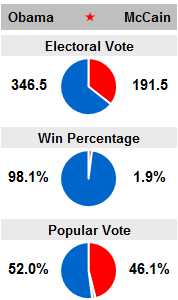
 . Oglesby, who was President of SDS in 1966 and 1967, led the largely nonviolent wing of the group in its battles with the violent revolutionary wing (which became the Weathermen). SDS at the time had three national secretaries, two of which were Bernardine Dohrn and