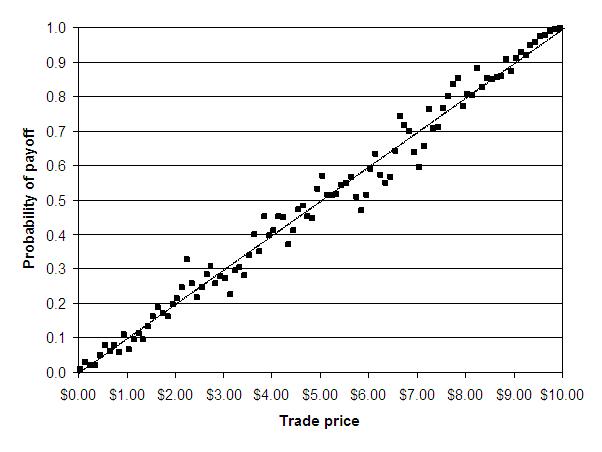
|
Saturday, February 2, 2008
ABA to Set New Bar Passage Standards for Accreditation:
National Law Journal
In general, the change would create a quantitative rule requiring law schools to demonstrate that 75% of their graduates passed the bar exam or to show that their pass rates were within a certain range compared with other law schools in the same jurisdiction. The change is technically a new interpretation of an existing accreditation standard. Almost all states require law students to graduate from an ABA-accredited law school in order to obtain a license to practice.... At a hearing last month before the Accreditation Standards Review Committee about the change, several prominent lawyers and scholars expressed their disapproval. Among them was General Motors North America Vice President and General Counsel E. Christopher Johnson, who argued that a bright-line rule would hurt minority enrollment because it would deter law schools from accepting applicants with lower scores on the Law School Admission Test.
Johnson is probably right, though another possibility is that pressure would come to bear on state bars to make their bar exams easier (which, as someone who doesn't believe in bar exams to begin with, I think would be a good thing). Meanwhile, one can question whether schools whose minority students pass the bar at rates well below 75% are doing those students much of a favor by accepting them despite low LSAT scores that predict future bar passage issues, taking their tuition money, and then leaving half or more of them without a career as an attorney.
Thanks to Paul Caron at TaxProf for the pointer.
Spell-Checking "Obama" into "Osama":
Benjamin Zimmer (Language Log) reports on this, and a quick experiment confirmed it. (Of course, as ABC News points out, it's not that someone at Microsoft is somehow deliberately anti-Obama; it's just that Obama wasn't in the dictionary -- that makes sense -- but Osama was, so the spell-checker suggested it.)
As the ABC story puts it, "When Fast Isn't Fast Enough, Spell-Checker Isn't Always Your Friend."
Political Ignorance and Belief in Conspiracy Theory:
Cass Sunstein and Adrian Vermeule have posted an excellent new paper on belief in conspiracy theory. As they point out, belief in highly dubious conspiracy theories about key political events is widespread. For example, they cite survey data showing that some one third of Americans believe that federal government officials either carried out the 9/11 attacks themselves or deliberately allowed them to happen. Large numbers of people also believe that John F. Kennedy's assassination was the result of a wideranging conspiracy in the government, that the AIDS virus was secretly produced in a government laboratory for the purpose of infecting blacks, and that the government is covering up evidence of alien visitation of Earth.
Why are such irrational beliefs so widespread in an open society where information refuting them is easily accessible? Sunstein and Vermeule present some possible answers. But they fail to consider a crucial question: Why is belief in bogus political conspiracies so much more widespread than comparably irrational beliefs about conspiracies in our daily lives? Far more people believe that the CIA killed Kennedy or engineered the 9/11 attacks than believe that a dark conspiracy is out to get them personally or that their associates and co-workers are plotting against them. Millions of people who embrace absurd conspiracy theories about political events are generally rational in their everyday lives.
In my view, the disjunction has to do with the rationality of political ignorance. As I describe in more detail in several of my works (e.g. - here and here), it is perfectly rational for most people to know very little about politics and public policy - and indeed most people are quite ignorant about even basic aspects of these subjects. Because the chance of your vote influencing the outcome of an election is infinitesmally small, there is little payoff to becoming informed about politics if your only reason for doing so is to be a better voter. By contrast, there are very strong incentives to be well-informed about issues in our personal and professional lives, where our choices are likely to be individually decisive. The person who (falsely) believes that a dark conspiracy is out to get him will impose tremendous costs on himself if he bases his decisions on that assumption; he's likely to end up a paranoid recluse like Bobby Fischer (who, of course, embraced political conspiracy theories as well).
In the political realm, on the other hand, widespread rational ignorance helps to spread conspiracy theory in two ways. First, the more ignorant you are about politics and economics, the more plausible simple conspiracy theory explanations of events are likely to seem. If you don't understand basic economics, you are more likely to believe that rising oil prices are caused by a conspiracy among oil companies or that the subprime crisis was caused by a conspiracy among banks. If you don't understand the basic workings of our political system, you are more likely to swallow the idea that the federal government could carry out something like the 9/11 attack and then (falsely) blame it on Osama Bin Laden without the truth being quickly exposed through leaks and hostile media coverage.
Second, the rationality of political ignorance implies that even people who do have considerable knowledge are likely to be more susceptible to conspiracy theories about political events than in their personal lives. As I explain in this paper (see also Bryan Caplan's excellent book), the rationality of political ignorance not only reduces people's incentives to acquire political information, it also undercuts incentives to rationally evaluate the information they do learn. As a result, we are more likely to be highly biased in the way we evaluate political information than information about most other subjects. Many people embrace political conspiracy theories because they are more entertaining and emotionally satisfying than alternative, more prosaic explanations of events. Unlike in our nonpolitical lives, most people have little incentive to critically evaluate their political beliefs in order to weed out biases and and ensure their truth.
That is not to say that people are uniformly rational in their nonpolitical decisions. Far from it. But they are likely to be a great deal less irrational than they are about politics.
Obama vs. Hillary on Subprime Mortgages:
There was an interesting exchange on subprime mortgages between Barack Obama and Hillary Clinton during their last debate. Hillary argued for a mortgage freeze (hat tip: Instapundit):
I think it’s imperative that we approach this mortgage crisis with the seriousness that it is presenting. There are 95,000 homes in foreclosure in California right now. I want a moratorium on foreclosures for 90 days so we can try to work out keeping people in their homes instead of having them lose their homes, and I want to freeze interest rates for five years.
Obama pointed out a serious flaw in her proposal:
On the mortgage crisis, again, we both believe that this is a critical problem. It’s a huge problem in California and all across the country. And we agree that we have to keep people in their homes.
I have put forward a $10 billion home foreclosure prevention fund that would help to bridge the lender and the borrower so that people can stay in their homes.
I have not signed on to the notion of an interest rates freeze, and the reason is not because we need to protect the banks. The problem is, is that if we have such a freeze, mortgage interest rates will go up across the board and you will have a lot of people who are currently trying to get mortgages who will actually have more of a difficult time.
Obama is right to point out that Hillary's proposed mortgage freeze would create perverse incentives. But his own proposal for a bailout has a similar weakness. If the government bails out subprime borrowers and lenders who made bad decisions, that will create incentives for future borrowers and lenders to take unjustified risks of their own. The end result will be a serious moral hazard that leads to overinvestment in overvalued real estate - drawing funds away from potentially more productive uses elsewhere. Both borrowers and lenders will expect the government to bail them out if future risky morgages go into default.
In addition, as I emphasize in this post, a bailout would impose large costs on innocent third parties: the taxpayers. If we genuinely want to prevent unwise mortgage borrowing while simultaneously protecting the interests of future homebuyers and innocent third parties, the right strategy may well be for government to do little or nothing. If both lenders and borrowers have to pay the price for their mistakes, they will be less likely to repeat them.
Enzyte a Fraud -- Who Knew?!
The Cincinnati Enquirer reports that a former executive for the company that sold the Enzyte "male enhancement" pill admitted in court that the company's claims were completely made up.
James Teegarden Jr., the former vice president of operations at Berkeley Premium Nutraceuticals, explained Tuesday in U.S. District Court how he and others at the company made up much of the content that appeared in Enzyte ads.
He said employees of the Forest Park company created fictitious doctors to endorse the pills, fabricated a customer satisfaction survey and made up numbers to back up claims about Enzyte’s effectiveness.
“So all this is a fiction?” Judge S. Arthur Spiegel asked about some of the claims.
“That’s correct, your honor,” Teegarden said.
Teegarden’s testimony is key to the case federal prosecutors are making against Berkeley and its founder, Steve Warshak, who is accused of orchestrating a $100 million conspiracy to defraud thousands of customers.
Warshak faces up to 20 years in prison and millions of dollars in penalties if his trial ends with a conviction.
AOL - Time Warner to merge!
Oh wait, I mean Microsoft and Yahoo! ... which does smell, to me, a lot like the AOL-Time catastrophe of just a few years past. The aging giant of days of yore (that would be Microsoft) looking for a way to get hip (that would be Yahoo!) and BIG in a hurry. But (you heard it here first) it will end in tears. Dust off those stories about how the two cultures don't merge, and about how the "expected synergies" never seemed to materialize. You have to be big to beat google at its game, but you can't buy your way big. I'm gonna short this deal, for sure.
Reinventing "24":
Today's WSJ has an interesting story about Fox's effort to reinvent -- and reinvigorate -- its hit series, "24".
Against the real-life backdrop of global terrorist attacks, "24" at its peak fulfilled the fantasies of an insecure nation. It became one of the most important franchises for News Corp.'s Fox Broadcasting Co., with 17 million viewers tuning in some weeks and millions returning to watch on DVD. . . .
But those who ride the tide of the times can also get upended by them. As public opinion about the Iraq War turned south, the show's depiction of torture came to be seen as glorifying the practice in the wake of real-world reports of waterboarding and other interrogation techniques used on detainees.
Ratings dropped by a third over the course of last year's sixth season. Producers would later experience trouble casting roles, once some of the most desirable in television, because the actors disapproved of the show's depiction of torture. "The fear and wish-fulfillment the show represented after 9/11 ended up boomeranging against us," says the show's head writer, Howard Gordon. "We were suddenly facing a blowback from current events."
Last spring, Fox executives asked producers to come up with a plan for what to do with their onetime crown jewel. The producers decided to take the radical -- and rarely attempted -- step of reinventing the show. While some fans complained "24" had grown too formulaic, the producers also grudgingly saw the importance of wrestling the show from its ties to an unpopular conflict.
The result: "24" is nowhere to be found on the TV schedule. For weeks the show's producers tried to reconcile the show's premise with the new public mood. Should Jack atone for his sins? Is Jack bad? The script rewrites and philosophical crises left the show so far behind schedule that when the Hollywood writers went on strike in November, Fox had no choice but to delay its premiere date. The show could premiere this summer, next fall or as late as January 2009.
Climate Change, Cumulative Evidence, and Ideology:
Almost every time I post something on climate change policy, the comment thread quickly devolves into a debate over the existence of antrhopogenic global warming at all. (See, for instance, this post on "conservative" approaches to climate change policy.) I have largely refused to engage in these discussions because I find them quite unproductive. The same arguments are repeated ad nauseum, and no one is convinced (if anyone even listens to what the other side is saying). I have also seen nothing in these exchanges that would alter my current assessment of the scientific evidence.
Given my strong libertarian leanings, it would certainly be ideologically convenient if the evidence for a human contribution to climate change were less strong. Alas, I believe the preponderance of evidence strongly supports the claim that anthropogenic emissions are having an effect on the global climate, and that effect will increase as greenhouse gases accumulate in the atmosphere. While I reject most apocalyptic scenarios as unfounded or unduly speculative, I am convinced that the human contribution to climate change will cause or exacerbate significant problems in at least some parts of the world. For instance, even a relatively modest warming over the coming decades is very likely to have a meaningful effect on the timing and distribution of precipitation and evaporation rates, which will, in turn, have a substantial impact on freshwater supplies. That we do not know with any precision the when, where, and how much does not change the fact that we are quite certain that such changes will occur.
So-called climate "skeptics" make many valid points about the weakness or unreliability of many individual arguments and studies on climate. They also point out how policy advocates routinely exaggerate the implications of various studies or the likely consequences of even the most robust climate predictions. Economists and others have also done important work questioning whether climate risks justify extreme mitigation measures. But none of this changes the fact that the cumulative evidence for a human contribution to present and future climate changes, when taken as a whole, is quite strong. In this regard, I think it is worth quoting something Ilya wrote below about the nature of evidence in his post about 12 Angry Men": People often dismiss individual arguments and evidence against their preferred position without considering the cumulative weight of the other side's points. It's a very easy fallacy to fall into. But the beginning of wisdom is to at least be aware of the problem. The "divide and conquer" strategy of dissecting each piece of evidence independently can make for effective advocacy, but it is not a good way to find the truth.
Don't get me wrong. I believe that there is room to question the global warming "consensus," particularly as represented by activist groups and some in the media, and to challenge various climate scenarios and their policy implications. I am unpersuaded that climate change threatens civilization or justifies truly draconian measures. Nevertheless, I believe climate change is a serious concern. And as much as I wish it were not the case, I believe the threat of climate change justifies some measures that the libertarian in me does not much like. But that's the way it is.
Predictocracy vs. Futarchy:
In describing normative markets in my book, I outline the possibility of prediction market-based legislative, judicial, and even executive power, but only for heuristic value. Nonetheless, it is fun to indulge in political science fiction and imagine a government run by prediction markets. I hope that this exercise can convince people that prediction markets are a powerful and flexible tool that may be useful in more modest but still exciting ways.
A predictocracy, then, is a government in which normative markets make the full range of government decisions, except when the prediction market mechanism results in a decision to delegate a decision to some other mechanism (whether traditional or using prediction markets in some other way).
I am not the first to imagine prediction markets serving at the center of government. Robin Hanson has previously defended a form of government that he calls "futarchy." His vision is that the legislature would be limited to defining some objective function (a GDP+ that includes GDP, but also anything else of value). Only policies that conditional markets predict would increase GDP+ would be enacted.
The slight disagreement between Hanson and me may sound to skeptics and even many prediction market enthusiasts like an argument between religious fanatics who have already disengaged from reality. But in Predictocracy, I explain why I prefer predictocracy to futarchy, and Hanson has now respectfully joined the argument.
My principal reasons for preferring predictocracy stem from the caveats that I previously offered about conditional markets. I worry that there will be too much noise in estimating GDP+ to make reliance on the difference between two conditional markets reliable (except for monumentally large decisions), and also that any prediction market subsidies in futarchy won't be well targeted.
Hanson points out that futarchy could authorize predictocracy-like decision making for particular decisions, and vice versa, and so he argues that we should pick the system that would make better decisions on the largest issues. But I worry that the caveats about conditional markets suggest that futarchy might not be the best vehicle for determining whether predictocracy should be used for particular realms of decision making. It would work only if large enough realms were being carved out to make a meaningful impact on GDP+.
Hanson makes some strong points in favor of futarchy. "Democracy today suffers from enormous errors regarding estimates of policy consequences, i.e., of passing particular bills," he points out. Predictocracy reduces the effects of the errors, since evaluations can be made years after a policy is enacted, but ex post evaluators in predictocracy might make some systematic errors that prediction market traders in futarchy would fix.
Futarchy, however, introduces another type of error, the danger that the legislature will not do a good job of defining GDP+, as Hanson acknowledges. It's not a priori clear which would be worse -- errors by the legislature in developing a formula for GDP+, or errors by ex post evaluators in determining whether a particular policy has increased or decreased general welfare. It probably depends to some extent on the quality of our legislature and the quality of our average ex post judges.
Ultimately, the question reduces to this: Suppose all you knew about a policy was that (a) one prediction market forecast that it would increase a measure of GDP+ devised by the legislature; and (b) another prediction market forecast that people some years later would conclude that this policy was a bad idea.
I would tentatively suppose that the participants in market (b) recognized some limitation of GDP+ that would be apparent after enactment of the policy. Robin would guess that the participants in market (b) anticipated that the ex post evaluators would fail to identify some actual policy consequence of the policy.
Given my views on this question, and the challenges of using futarchy for relatively small decisions, I would prefer predictocracy. Most readers who have followed the argument so far probably prefer traditional forms of republican government -- and I do too, because of transition problems and uncertaintty.
Ultimately, I believe that both markets forecasting particular consequences of potential government decisions and normative markets forecasting ex post assessments of policies could be useful tools within traditional republican governance.
Friday, February 1, 2008
12AM:
It's not just the time, it's also the movie Ilya and David blog about below (and one of my favorites). Ilya considers whether the defendant in 12 Angry Men was really guilty. I think the author, Reginald Rose, deliberately leaves that unclear. The audience never even hears any testimony, and what we hear second-hand from the jurors is conflicting. It's conflicting for a reason, I think; the idea is to make the audience dwell on the difference between guilt and the absence of reasonable doubt of guilt. David suggests that Henry Fonda asks a lot of questions that should have been asked by the defense attorney. I would put this a bit differently: I think Henry Fonda is the defense attorney. Rose's clever move is to take a criminal case -- government witnesses, followed by cross examination, closing, and then jury deliberations -- and to present them all as all just part of the jury deliberations. As I see it, the jurors who think the case is easy present the government's case; Fonda's questions are the cross examination and closing argument; and the hostile reaction by jurors who object to Fonda's inquiries are the testimony of the goverment's witnesses under cross examination. This device lets Rose tell the story of an entire criminal trial under the guise of the screenplay being just about jury deliberations. Great stuff.
Goldstein v. Pataki and the Shortcomings of Kelo:
The US Court of Appeals for the Second Circuit recently decided Goldstein v. Pataki, a case challenging the condemnation of homes and other property in Brooklyn for the purpose of transferring them to developer Bruce Ratner, owner of the New Jersey Nets. Ratner plans to use the land to build a new stadium for the Nets, as well as other facilities, including some 2250 new housing units.
Not surprisingly, the Second Circuit upheld the condemnations. Under Kelo v. City of New London, they had very little choice. As I discuss in great detail in this article, Kelo mandates very broad judicial deference to the government in determining whether a condemnation is a genuine "public use" under the Fifth Amendment. Any potential benefit to the general public is sufficient, even if it is greatly outweighed by the project's cost.
The case nonetheless reveals some of the serious shortcomings of Kelo and related precedents. Goldstein v. Pataki is a correct application of Kelo; it is also an example of the sort of abuse that more robust judicial protection of property rights could prevent.
First, the fact that much of the condemned land is to be used to build a sports stadium raises serious red flags about the true likelihood that the general public will benefit from the condemnation. Numerous studies by economists show that public subsidies for stadium construction create no economic benefits for the general public (see, e.g, this book published by the liberal Brookings Institution).
Second, the court claims that the creation of "affordable housing" for the poor is one of the public benefits to be expected from the project. The project will indeed create some new housing units (in addition to the stadium). However, as the Second Circuit opinion concedes (pg. 15), almost 70% of the new housing units will be "luxury" units for the wealthy, and the remainder is mostly not guaranteed to be ever built and is still intended for the "middle class" rather than the poor. Like the stadium, the housing portion of the project seems likely to be a straight redistribution of wealth from the current residents of the area to the very wealthy Mr. Ratner and the types of wealthy people who will be able to afford to buy the luxury housing he intends to build. To say the least, it is hard to discern any genuine public benefit here.
The Second Circuit also justifies the takings on the basis that they will serve to alleviate "blight." New York City has indeed designated much of the area condemned area as blighted. However, the validity of this designation is debatable at best (the plaintiffs pointed out that much of the land in the area is among the most valuable in Brooklyn). As I discuss in this article, New York is one of many states with a definition of "blight" so broad that it can encompass virtually any property. Even if the area really is "blighted," it doesn't necessarily follow that the current owners and residents should be expelled and their land transferred to a politically powerful developer. Cities have many other options for alleviating genuine blight that do not infringe so greatly on property rights. At the very least, there is no good reason to condemn the 50% of the project area that even the city acknowledges to be free of blight (see pg. 14).
In this case, as in Kelo itself, the court took account of the claimed benefits to the general public, but explicitly refused to consider the massive costs (pp. 13-15). Ignoring cost is a requirement under Kelo. But it is not a good way of determining whether a planned condemnation is actually likely to serve a "public use" - even if "public use" is defined broadly to include indirect public "benefits." Like those in Kelo, the Goldstein takings seem highly likely to create more costs than benefits for the general public. Ignoring costs is a blank check for local governments to undertake condemnations that benefit politically powerful interests while imposing the costs on taxpayers and the politically weak.
Finally, the Second Circuit notes that "Ratner was the impetus behind the [condemnation] Project, i.e., that he, not a state agency, first conceived of developing Atlantic Yards, that the Ratner Group proposed the geographic boundaries of the Project, and that it was his plan for the Project that the ESDC [government agency undertaking the condemnations] eventually adopted without significant modification." The court is probably right to conclude that this is not enough to prove that the taking was a "pretextual" one under Kelo. At the very least, however, such a pattern of events should trigger heightened judicial scrutiny of the government's true purposes in undertaking the condemnation. The fact that this kind of special interest-driven project receives only the most cursory possible judicial scrutiny is one of Kelo's many shortcomings.
Twelve Angry Men and the Cumulative Weight of Evidence:
Twelve Angry Men, the classic movie discussed in David's post was a great film. But I've always thought that the defendant Henry Fonda's character persuades the jury to acquit was actually guilty. There were four or five separate pieces of evidence pointing to the defendant's guilt, including two separate eyewitnesses. Fonda's character does a good job of showing that no one piece of evidence was enough to prove the accused guilty beyond a reasonable doubt by itself. But he and the other jurors ignore the possibility that guilt might be established by the cumulative weight of multiple pieces of evidence that are individually insufficient. For example, let's assume that the defendant has five pieces of evidence against him and each of them individually shows that there is only a 70% chance of his being guilty. The combined probability of his guilt based on all five items is about 99.8%, more than enough to prove guilt beyond a reasonable doubt. By focusing on each piece of evidence individually, Fonda's character obscures this fact and persuades the jury to let a guilty man go. Obviously, this interpretation of the movie is not the one that the filmmakers wanted the audience to come away with. But I think it fits the evidence nonetheless.
In real life, this "divide and conquer" strategy was effectively used by O.J. Simpson's defense lawyers, who raised doubts about some of the individual items of evidence against their client, but successfully avoided confronting the fact that he was almost certainly guilty based on the cumulative weight of many different items of evidence. Former prosecutor Vincent Bugliosi discusses this in his excellent book on the Simpson case.
The point is applicable to issues beyond criminal law. People often dismiss individual arguments and evidence against their preferred position without considering the cumulative weight of the other side's points. It's a very easy fallacy to fall into. But the beginning of wisdom is to at least be aware of the problem.
UPDATE: My analysis assumes that the five pieces of evidence were conditionally independent of each other (i.e. - that the discrediting of one does not affect the odds of the others being valid). That, I think, is an accurate representation of the evidence in the movie, which consistent of several independent items: two separate eyewitness accounts, some items of physical evidence, and flaws in the defendant's alibi. Related Posts (on one page): - 12AM:
- Twelve Angry Men and the Cumulative Weight of Evidence:
- A Debate on "Twelve Angry Men":
Massachusetts Trial Court Decision Rejecting Wiretapping / Disturbing the Peace Charges
against Simon Glik, who recorded a police arrest, is here; thanks to Harvey Silverglate for the pointer. Related Posts (on one page): - Massachusetts Trial Court Decision Rejecting Wiretapping / Disturbing the Peace Charges
- The Dark Side of "Privacy Protections," Continued:
A Debate on "Twelve Angry Men":
Via Overlawyered, you can find a harsh critique of the classic jury deliberation movie here, and a vigorous defense here.
I saw the movie many years ago, but I remember that my reaction was that Henry Fonda raised many questions that should have been asked by the defense lawyer (e.g., maybe an eyewitness wasn't wearing her eyeglasses), raising two possibilities: (1) that the defense lawyer was incompetent; or (2) that the defense lawyer knew that the answers wouldn't have helped his client. This raised, to me, a broader issue: to meet his burden of proof, does a prosecutor need to anticipate and rebut all possible objections, even those not actually raised by the defense attorney, or is it enough for the jury to determine that if one accepts the evidence placed before them by the two sides, the prosecutor has the overwhelmingly stronger case?
Correlation Between Grades and Essay Answer Length:
Last semester, I for the first time recorded in my exam scoring spreadsheet the length of each answer. This let me figure out the correlation between the length and the grade.
Note that my exam had 13 multiple choice questions (which amounted to 1/3 of the grade) and one long essay (which amounted to 2/3 of the grade, and for which the median answer was about 3750 words). The students had four hours to do the exam, and the exam was open book and open notes.
The correlation coefficient of the total score (which combined the essay score and the multiple choice score) and the essay word count was 0.60, which is huge as correlations go. So longer is better, by a lot, right? The correlation between the total score and the word count for exams longer than the median exam was basically zero.
In fact, I sorted the spreadsheet by word count, and then added a column for each exam that measured the correlation between total score and essay word count for all exams this exam and longer (the Excel formula for the 5th shortest exam of the 81 total, for instance, was =CORREL(B5:B$81,K5:K$81), where column B was the total score and column K was the essay length). The column started at 0.60, got steadily smaller until the median, and then immediately past the median exam the column fell to basically 0 (-0.01, to be precise) and pretty much stayed that way as the exams got longer.
I also did the same with the correlation between the essay score and the word count. For that, the inflection point didn't appear until exam 50 out of 81, rather than 42 out of 81. That makes sense: Time spent on the essay is time not spent on the multiple choice, so there's some tendency for the longer essays (past a certain length) to have slightly smaller multiple choice scores.
Likewise, the correlation between essay word length and multiple choice score was mildly positive if we looked at all exams (0.12), but fell to basically 0 once one set aside the 17 shortest exams -- and once one set aside the 35 shortest exams, the correlation between essay word length and multiple choice score got to be -0.10 and stayed pretty much there (with some fluctuations).
Is this of any use to students? I highly doubt it -- it's hard to act on the advice, "write at least as many words as your median classmate," and in any event simply trying to make your exam longer is unlikely to make it better (even if longer is usually better, up to a point). Still, it struck me as an interesting data point; and perhaps some students might be happy to know that, past a certain level, quantity and quality aren't even correlated.
In any case, this is just one set of data; in past years, I didn't include the word counts in my spreadsheets, so I couldn't do the same analysis. But I'd love to see what other law professors find.
American Muslims' Demands for Religious Exemptions:
My post on the Muslim soldier's religious exemption demand reminded me of a point I made several months ago:
Recent years have seen a set of requests by Muslims for exemptions from generally applicable laws and work rules. A Muslim policewoman in Philadelphia, for instance, asked for an exemption from police-uniform rules so that she could wear a Muslim headdress. A few years ago, a Muslim woman in Florida asked that she be allowed to wear a veil in a driver’s license photo. Last year, a Muslim woman in Michigan asked that she be allowed to testify veiled in a small-claims case that she brought.
All these claims were rejected by courts, and likely correctly, though the arguments for the rejection are not open-and-shut. But some of the public reaction I’ve seen to the claims suggests that people are seeing such claims as some sort of special demands by Muslims for special treatment beyond what is given Christians, Jews, and others. And that turns out not to be quite so: While the claims are for religious exemptions for Muslims, they are brought under general religious-exemption statutes that were designed for all religions and that have historically benefited mostly Christians (since there are so many Christians in America).
The Muslim exemption claims are plausible attempts to invoke established American religious-exemption law, and they deserve to be treated as such -- even if there are good reasons for rejecting them, as American religious-exemption law recognizes. Let us briefly review this law, so that this becomes clearer.... [Go here to keep reading.]
This is an excellent example. People of many religious groups have demanded exemptions from military service. In some measure, American law has chosen to expressly accommodate them, for instance through the conscientious objector exemption for people who oppose all wars (which especially benefits Quakers and other pacifist groups). Some members of other religious groups have also demanded exemptions, for instance when they believed that as Catholics they had a religious obligation not to fight in wars they believed to be unjust. Their claims were considered and rejected, using the then-standard constitutional approach for considering religious exemption demands (which has now been reinstated as a federal statutory approach).
The Muslims are just the latest group to do so. Their objections may be somewhat different from the Catholics', in that to some Muslims they may turn on the religious identity of the people on the other side. But other Muslims' objections appear to be very similar to some more familiar religious objections; for instance, in the case I discuss below, one of the quoted Muslim scholarly opinions suggested a just/unjust war distinction that in principle sounds much like the rule asserted by the Catholic objector in Gillette v. U.S.. And more broadly, Muslims are simply taking advantage of a longstanding American tradition -- the tradition of often (though not always) accommodating people's religious objections to generally applicable laws.
Sometimes the Muslim objector's demands should be rejected and sometimes they should be accepted. But they shouldn't be seen as some striking innovation brought here by some foreign interlopers. One commenter to an earlier post about accommodation of Muslim female athletes complained that, when Muslims "come here, we're expected to conform to their rules, not the other way around." Yet that misses the point: One of our rules, which we've followed for centuries, is precisely that sincere religious objections -- whether brought by familiar religions or recently imported ones -- should often (not always, but often) be accommodated.
Muslim Soldier's Religiously Motivated Refusal to Deploy to Iraq:
The Army Court of Criminal Appeals just handed down an opinion on this a few days ago, rejecting the claim, asserted by Sgt. Abdullah Webster as a defense to charges of "missing movement by design and disobeying a superior commissioned officer." A few highlights:
1. "Appellate defense counsel now assert the military judge erred in accepting
appellant's plea because he 'did not freely plead guilty' and appellant's 'guilty plea
was irregular and not freely given because the Islamic scholars ... forbade [defendant] from deploying to Iraq [and] doing so would condemn [appellant] to hell." The court says no: "It is irrelevant that appellant missed movement or failed to obey the orders of
his superior commissioned officers based on religious motives."
2. Defendant also argues that the federal Religious Freedom Restoration Act provides a defense, presumably because of his view that
Based upon the advice given to me by Islamic Scholars ... the conclusions were: 1. Consensus was that this [sic] no Muslims are permitted. 2. Muslims are not allowed to kill another Muslim except under three conditions . . . . Given the religious ruling, any combatant role I undertake would jeopardize my belief and place me in an unfavorable position on the Day of Judgment.
RFRA provides that, when the federal government substantially burdens a person's religious practice -- for instance, by requiring him to do something that his religion forbids -- the person is entitled to an exemption (even when the law is generally applicable, and doesn't single out religious people for special burden) unless the government shows that applying the law to the person is the least restrictive means to serve a compelling government interest.
The court says no: Even if the order burdened defendant's religious practice (which the court assumes for the sake of argument),
The Army has a compelling interest in requiring soldiers to deploy with their units. As the Supreme Court has said, “[i]t is ‘obvious and unarguable’ that no governmental interest is more compelling than the security of the Nation.” The Army’s primary mission is to maintain national security by fighting and winning our nation’s wars. The Army cannot accomplish this primary mission if it cannot deploy, in a state of military readiness, the various units into which it is organized. Giving soldiers the option to decide selectively whether they wish to participate in particular military operations would undermine the readiness of all units to deploy, and thus compromise the Army’s mission and national security.
In this case, the Army furthered its compelling interest in the least restrictive manner possible. Although the Army required appellant to deploy with his unit, the Army made numerous allowances for him. The Army afforded him the opportunity to request relief as a conscientious objector. The Army gave him the right to request reasonable accommodation of his religious practices. Finally, although apparently not required to do so by any regulation, appellant’s commander generously allowed appellant to deploy with his unit in a non-combatant role....
As the Supreme Court has stated, “to accomplish its mission the military must
foster instinctive obedience, unity, commitment, and esprit de corps.” ... “The inescapable demands of military discipline and obedience to orders cannot be taught on battlefields; the habit of immediate compliance with military procedures and orders must be virtually reflex with no time for debate or reflection.”
Sounds quite right to me. I should also add that the Supreme Court held in Gillete v. U.S. (1971) that people weren't entitled to a religious exemption from the duty to serve in the military, beyond what was provided by the limited conscientious objector exception (which applies only to those who object to all military service, rather than to those who refuse to fight in what they see as "unjust" wars). Gillette was decided during the era when the Court viewed the Free Exercise Clause as providing a presumptive right to religious exemptions; the Court later reversed that position, but the Religious Freedom Restoration Act basically reinstated the Gillette-era religious exemption doctrine as to the federal government, so Gillette would still be good precedent as to RFRA cases (though for some reason the Army Court of Criminal Appeals didn't cite it).
Why Normative Markets?
In my last post, I described and gave a general argument for normative prediction markets. If a prediction market forecasts an evaluation by someone to be selected randomly from a body of very educated people (somewhat analogous to the federal judiciary, though perhaps selected in a way that makes it more representative), it will be an informed forecast of an informed decision, and the uncertainty about who the eventual decision maker will be provides for a kind of virtual representativeness.
Now, I'll describe several advantages of normative markets that follow:
(1) More consistent, predictable decision making. The virtual representativeness reduces the danger of idiosyncratic decision making. Of course, there will be some decisions that fall close to the line, but we avoid some situations where it's clear that 2/3 of decision makers would make one decision, but it happens to be someone in the 1/3 of decision makers who gets the final call.
If we can have more consistent, predictable decision making, we also may see a general shift from legal rules to standards. A powerful argument for rules over standards is that only rules can produce consistent and predictable decision making. With normative markets deciding whether legal provisions are followed, standards become relatively more attractive.
(2) More principled decisions. Suppose there is some higher order principle X that the group has precommitted to in advance. Now, we have to make a decision about whether something that the group has decided to do, Y, would be consistent with that high-level principle.
With conventional decision making, the decision maker may well sacrifice X for Y. X may be more important to a decision maker than Y, but a disingenuous argument that Y is consistent with X makes it only slightly less likely that X will be followed in the future. Those who have read Mistretta v. United States should understand what I am talking about.
This is less likely with normative markets, because the evaluation of whether Y is consistent with X will not actually affect whether the group can do Y. That decision has already been made. So, a precommitment to using normative markets can help improve the chance that the group will follow through on its substantive precommitments.
(3) More insulated decisions. It should be harder for a special interest group to influence decision making with normative markets. (Assume for the sake of argument that special interests make decision making worse rather than better.) The judiciary is relatively immune from special interests, and so too could be the pool of ex post evaluators.
A special interest group could try to affect the pool of ex post evaluators, but with many evaluators, each making only a small number of randomly selected decisions on a large number of potential topics, this won't be easy. Moreover, bribing the ex post evaluator would not be enough; the special interest group would have to commit credibly to bribing the evaluator, because the actual ex post decision would not matter.
(4) More scalable decisions. We can easily change the probability that a case is submitted to an ex post evaluator. More decisions would require more subsidies, but we don't have to hire and select more decision makers. Market participation should grow in proportion to subsidies.
Consider, for example, immigration review. From one perspective, this might seem to be one of the worst contexts for prediction markets, because they seem impersonal. But our current system of immigration may be inhumane and capricious. Normative markets could at least eliminate backlogs, in addition to providing more consistent decision making.
Nineteenth-century prediction markets:
Those who are interested in Mike Abramowicz's prediction markets posts may also be interested in this new NBER working paper I just saw on SSRN:
Historians have long wondered whether the Southern Confederacy had a realistic chance at winning the American Civil War. We provide some quantitative evidence on this question by introducing a new methodology for estimating the probability of winning a civil war or revolution based on decisions in financial markets. Using a unique dataset of Confederate gold bonds in Amsterdam, we apply this methodology to estimate the probability of a Southern victory from the summer of 1863 until the end of the war.
Our results suggest that European investors gave the Confederacy approximately a 42 percent chance of victory prior to the battle of Gettysburg/Vicksburg. News of the severity of the two rebel defeats led to a sell-off in Confederate bonds. By the end of 1863, the probability of a Southern victory fell to about 15 percent. Confederate victory prospects generally decreased for the remainder of the war.
The analysis also suggests that McClellan's possible election as U.S. President on a peace party platform as well as Confederate military victories in 1864 did little to reverse the market's assessment that the South would probably lose the Civil War.
This paper is also available directly on the NBER site, though I'm not sure whether the general public has free access to it.
Assessing the Economic Impact of Banning Economic Development Takings:
The Institute for Justice (the libertarian public interest law firm that represented the property owners in Kelo v. City of New London) has an interesting study assessing the economic impact of post-Kelo reform laws that ban Kelo-style economic development takings.
Contrary to the "doomsday" predictions of planners and local government officials who claimed that eliminating economic development takings would drastically stifle development, the study finds that states with strong post-Kelo reform laws have not suffered any reduction in growth and development relative to preexisting trends or in comparison with states that passed ineffective reforms or none at all.
I tend to agree with the study's conclusion that takings for economic development aren't actually necessary to increase employment or promote local economic growth. For reasons I outlined in this article, economic development takings are likely to do more harm than good for local economies.
At the same time, I think that the IJ study is not yet a definitive assessment of the economic impact of post-Kelo reform laws. All but one of the laws considered in the study have been in force for less than two and one half years (Utah, which enacted its reform law a few months before Kelo came down on June 23, 2005, is the exception). It is probably too early to fully assess their longterm impact. In addition, while the study controls for preexisting economic trends, it doesn't take account of intervening events other than post-Kelo reform laws that might affect economic development in different regions of the country.
The IJ study is a compelling refutation of the more extreme doom and gloom predictions of Kelo defenders. In my view, time will show that banning economic development takings is a boon for local economies, not a detriment. A few state Supreme Courts, such as Washington's (1959) and Kentucky's (1979), banned economic development takings under state constitutions many years before Kelo; there is no evidence that their actions undermined their states' economies in any way. Development economists have long argued that protecting property rights is a good way to promote growth. If landowners' rights are protected, they are more likely to invest in their properties and establish enterprises that stimulate local economies.
However, it will probably take several years for us to accumulate more definitive data on the impact of post-Kelo reform laws. In the meantime, the IJ study, combined with other available evidence, has shifted the burden of proof to those who argue that economic development takings are an essential tool for promoting local economic growth. It is up to them to show that forcibly displacing homeowners and businesses for the benefit of other private interests really is a good way to promote economic growth.
CONFLICT OF INTEREST WATCH: As longtime VC readers know, I have done considerable pro bono work for IJ, including writing several amicus briefs on their behalf.
Normative Prediction Markets:
Suppose that you are a member of a large group that has a large number of decisions to make. It might seem that you have two basic choices.
First, allow everyone to vote on every decision. This approach produces high representativeness (at least if everyone votes), but the votes will be based on little information. Second, allow a subset of the group to make each decision. This approach reduces representativeness, but allows for more informed decision makers.
Democratic institutions combine these two basic approaches in elaborate ways to overcome the trade-off between unrepresentative and uninformed decision making. All enfranchised citizens select a few citizens to serve as legislators, for example, and legislators divide into committees. For different types of decisions, we accept different trade-offs. Three-judge panels are unrepresentative but informed, so in theory we allow them to resolve legal questions but not to change national policy.
None of these solutions is perfect, and we face the usual perils of republican decision making: ignorant voters, special interests, legislative inertia, activist judges, and executive policies highly sensitive to the quadrennial preferences of a small number of voters in places like Florida and Ohio. But we may well structure voting regimes reasonably efficiently given the fundamental trade-off.
There is, however, a way of overcoming this basic trade-off using prediction markets rather than votes. We can commit to selecting someone at random from our group, or from a subset of it, to say what the decision should be. We will require this person to listen to detailed arguments and to produce a detailed explanation. But this will not be our decision. Instead, our decision will be based on the forecast generated by a “normative prediction market” predicting what this person will conclude is best.
Moreover, we don’t even need to have someone conduct this evaluation for every decision. We can use a pseudo-random number generator to pick only, say, one-tenth of the decisions for ex post evaluation. Before we make the random selection, we run a conditional normative market, where the condition is that the decision is selected for ex post evaluation. But every time, it is the market’s prediction that we will use as the decision.
A summary of the steps: (1) Subsidized conditional market predicts decision. (2) This prediction determines the group’s actual decision. (3) Random number from 0 to 1 is drawn; if it’s greater than 0.10, all money from market is returned. (4) Person is picked at random from group, and must eventually announce what he or she would have decided. (5) This evaluation is used to determine payouts in the conditional market.
This is a radically new way of making decisions, and I emphasize in the book that there are strong reasons not to transform radically our democratic institutions. I use dramatic examples (e.g., prediction market legislatures, trial by market) to illustrate the approach colorfully, but I don’t believe we should rewrite the Constitution. Normative markets could serve as useful inputs into more traditional decision making (change step 2 above to “This prediction provides a recommended decision.”), or be used in private settings.
All I want to show here is that this approach, which could also be used in private settings, helps overcome the trade-off between unrepresentative and uninformed decision making.
If the prediction market is sufficiently subsidized, then the prediction can be highly informed. Since we only have a few decisions that need ex post evaluation, and only one decision maker per decision, we can demand a lot of the ex post decision maker, who will then become informed too. Picking a random citizen might not be the best strategy, since an informed dolt is still a dolt, so we might have the ex post evaluator randomly drawn from a body akin to a judiciary (experts selected by indirectly elected representatives).
Meanwhile, the system provides a virtual representativeness. Traders don’t know who the actual ex post decision maker would be, so they will average the anticipated decisions of a broad ideological range of potential decision makers. We may be able to increase representativeness still further by delaying decisions a decade or so, so it won’t matter if we happen to have an unbalanced set of ex post decision makers at any one time.
Critically, it doesn’t matter if the actual ex post decision maker makes a foolish or unrepresentative decision. What matters is the average expected decision, because it is only the prediction of the ex post evaluation that determines policy.
Of course, my claims here depend on my earlier claims that prediction markets will be sufficiently accurate and deliberative.
Federalist Society Panel on Executive Power:
The Federalist Society has posted a video of the January 3 faculty conference panel on executive power, featuring Harvey Mansfield, John McGinnis, Neomi Rao, and our own Ilya Somin. (Sandy Levinson was also scheduled to be on the panel; to everyone's disappointment, he did not make it.) Although Ilya and I have stark disagreements about the proper role of the courts, we're mostly on the same page here. If hearing from only one VC blogger isn't enough for you, check out the Q&A. I ask the first question at the 34-minute mark; co-blogger David Bernstein asks the second question at the 39-minute mark; and fellow co-blogger Randy Barnett asks a question at the 60-minute mark.
Supreme Court Stays Eleventh Circuit Execution:
Lyle Denniston has the background here, and the stay order here. The obvious question is, does this tell us anything about what the Court might be doing with Baze v. Rees? I think the answer is "no." There are a bunch of reasons for this, but the biggest is a practical one: Even if the Court is likely to rule for Kentucky in the Baze case, denying the application for a stay in this case would leave the lower courts hopelessly confused as to whether executions will be allowed (and in what circumstances) before Baze is handed down. The whole point of taking Baze was to end lower court confusion and settle this issue clearly. So no matter how the initial conference vote went in the case, the sensible course is to stay all executions while the case is still pending.
Thursday, January 31, 2008
A Working Definition of Terrorism.
My colleague at the University of Utah College of Law, Amos Guiora, has just posted this very interesting paper on the appropriate definition of "terrorism." Here's the main point:
"The recommended definition captures the core elements of terrorism in clear and concise language. In reviewing scholarship and terrorists' writings, the overwhelming impression is that causing harm (physical or psychological) to the innocent civilian population is the central characteristic of terrorist action. The available literature articulates that harming civilians is the most effective manner from the terrorist mindset to effectuate their goals."
Guiora goes on to argue that, without a clear definition of terrorism, we won't take appropriate countermeasures. In particular, we need to understand that terrorism intends to disrupt daily life, and that effective counterterrorism measures will have to be based on that fact.
John McCain and the Judiciary:
Much controversy has centered recently around John McCain's possible judicial nominees should he become president. In my view, a President McCain would face a difficult tradeoff between the goal of appointing conservative jurists and the goal of saving the McCain-Feingold law from invalidation by the Court.
John McCain may well be sincere in claiming that he wants to appoint conservative justices. However, he is undoubtedly even more sincere in his support of the McCain-Feingold campaign finance law, his proudest achievement as a legislator. The narrow conservative majority on the Supreme Court is not fond of McCain-Feingold and has already significantly narrowed its scope in the Wisconsin Right to Life case. The five conservatives most likely believe that McCain-Feingold is unconstitutional; that applies also to swing voter Anthony Kennedy, who voted to strike down most of McCain-Feingold in McConnell v. FEC, the 2003 decision that narrowly upheld the law by a 5-4 margin (here is Kennedy's strong dissent in that case).
If he wants to have any chance at all of saving McCain-Feingold, a President McCain will have to appoint justices committed to upholding it. As a practical matter, however, there are few if any conservative jurists who are both 1) qualified to sit on the Court, and 2) likely to vote McCain's way on campaign finance issues; I can't think of even one offhand. Almost any well-known jurist likely to vote the conservative way on federalism, property rights, abortion, and other major constitutional issues is also likely to be just as committed to striking down McCain-Feingold as the conservatives currently on the Court. Thus, McCain will be strongly tempted to appointmoderate to liberal justices or a "stealth" candidate like Justice Souter with no clear judicial philosophy. The stealth approach failed for George W. Bush when the Harriet Miers nomination blew up in his face. However, McCain might do better with it, since he would be facing a Democratic-controlled Senate rather than a Republican one.
I honestly don't know whether McCain - should he be elected - would put his desire to uphold McCain-Feingold above his campaign promises to appoint conservative justices. However, the possibility that he might appoint an analogue to Justice Souter or Harriet Miers in order to save McCain-Feingold is a very real one. This concern is only slightly assuaged by recent endorsements of McCain by conservative legal luminaries such as Ted Olson and Miguel Estrada. Perhaps they know something about McCain's plans that I don't. However, it will take a lot more evidence to convince me that McCain is genuinely willing to set his commitment to McCain-Feingold aside in making Supreme Court appointments.
Supreme Court appointments are not the only issue in the presidential election and probably not the most important. However, conservatives and libertarians who care about legal issues should be aware of the possibility that a President McCain might end up appointing justices likely to vote against their positions on most major constitutional issues before the Court. The above is not an endorsement of Mitt Romney, who has his own shortcomings. Nor is it a comprehensive rejection of McCain, whose positions on some issues I very much agree with. It does, however, flag an important concern about McCain's potential judicial appointments.
James Risen Subpoenaed:
The New York Times reports on an interesting development in the investigation of leaks concerning classified counter-terrorism programs.
A federal grand jury has issued a subpoena to a reporter of The New York Times, apparently to try to force him to reveal his confidential sources for a 2006 book on the Central Intelligence Agency, one of the reporter’s lawyers said Thursday. . . .
Mr. Risen’s lawyer, David N. Kelley, who was the United States attorney in Manhattan early in the Bush administration, said in an interview that the subpoena sought the source of information for a specific chapter of the book “State of War.”
The chapter asserted that the C.I.A. had unsuccessfully tried, beginning in the Clinton administration, to infiltrate Iran’s nuclear program. None of the material in that chapter appeared in The New York Times. . . .
Mr. Risen, who is based in Washington and specializes in intelligence issues, is the latest of several reporters to face subpoenas in leak investigations overseen by the Justice Department. . . .
Ms. Mathis would not say why the material about the C.I.A. program involving Iran appeared in Mr. Risen’s book but not in pages of The Times. “We don’t discuss matters not published in The Times,” she said.
The Justice Department would not comment on the work of the grand jury that issued the subpoena to Mr. Risen. “The department does not comment on pending investigations,” said Peter Carr, a spokesman.
Crime Victims' Right to Object to a Plea Agreement:
I'm working on an interesting pro bono case involving the crime victims' right to object to a plea agreement in federal court under the Crime Victims Rights Act. It arises out the Texas City Refinery explosion in March 2005, which left 15 dead, hundreds injured, and untold property damage.
Recently the responsible corporation -- BP Products North America -- agreed to pled guilty to a criminal violation of the Clean Air Act. But the plea agreement is a "binding" plea agreement -- that is, the judge would have no discretion in sentencing. The plea agreement obligates BP Products North America to pay a $50 million fine and do essentially nothing more to ensure plant safety than abide by previous agreements with federal and state regulators.
Along with other pro bono lawyers in Texas, I represent some of the victims of the explosion. They would like the judge to reject the plea and send the parties back to the drawing board to negotiate more safety measures and a more appropriate -- and tougher -- penalty.
Today the other lawyers and I filed pleadings in the federal district court in Texas. Our pleadings argue the court should reject the plea because the proposed plea blocks the court from appointing its own independent safety monitor to supervise BP Products' environmental compliance. The pleadings also argue that since the statutory maximum fine in this case (based on the gain to the company or loss to the victims) is more than $2 billion, a substantially larger fine is appropriate.
The larger issue here is what role the fedeal courts will give crime victims in these kidns of issues. Under the new Crime Victims Rights Act, crime victims have the right to "heard" on any proposed plea. On Monday, I will be in Houston helping victims exercise that right.
Miguel Estrada Supports John McCain, Too:
Again from Jennifer Rubin (Commentary): "Conservative lawyer, former Assistant to the Solicitor General and filibustered federal appellate court nominee Miguel Estrada says 'McCain' as well." For those who don't know, Miguel is both brilliant and solidly conservative. Related Posts (on one page): - Miguel Estrada Supports John McCain, Too:
- Ted Olson Endorses John McCain:
Symposium at Catholic University (in D.C.) on Justice O'Connor's Jurisprudence Related to Race and Education:
Looks like a very interesting program, and a quick glance suggests it's a pretty balanced lineup. It will be happening on Friday, February 22.
Responding to Shellenberger & Nordhaus on Climate:
On Monday, Michael Shellenberger and Ted Nordhaus, authors of Break Through: From the Death of Environmentalism to the Politics of Possibility, challenged conservatives on global warming in an essay on TNR Online. While some conservatives (including yours truly) have acknowledged the threat of climate change, Shellenberger and Nordhaus wrote, few (if any) had followed through with tangible proposals for meaningful action.
Newt Gingrich and Terry Maple, authors of the conservative environmental manifesto, A Contract with the Earth, responded on Tuesday, arguing for a market-based approach of sorts, based on "bold government incentives," to the threat of climate change. Shellenberger and Nordhaus were not convinced by the Gingrich-Maple argument, and suggested Gingrich and Maple are trying to address climate change "on the cheap," and that won't do.
I contributed to the exchange today, suggesting that Nordhaus and Shellenberger are too wedded to centralized, top-down strategies. even though Shellenberger and Nordhaus recognize the difference between a politics of limits and one of possibility, they do not seem to comprehend the problems common to all centralized, top-down policy initiatives--regulatory and subsidy-driven alike. In their book and essays, Shellenberger and Nordhaus correctly observe that regulatory approaches to climate change are "economically insufficient to accelerate the transition to clean energy." Yet the "investment-centered" approach they prefer still suffers from substantial limits, not least their preference for a centrally directed system of subsidies. Rather than grapple with the limits of top-down direction of investment and economic activity, they present a false dichotomy between laissez faire absolutism and government direction of investments. . . .
There is certainly a need for conservatives and others to "back up words with action," but not just any action will do. We need innovation-spurring, forward-looking environmental policies, not a repackaging of the centralized mandates and economic controls that have dominated environmental policy for the past three decades. Shellenberger and Nordhaus have helped to initiate this dialogue, but their policy recommendations should not be the last word. The essay fleshes out some of what I have in mind in greater detail.
My prior posts on Nordhaus and Shellenberger, and their provocative book, are here and here. Meanwhile, while we're on the subject of conservatives and climate change, David Roberts rounds up the latest comments from the GOP presidential candidates on global warming policy.
Ted Olson Endorses John McCain:
From Jennifer Rubin at Commentary: "Ted Olson, fomer U.S. Solicitor General and conservative legal icon, has just informed me that he is endorsing John McCain."
Novak on McCain & Judicial Nominations:
Today's Robert Novak column supports John Fund's claim that Sen. McCain has made comments suggesting he would be unlikely to nominate someone like Samuel Alito to the Supreme Court. Specifically, Novak reports the following:
Fund wrote that McCain "has told conservatives he would be happy to appoint the likes of Chief Justice Roberts to the Supreme Court. But he indicated he might draw the line on a Samuel Alito because 'he wore his conservatism on his sleeve.' " In a conference call with bloggers that day, McCain said, "I don't recall a conversation where I would have said that." He was "astonished" by the Alito quote, he said, and he repeatedly says at town meetings, "We're going to have justices like Roberts and Alito."
I found what McCain could not remember: a private, informal chat with conservative Republican lawyers shortly after he announced his candidacy in April 2007. I talked to two lawyers who were present whom I have known for years and who have never misled me. One is neutral in the presidential race, and the other recently endorsed Mitt Romney. Both said they were not Fund's source, and neither knew I was talking to the other. They gave me nearly identical accounts, as follows:
"Wouldn't it be great if you get a chance to name somebody like Roberts and Alito?" one lawyer commented. McCain replied, "Well, certainly Roberts." Jaws were described as dropping. My sources cannot remember exactly what McCain said next, but their recollection is that he described Alito as too conservative.
Predicting Decisions and Their Effects:
So far, my posts have implicitly assumed independence between forecasts and decisions. Now, let’s consider some ways in which we might structure prediction markets to forecast the decisions themselves and their consequences, so that the forecasts might influence the decisions.
(1) Markets predicting decisions. A market that predicts a decision might end up affecting the decision. Suppose that Eugene is elected dictator, but because of his blogging responsibilities, His Tremendousness must make many decisions. So, he establishes prediction markets forecasting what decisions he will make.
Now, Eugene is presented with a decision to make, and he quickly analyzes the problem and leans toward Decision A. But then he checks the market and sees that it forecasts that he will make Decision B. He wonders, why is that? He looks more carefully and realizes that he has missed some aspects of the problem.
Some of the dynamics of the deliberative market are present here. A trader predicting a decision can profit by developing arguments that will persuade the decision maker. For example, the trader can write an argument for Decision A and bet on Decision A just before releasing the argument. Eugene might thus create a market predicting his decisions as a way of generating research and arguments relevant to those decisions.
(2) Conditional markets. A conditional market predicts some variable contingent on a condition. A simple way to run such a market is to stipulate that all money spent on the prediction market will be refunded if the condition does not occur. For example, one market could predict a corporation’s stock price if a corporation decides to build a factory, and a separate market could predict the stock price if it doesn’t build the factory. The corporation can compare the forecasts to assess the market’s perception of the effect of building the factory on stock price.
These are a useful tool, but there are important caveats. First, small deviations between two markets can’t be taken too seriously. If Market A predicts a stock price of $30.00 and Market B predicts a stock price of $30.01, the difference could just be noise. Relatedly, if the condition will have little effect on the stock price, even subsidized prediction markets will give people little incentive to study the effect of the condition. Instead, the subsidy will just give general incentives to study all factors that might affect future stock price.
Second, traders will recognize that information unknown to them may affect the decision. For example, last May, Hillary Clinton’s chance of winning the Presidency conditional on being nominated was estimated based on prediction markets at over 70%. That could indicate that Clinton was a strong candidate. It also could mean that the Democrats would stick with a weak candidate like Clinton only if other factors, like the economy, were pointing so strongly in the Democrats’ direction that Democratic primary voters did not care about electability.
In our next installment, I’ll show that “normative markets” combine the two market approaches considered above.
If I Were a Senator or Governor Who's Also a Presidential Candidate,
I'd file an amicus brief in the Supreme Court's Second Amendment case supporting the individual right to bear arms (but with room for an unspecified range of "reasonable restrictions"). I'd then tout my position, and question the views of those of my rivals who didn't file such a brief.
Not that I'd expect the brief to matter much to the Court -- but I'd think it would be pretty good for my campaign, certainly if I'm a Republican but maybe even if I'm a Democrat who wants to appeal to the many pro-gun-rights Democrats and independents. Or am I mistaken?
Why Check With People Before Responding to Their Off-Hand Remarks?
Earlier this morning, I wrote:
It's true that blog posts are often less thought-through than articles or op-eds.... It therefore makes sense to check with the author before citing the post, in case the author wants to elaborate on it, or even recant it in some measure -- it's not necessary, but it can be helpful.
Tim Sandefur responded:
I must say I really disagree with the "check with the author" thing. Why? I never check with the author of a law review article or a book when I cite them. I can see that in some cases it might be helpful if you think the author could expand on some point, but that would probably be best done in a new post by that blogger.
When I cite a blog it is very often because I am citing someone whose views are contrary to mine, and if there were any point of etiquette that counsels me to ask permission or anything, that person would then refuse (or alter the blog post) and deprive me of a helpful reference. The fact that people can retroactively alter their blog posts makes it especially likely that a person who made a comment that later proves embarrassing will then try to weasel out of it when he's called on it in the form of a law review citation.
In my view, there's no more reason to request permission before citing in a law review than there is to request permission before linking to it from my own blog and criticizing it. If the person then chooses to alter the blog post or elaborate or whatever, that's fine, but why should I give him a chance to cover up his tracks before I criticize him?
Now, obviously blogs are, as you say, off-the-cuff, and they should be cited with that in mind (and if cited, should be read with that in mind). And you do say that there's no "rule" here, but I still don't think there's any reason to set out some guideline of etiquette that counsels any obligation on the part of a reader or writer to ask permission before citing a blog post. And I think there is an obvious downside in a bloggers' ability to go back and change his statements.
Here's my thinking: None of this is a matter of needing "permission" -- but it is a matter of making sure that debates are based on real disagreements, and not on misunderstandings, silly mistakes, or qualifiers that are omitted in the course of a casual conversation.
Say you say in a quick blog post, "Content-based speech restrictions are unconstitutional," and I have a paragraph in your article saying, "Some scholars argue that content-based speech restrictions are unconstitutional, but they're wrong -- after all, libel law, obscenity law, and many other constitutionally permissible laws are content-based." But you didn't really mean to argue that content-based speech restrictions are unconstitutional; you just omitted a "generally," or some other qualifier. What's the point of the back and forth? How does it help the reader, or the state of professional knowledge?
Or say you accidentally omit a "not" or an "un-," or make a similar typing error (not uncommon in quickly written prose). And say you don't notice this and your readers don't tell you (maybe you don't have a lot of readers who help you by sending corrections, or maybe they just weren't paying attention to this post). I then write "X says that content-based speech restrictions are constitutional, which shows what a minimalist he is when it comes to free speech" -- but it turns out I'm arguing not with your sincere beliefs or your edited prose, but with your slip of the finger. What's the point?
Nor is there much reason to worry, I think, about the person "covering his tracks" by modifying the post. If the original post is somehow especially telling, you can always cite the original (just save a copy of the original version, and note in your footnote that you're citing to the original version and not the updated one). Thus, for instance, if you think the original post really reflects the speaker's true views, and the revision is an attempt to disingenuously hide the beliefs that slipped out in a rare moment of candor, go ahead and cite to the original.
But if the person e-mails back sincerely saying, "Thanks -- I misspoke, and I've corrected the post to more accurately reflect my views [or the state of the law]," then what have you lost? At most the opportunity to engage in a debate with a view that might not actually be held by anyone, or to represent the post as your target's true views when it's actually just an error. Pat yourself on the back for being nice, and, more importantly, for sparing your readers a pointless debate against a view that even your target doesn't actually hold.
Now some of this is specific to law review articles that cite blog posts. If you're citing an article, you can be more confident that the author really means what he says there, because the author has likely reread the article several times, and confirmed that he didn't just misspeak. If you're writing a blog post that cites another blog post, you might not want the delay that often accompanies such queries. But if you're writing a law review article, you have the time to check things, and good reason to avoid needless debates.
Community Morality and Zoning Restrictions on Adult Businesses and Military Recruiting Stations:
In addition to the measures against military recruiters described in Eugene's recent posts, Berkeley is also considering enacting a zoning ordinance to restrict their location in much the same way as other cities use zoning to restrict or ban businesses selling pornography:
If passed by a majority of Berkeley voters, a proposed initiative would require military recruiting offices and private military companies in Berkeley to first acquire a special use permit....
If the initiative passes, recruitment offices could not be opened within 600 feet of residential districts, public parks, public health clinics, public libraries, schools or churches...
The author of the initiative, Berkeley-based lawyer Sharon Adams, modeled the initiative after current zoning law that restricts the location of adult-oriented businesses.
"In the same way that many communities limit the location of pornographic stores, that's the same way we feel about the military recruiting stations," said Phoebe Sorgen, an initiative proponent and a member of the city's Peace and Justice Commission. "Teenagers that really want to find them will be able to seek them out and find them, but we don't want them in our face."
Conservatives are justifiably outraged by the proposed Berkeley measure. I share their indignation. However, it is striking that advocates of the Berkeley measure use most of the same arguments for it as many conservatives use to justify zoning out adult businesses and other enterprises they disapprove of.
For example, the Berkeleyites claim that the measure is justified on the basis of community morality in Berkeley, where much of the very left-wing population finds military recruiters offensive. As Berkeley Councilmember Dona Spring puts it, "I do want to do something, whatever we can do, to shut down an agency that offends our public standards." Conservatives similarly argue that local communities that find adult businesses offensive should be able to ban them for that reason. If conservative local majorities should be able to use zoning law to enforce their moral values, why shouldn't the left-wing local majority in Berkeley be able to do the same thing?
Similarly, both groups cite the need to protect the young. As Sharon Adams, author of the proposed Berkeley law explained, "We feel that as a community we need to protect the youth" from military recruiters. Similarly, conservatives seek to use zoning to protect the young from the supposedly corrupting influences of porn. In (very limited) defense of the Berkeley activists, it seems likely that joining the military (at least in a combat role) is a far more dangerous activity for the young than consuming porn.
Finally, both groups justify zoning restrictions on the grounds that the enterprises they oppose cause harmful "secondary effects" on the community. Conservatives claim that adult businesses cause crime and disorder. The Berkeley leftists argue that military recruiting stations promote violence, militarism, and discrimination against gays and lesbians. I think that the Berkeley secondary effects arguments are extremely implausible. But social science research suggests that the conservative ones aren't much better. For a good summary of the data, see Bryant Paul, et al., Government Regulation of “Adult Businesses” Through Zoning and Anti-Nudity Ordinances: Debunking the Legal Myth of Negative Secondary Effects,6 Communication Law & Policy 355 (2001). See also this more recent study.
To be clear, I don't believe that local governments should use zoning restrictions to target either recruiting stations or adult businesses. Those individuals who have a strong desire to isolate themselves from either one have many options for doing so. They can use restrictive covenants, live in a private planned community (as over 50 million Americans do already), or move to a neighborhood where there is little potential market for whatever type of business they disapprove of. However, they should not use the heavy hand of government to force out enterprises merely because they find them offensive. Zoning might be able to play a valuable role in providing certain local public goods and in restricting businesses that cause genuinely severe harm to their neighbors. But mere community disapproval - whether by the right or the left - should not be enough to justify such restrictions.
Conspiracy Theory -- Pass It On:
Berkeley's and the far Left's latest bout of self-marginalization was cunningly planted by Karl Rove, and of course the neocons. On top of the lovely, pointless self-parody from the Berkeley City Council, check out this item, from the same news story:
Code Pink on Wednesday started circulating petitions to put a measure on the November ballot in Berkeley that would make it more difficult to open military recruiting offices near homes, parks, schools, churches libraries or health clinics. The group needs 5,000 signatures to make the ballot.
I mean, that wouldn't be even remotely effective, even if it were enacted and upheld against a preemption challenge -- it's just an attempt to insult the Marines. Karl and the neocons say, "Bwahahaha! Everything is going just as we planned."
You're Only Supposed to Go to a City with the City Council's Invitation? Who Knew?
The Contra Costa Times reports:
[T]he Berkeley City Council ... voted 8-1 Tuesday night to tell the U.S. Marines that its Shattuck Avenue recruiting station "is not welcome in the city, and if recruiters choose to stay, they do so as uninvited and unwelcome intruders."
In addition, the council voted to explore enforcing its law prohibiting discrimination on the basis of sexual orientation against the Marines because of the military's don't ask, don't tell policy. And it officially encouraged the women's peace group Code Pink to impede the work of the Marines in the city by protesting in front of the station.
In a separate item, the council voted 8-1 to give Code Pink a designated parking space in front of the recruiting station once a week for six months and a free sound permit for protesting once a week from noon to 4 p.m....
"I believe in the Code Pink cause. The Marines don't belong here, they shouldn't have come here, and they should leave," said Berkeley Mayor Tom Bates after votes were cast....
Oddly enough, in pretty much every city I've lived, I've been "uninvited" by the city council or any other organization representing the city. Nor would I have felt I was doing something rude or otherwise bad if the city council has announced that I was "unwelcome."
On the other hand, being labeled as "intruder" would have troubled me, because it seems to assert some sort of property rights on the city council's part. If a host declares me an intruder in his house, or a business on its property, I would have to leave. But here the Marines, I take it, are on private property that the commercial landlord has voluntarily rented to them. A little arrogant for the city council to decide who's an intruder as to all the private property in the city, no? (The same would go as to government-owned parcels of property or easements that are by law open to the whole public, such as roads or sidewalks.) Especially when it's quite likely that many Berkeleyans, even if only a minority, take a different view, and are entitled to themselves invite the Marines onto the property if they so choose?
Thanks to InstaPundit for the pointer.
Citing Blogs in Legal Scholarship:
People sometime ask whether it's proper to cite blogs in a law review article. A few thoughts:
1. Crediting Ideas, Big or Small: Not only is it proper to cite blogs to credit them for their ideas -- it's mandatory, if an observation in your article was borrowed from someone else's blog post, or even just if the blogger had the original observation first. That's the same rule as when you borrow from a law review article, an op-ed, or even a personal conversation.
2. But Check with the Author: It's true that blog posts are often less thought-through than articles or op-eds. (They're also unedited, but many op-eds aren't substantially edited by editors, and certainly not by editors who have knowledge of the law; yet op-eds are certainly citable.) It therefore makes sense to check with the author before citing the post, in case the author wants to elaborate on it, or even recant it in some measure -- it's not necessary, but it can be helpful.
3. Supporting Authority: If, however, you're making an assertion that you want to rely on without proving yourself, and therefore want to cite supporting authority for it -- as opposed to giving credit to the originator of an idea, or referring to a particular counterargument that was seems to be present only in a blog post -- then you should cite a law review article or a book. Those are the sources that are more likely to be the more thought-through and detailed expositions of the argument.
4. Factual Assertions: Finally, you should not cite blog posts for specific facts quoted or paraphrased by those blog posts, whether they are facts about cases, statutes, social science data, or whatever else. Find, read, quote, and cite the original source instead. But of course that's true not just as to blog posts but also as to articles, books, and other sources -- if they are quoting or paraphrasing another source, you should go to the original. Don't let the intermediate source's errors and oversimplifications become your errors and oversimplifications.
Deliberating with Prediction Markets:
Prediction markets may seem inadequately deliberative. On the election markets, for example, participants trade, but do not ordinarily explain their trades. Decision makers in deliberative bodies, in contrast, seek to persuade one another.
Group deliberation, however, has its own perils, including the danger that polarization will move a group to extremes, as Cass Sunstein has shown. Sunstein argues in Infotopia that prediction markets might therefore be superior in some contexts to deliberation. A recent study shows better forecasts with prediction markets than with group deliberation.
In some contexts, though, prediction markets might be more useful yet if individual participants explained their forecasts. I’ve proposed a type of prediction market called a deliberative market that can increase incentives that participants have to release information supporting their views. In the deliberative market (see my original paper here and this section of my book), a participant’s profit or loss is determined by the market forecast some time after the participant’s initial prediction, so a participant can earn money only to the extent that others are persuaded in that time frame.
In a post yesterday on the Overcoming Bias blog, Robin Hanson criticizes my argument for not including a robust enough economic model and for allegedly making unrealistic assumptions. In a reply, I maintain that the point is pretty simple, and the math I used was ample to make it. In the comments to my reply, Robin and I come closer to agreeing about the underlying issue of whether the deliberative market increases incentives for information release.
Chris Hibbert, who has developed the robust Zocalo open source prediction market software, meanwhile, makes the sound point that a possible disadvantage of the deliberative approach is that it may stop individuals who are confident of their views but don’t think they can persuade others in the time frame from participating in the market. Sometimes, it might be useful to have both a standard and a deliberative prediction market for the same forecasting problem.
There may be other ways of making prediction markets more transparent. An admittedly more speculative section of the book imagines the “market web,” which can be used to break down problems. For example, an election market might include a node forecasting the possibility of a recession. Changes in this node’s value would automatically affect the value of other nodes, including ultimately the probability that particular candidates would win the election. Such a web could become complicated very quickly, but it could allow a group to produce a consensus model of a complex phenomenon.
Volokh Conspiracy Citations in the Westlaw JLR Database:
By year: 2004, 14 citations. 2005, 22 citations. 2006, 69 citations. 2007, 43 citations. Note that the high number of citations in 2006 resulted in part from the publication of papers from conferences about law blogs, and that the number of citations for 2007 will likely increase in the future because not all journals have posted their final 2007 issues to the database. (Methodology: JLR database queries for "volokh conspiracy" limited to each year.) UPDATE: Eugene, commenter Larry the Librarian, and David Zaring all point out that my methodology may undercount cites slightly for various reasons.
Wednesday, January 30, 2008
The Dark Side of "Privacy Protections," Continued:
Last month, I linked to a story about someone who was "convicted of violating state wiretapping laws" for "conceal[ing] a camera to videotape a Boston University police sergeant ... during a 2006 political protest." I wrote that this was outrageous, but entirely consistent with a 2001 Massachusetts Supreme Judicial Court decision in Commonwealth v. Hyde, which is based on Massachusetts' extremely broad privacy law. The court there upheld a conviction of a person who had "secretly tape recording statements made by police officers during a routine traffic stop" of himself. This, I argued, was the dark side of "privacy" — a law aimed at protecting privacy ends up wrongly restricting people's liberty, and people's ability to protect themselves against police misconduct. Here's part of the court's rationale:
We reject the defendant's argument that the statute is not applicable because the police officers were performing their public duties, and, therefore, had no reasonable expectation of privacy in their words. The statute's preamble expresses the Legislature's general concern that "the uncontrolled development and unrestricted use of modern electronic surveillance devices pose[d] grave dangers to the privacy of all citizens of the commonwealth" and this concern was relied on to justify the ban on the public's clandestine use of such devices.
And this protection of "privacy" extends not just to allegedly misbehaving cops but even to kidnappers calling in ransom requests: "In Commonwealth v. Jackson, this court rejected the argument that, because a kidnapper has no legitimate privacy interest in telephone calls made for ransom purposes, the secret electronic recording of that conversation by the victim's brother would not be prohibited ...."
These incidents aren't necessarily an indictment of all such laws. Perhaps such a law could be properly drafted to exclude audiotaping of conversations with the police, or of conversations with people who one reasonably believes are trying to extort something from you or threaten you. But the incidents are a warning that not all laws proposed in the name of "privacy" are good, especially when they try to protect one person's privacy by constraining another's liberty to record conversations to which one is lawfully a party.
Now there's another such incident in the news; the Massachusetts Lawyers Weekly reports:
[Simon Glik] will stand trial on Jan. 29 in Boston Municipal Court on charges of wiretapping, aiding an escape and disturbing the peace for allegedly using his cell phone to record the arrest of a 16-year-old juvenile in a drug case....
Officer Peter Savalis alleges that attorney Simon Glik was walking in the Boston Common at 5:30 p.m. when he used his phone’s camera to videotape him and two other officers investigating a teen.
“[He] reached out and placed his arm into the officer’s way and held out a phone,” according to Savalis’ police report -— an accusation that Glik denies.
The report then states that [Glik] walked around the officers and continued recording the scene.
When one of the officers asked if he was using audio and video on the phone, Glik reportedly said: “I sure am using audio.” ...
I can't speak to whether Glik got close enough to the scene that he was physically interfering with the arrest of the suspect. But it shouldn't be illegal for him to audiotape the police officers (the subject of a separate charge, of which he could be convicted even if the jury finds he didn't physically interfere with the arrest). Yet under Massachusetts law, he may well be guilty, so long as the jury concludes that at least part of the tape recording happened before the officers realized that they were being recorded. Pretty bad.
Thanks to Harvey Silverglate for the pointer.
Irresponsible Charges by Ha'aretz of "Racist" Attacks by "Jewish Spokesmen":
Ha'aretz, an Israeli newspaper whose English Internet edition is widely read in the U.S.,
has an editorial today that states: "While Obama was taking advantage of Martin Luther King Day to speak out against anti-Semitism among blacks, Jewish spokesmen were using racist language against him, solely because his father was Muslim."
I looked in vain in the rest of the editorial for any evidence that anyone who can reasonably be described as a "Jewish spokesman" had said anything remotely racist about Obama. As far as I can tell, Ha'aretz's main complaint is that Jews with right-wing views on Israel are suspicious of Obama because they see him as a "leftist". Ha'aretz's editorialists seem to agree that he's a leftist (in Israeli terms, this means something more like "liberal" in American vernacular), but thinks that's cause for celebration, not criticism. I don't get the concept that when a right-winger is hostile to someone both they and his defenders consider a "leftist", this is an issue of racism; do right-wingers tend to support white Protestant leftists?
It's true, as Ha'aretz points out, that there has been a virulent, dishonest email campaign against Obama, based on his being some sort of Muslim Manchurian candidate. I've received one such email from a casual acquaintance (see below). The one I received struck me as targeted to religious Christians, though the emails have been sent to Jews as well. But be that as it may, this email campaign has not, to my knowledge, been traced to any prominent individual Jewish activist or Jewish organization, and indeed was formally condemned by a group of "Jewish spokesmen," representing a broad spectrum of religious, fraternal, civil rights, and anti-defamation organizations.
Unless Ha'aretz can come up with a reasonable example of "Jewish spokesmen" using "racist language" regarding Obama, I hope the newspaper will withdraw this accusation and run a correction. But I suspect that Ha'aretz is less concerned with Obama per se, and more with trying to discredit the America "right-wing Jews" (a very broad category for Ha'aretz; consider, as an analogy, who the editors of The Nation would consider right-wing) it holds in contempt.
UPDATE: For those unfamiliar with Ha'aretz's editor's politics, note that recently Ha'aretz editor David Landau reportedly "implored [Condoleeza] Rice to intervene, asserting that the Israeli government wanted 'to be raped' and that it would be like a 'wet dream' for him to see this happen." In other words, Ha'aretz would like policies supported by the Israeli left but opposed by most Israelis to be imposed on Israel by the U.S.
ADDENDUM: Here's the email a casual acquaintance sent me:
Barack Hussein Obama was born in Honolulu, Hawaii, to Barack Hussein Obama, Sr., a black MUSLIM from Nyangoma-Kogel, Kenya and Ann Dunham, a white ATHIEST from
Wichita, Kansas.
Obama's parents met at the University of Hawaii. When Obama was two years old, his parents divorced. His father returned to Kenya. His mother then married Lolo Soetoro, a RADICAL Muslim from Indonesia. When Obama was 6 years old, the family relocated to Indonesia. Obama atended a MUSLIM school in Jakarta. He also spent two years in a Catholic school.
Obama takes great care to conceal the fact that he is a Muslim. He is quick to point out that, "He was once a Muslim, but that he also attended Catholic school."
Obama's political handlers are attempting to make it appear that that he is not a radical and that Obama's introduction to Islam came via his father, and that this influence was temporary at best. In reality, the senior Obama returned to Kenya soon after the divorce, and never again had any direct influence over his son's education.
Lolo Soetoro, the second husband of Obama's mother, Ann Dunham, introduced his stepson to Islam. Obama was enrolled in a Wahabi school in Jakarta. Wahabism is the RADICAL teaching that is followed by the Muslim terrorists who are now waging Jihad against the western world. Since it is politically expedient to be a CHRISTIAN when seeking major public office in the United States, Barack Hussein Obama has joined the United Church of Christ in an attempt to downplay his Muslim background.
ALSO, keep in mind that when he was sworn into office he DID NOT use the Holy Bible, but instead the Koran. Barack Hussein Obama will NOT recite the Pledge of Allegience [sic] nor
will he show any reverence for our flag. While others place their hands over their hearts, Obama turns his back to the flag and slouches.
The Muslims have said they plan on destroying the US from the inside out, what better way to start than at the highest level - through the President of the United States, one of their own!!!!
Note that there is nothing specifically of Jewish interest in this email, and several indications that it's intended for Christians, e.g., the reference to the "Holy Bible."
The First Amendment and Information Gathering:
Prof. Mark Kleiman (The Reality-Based Community) and Prof. Michael Froomkin (Discourse.net) rightly condemn this move by some New York officials:
Richard Falkenrath, the NYPD's deputy commissioner for counterterrorism, ... and Mayor Michael Bloomberg have asked the City Council to pass a law requiring anyone who wants to own [machines that detect traces of biological, chemical, and radiological weapons] to get a permit from the police first. And it's not just devices to detect weaponized anthrax that they want the power to control, but those that detect everything from industrial pollutants to asbestos in shoddy apartments. Want to test for pollution in low-income neighborhoods with high rates of childhood asthma? Gotta ask the cops for permission. Why? So you "will not lead to excessive false alarms and unwarranted anxiety," the first draft of the law states.
Last week, Falkenrath made his case for the new law before the City Council's Public Safety Committee, where Councilman Peter Vallone introduced the bill and chaired the hearing. Dozens of university researchers, public-health professionals, and environmental lawyers sat in the crowd, horrified by the prospect that if this law passes, their work detecting and warning the public about airborne pollutants will become next to impossible. But Falkenrath pressed on, saying that unless the police can determine who gets to look for nasty stuff floating in the air, the city would be paralyzed by fear.
"There are currently no guidelines regulating the private acquisition of biological, chemical, and radiological detectors," warned Falkenrath, adding that this law was suggested by officials within the Department of Homeland Security. "There are no consistent standards for the type of detectors used, no requirement that they be reported to the police department—or anyone else, for that matter—and no mechanism for coordinating these devices.... Our mutual goal is to prevent false alarms ... by making sure we know where these detectors are located, and that they conform to standards of quality and reliability." ...
As the opposition mounted, Vallone pulled the proposed legislation just before the meeting's end and agreed to give it a second look.... He and his colleagues will try to accommodate all the concerns when they redraft the bill, he said, but one way or another, the cops are going to have this new power....
This is the very model of government paternalism, and likely counterproductive government paternalism at that. But Mark asks: Does it violate the First Amendment, because it deliberately interferes with information gathering?
I think the answer has to be: Nobody knows. The Supreme Court has said surprisingly little about restrictions on information gathering (as opposed to restrictions on information dissemination, which is what most of the Court's Free Speech/Press Clause caselaw is about).
We do know that generally speaking there's no First-Amendment-based information gathering defense to generally applicable laws, such as bans on travel to Cuba and the like. We also know that there's generally no First Amendment right of access to information that's in the government hands (except for a historically sanctioned presumptive right of access to criminal trials, which lower courts have reasonably extended to civil trials and to most court filings in civil and criminal cases).
But here the government is proposing the licensing of certain products precisely because of a fear that the products will be used to gather information, and then to disseminate the information in ways that the government claims might be misleading. That sure sounds bad, because the government's rationale is frankly concerned with the communicative impact of the speech that will eventually flow from use of the devices.
Moreover, the fear isn't just that the devices and the speech they facilitate will infringe privacy (a rationale for banning certain forms of information gathering, such as unauthorized recording of conversations, and potentially even the distribution of certain kinds of eavesdropping restrictions). Rather, it's that it will lead to speech that will mislead and frighten the citizenry into doing foolish things — a classically disfavored rationale in First Amendment law.
So I think there's a perfectly credible First Amendment argument against any such ban — as well as lots of first-rate policy arguments (for some plausible-seeming examples, see this American Industrial Hygiene Association letter). But there's no Supreme Court caselaw squarely confronting this subject, so predictions are hard to make (though if anyone can point me to some useful lower court caselaw on the subject, I'd love to read it).
UPDATE: Thanks to John Wilson from the UCLA Law Library, I now have the text of the proposed amendment:
Proposed Int. No. 650-A
By Council Members Vallone Jr., Addabbo Jr., Comrie, Fidler, Gentile, Nelson, Recchia Jr., Stewart and White Jr. (by request of the Mayor)
A Local Law to amend the administrative code of the city of New York, in relation to permits for biological, chemical and radiological detectors.
Be it enacted by the Council as follows:
Section 1. Legislative purposes. The Council recognizes the need to protect the citizens of New York City from possible terrorist attacks involving chemical, biological, radiological, or nuclear devices or weapons. As part of this effort, the Council understands the importance of the deployment of certain instruments designed to detect the presence of certain chemicals, biological agents, and radiation in the environment. While the proliferation of these capabilities may represent a positive development in furthering public safety, such instruments should be deployed and operated only with the knowledge of the Police Department and other appropriate City agencies. Moreover, the City has an interest in the reliability and effectiveness of these instruments so that their deployment will not cause excessive false alarms and unwarranted anxiety that a large-scale public emergency is occurring. Therefore, the Council finds that, to further the public safety, the possession and deployment of biological, chemical and radiological detectors should be regulated by the issuance of permits and the promulgation of standards for such detectors and their use, and that alarms triggered by such detectors should be immediately reported according to prescribed procedures.
§ 2. Title 10 of the administrative code of the city of New York is amended by adding a new chapter 8 to read as follows: ...
§ 10-801 Definitions. For the purposes of this chapter, the following terms shall have the following meanings.
a. The term “alarm” shall mean any alarm or other indication of a biological, chemical or radiological detector that indicates the presence of a biological agent, chemical agent, radiation or radioactive substance at the level or levels prescribed pursuant to section 10-807 of this chapter.
b. The term “biological agent” shall mean any micro-organism, including bacteria and viruses, or structural components or products of such micro-organisms, including toxins, whether engineered or naturally-occurring, that are capable of causing death, disease or other biological malfunction in a living organism, deterioration or poisoning of food or water, or deleterious alteration of the environment.
c. The term “biological detector” shall mean an instrument used for the purpose of monitoring the release or presence of one or more biological agents, including an instrument which samples the atmosphere for such purpose.
d. The term “chemical agent” shall mean a chemical which through its chemical action on life processes can cause death, serious physical injury or permanent harm to humans or animals and shall include but not be limited to toxic industrial chemicals and chemical warfare agents as identified by the commissioner.
e. The term “chemical detector” shall mean an instrument used for the purpose of monitoring the release or presence of one or more chemical agents, including an instrument which samples the atmosphere for such purpose.
f. The term “commissioner” shall mean the police commissioner of the city of New York or his or her designee.
g. The term “deploy” shall mean use or operate a biological, chemical and radiological detector, and “deployment” shall mean the use or operation of such a detector.
h. The term “permit” shall mean the permit issued by the commissioner for possession or deployment of a biological, chemical or radiological detector.
i. The term “radioactive substance” shall mean a substance that emits ionizing radiation including alpha, beta, gamma or neutron radiation.
j. The term “radiological detector” shall mean an instrument used for the purpose of monitoring the release or presence of radiation or a radioactive substance.
§ 10-802 Permits for possession or deployment of biological, chemical and radiological detectors.
a. It shall be unlawful for any person to possess or deploy a biological, chemical or radiological detector in the city of New York unless such person holds a valid permit therefor, provided that the commissioner in his or her discretion may exclude by rule any class or type of biological, chemical or radiological detector that shall not require such permit because requiring a permit therefor would not further the purposes of this chapter.
b. This section shall not apply to biological, chemical and radiological detectors:
(1) possessed or deployed by the department of health and mental hygiene, the fire department, or any other city agency authorized by the commissioner to possess or deploy a biological, chemical or radiological detector without a permit; or
(2) possessed by any person, without deployment, for the sole purpose of (i) selling such detector to another person for deployment by another person or (ii) transporting such detector from one location to another.
§ 10-803 Application for permit.
a. Application for a permit to possess or deploy a biological, chemical or radiological detector, or for renewal of such permit, shall be made to the commissioner upon such form as the commissioner shall prescribe and shall contain such information as the commissioner may require, including but not limited to a detailed description of the biological, chemical or radiological detector to be possessed or deployed, the manner in which such detector will be installed and maintained, the manner by which such detector will indicate or transmit an alarm, and the proposed emergency action plan to be implemented in the event of an alarm. Applicants shall affirm the truth of the contents of the application under penalty of perjury.
b. There shall be no fee required for processing such application.
c. The commissioner shall review the application and investigate the information contained therein, requesting and receiving from the applicant any further information as may be necessary for his or her determination. The commissioner may consult as appropriate with other city agencies with respect to such application or investigation, including but not limited to the department of health and mental hygiene, the fire department and the department of environmental protection.
d. Applicants also may be required to meet with the police department and other appropriate city agencies in order to coordinate potential emergency responses to an alarm indicated or transmitted by a biological, chemical or radiological detector.
e. An application for a permit or for renewal thereof will be approved and a permit will be issued by the commissioner if he or she determines that the application and the biological, chemical or radiological detector to be possessed or deployed meet the requirements of this chapter and any rules promulgated hereunder. Such permit shall be issued upon such terms and conditions the commissioner may prescribe, including but not limited to the requirements set forth in section 10-807 of this chapter. If the application is disapproved, the commissioner shall so notify the applicant, including any reasons for the disapproval.
§ 10-804 Permit term. A permit issued pursuant to this chapter shall expire on the last day of the fifth December after the date of issue and may be renewed for five-year terms thereafter by submission of an application for renewal as described in section 10-803 of this title.
§ 10-805 Notifications. a. Following issuance of the permit, the permit holder shall immediately notify the commissioner of any material change in the information contained in the application or of other relevant circumstances established by rule of the commissioner, including but not limited to the acquisition of a biological, chemical or radiological detector different from the detector for which the permit was issued. Upon notification of such change, the commissioner may suspend, revoke or amend the permit and/or direct that the holder submit an application for a new permit.
b. Any person deploying a biological, chemical or radiological detector shall immediately notify the police department if such detector indicates an alarm, notwithstanding whether the person holds a permit for such detector, by following such procedures as are prescribed by rule of the commissioner and/or are included as a term of the permit itself....
§ 10-807 Rules. a. The commissioner is authorized to promulgate such rules as he or she deems necessary to implement the provisions of this chapter.
b. To promote the legislative purposes of this chapter, such rules may include but are not limited to:
(1) minimum technical standards and capabilities that must be met by biological, chemical and radiological detectors, as determined in consultation with other appropriate city agencies, including but not limited to the department of health and mental hygiene and department of environmental protection;
(2) requirements relating to the manner in which such detectors will indicate or transmit an alarm;
(3) the thresholds of an indicated biological agent, chemical agent, radiation or radioactive substance, as determined in consultation with the department of health and mental hygiene and the department of environmental protection, at which the police department must be notified by the permit holder or other action by such permit holder must be taken;
(4) requirements relating to the installation and maintenance of such detectors;
(5) requirements relating to the means by which the police department will be notified in the event of an alarm;
(6) emergency response protocols and any other requirements for the emergency action plan to be implemented in the event of an alarm, including a requirement that permit holders comply with the instructions of police department personnel and cooperate in any investigation resulting from such alarm;
(7) requirements relating to the character and fitness of applicants to possess or deploy such detectors;
(8) requirements relating to the responsibility of applicants and permit holders to provide additional information upon material change to information contained in the permit application or circumstances affecting the permit;
(9) circumstances under which the commissioner may direct those possessing or deploying a biological, chemical or radiological detector to surrender possession and/or discontinue deployment of such detector; and
(10) the grounds for the refusal to issue, revocation or suspension of a permit and the procedures to be followed in the event of such refusal to issue, revocation or suspension.
§ 10-808 Penalties.
a. Any person who violates subdivision a of section 10-802 or section 10-805 of this chapter or any rule promulgated pursuant to section 10-807 of this chapter shall be guilty of a misdemeanor.
b. The commissioner may suspend or revoke a permit upon his or her determination that: (1) an application contains a material false statement; (2) the permit holder or his or her authorized employees or agents have failed to comply with this chapter, the rules promulgated hereunder, or the terms and conditions of a permit; (3) the biological, chemical or radiological detector for which a permit was issued has failed to be in compliance with such chapter, rules or permit; or (4) the permit holder or his or her authorized employees or agents have failed to comply with the instructions of the police department or cooperate in any investigation relating to the permit or to the biological, chemical or radiological detector for which a permit was issued....
Law Schools that Offer Courses in Computer Crime Law:
I'm trying to put together a list of law schools that offer courses in Computer Crime Law. I'm interested either in schools that offer the course every year or schools that have offered it in the last year or two, either as a seminar or a class. Here's a list of schools that I'm pretty sure are on the list, together with links to the course descriptions where I could find them: Georgetown (2 courses)
University of Washington
University of Chicago
North Carolina
Stanford
University of Mississippi
University of Oregon
Syracuse
University of Dayton
George Washington
University of Pennsylvania
University of Detroit - Mercy
Thomas Cooley
Fordham
Colorado
Lewis & Clark
Widener - Wilmington
I'm hoping readers who know of such classes (or even took or taught them) but are not on this list can fill in other schools that offer the course in the comment thread or else send me an e-mail with the information. I should add that there are several other law schools that have offered the course within the last five years or so, including Harvard, Columbia, and NYU; several schools that teach courses that are similar but not quite the same (like Mason's class on cyberterrorism); and several institutions other than law schools that offer the course. However, I'm trying to stick to law schools that have offered the class in the last two years (or will offer it soon, if there are schools that recently added the class to the curriculum). Thanks!
Not the Best Name for a Law:
The Libel Terrorism Protection Act. I take it that they're trying to protect against something they label "libel terrorism" (which is itself something of a misuse of "terrorism," it seems to me, even if it's understood as a play on "libel tourism"). But in any case, the name sounds at first like they're trying to protect terrorism, or libel, or libel terrorism, not protect against it.
The proposal itself -- providing that New York state courts need not enforce foreign libel judgments, if the foreign law provided less free speech protection than did U.S. law, and giving New York courts jurisdiction to issue declaratory judgments to this effect -- strikes me as sound. For more on why a nonenforcement policy is sound, see the Maryland high court's 1997 decision in Telnikoff v. Matusevitch. (We Russkies are a bunch of troublemakers.) But Libel Terrorism Protection Act is a funny name for the proposal.
Nader Again?:
Story here.
Levy on McCain and Judges:
The WSJ's Collin Levy weighs in on Senator John McCain and the issue of judicial nominations.
While Mr. McCain has listed the names of justices he admires on the trail before, he has generally steered clear of the courts as a major topic.
In states like South Carolina, he preferred to invoke his pro-life voting record -- and the tactic seems to have paid off. He won the state with around 27% support from evangelical voters, according to CNN exit polling. In Florida, he won endorsements from a coalition of pro-life and value voters, and campaigned hard in evangelical strongholds near the Georgia and Alabama borders.
The problem for Sen. McCain is that the justice train runs straight through the middle of McCain-Feingold, a sore point for many judicial conservatives. The landmark campaign finance law, officially known as Bipartisan Campaign Reform Act of 2002, is one of the Arizona senator's proudest achievements, one he would presumably seek to protect if it was within his power. But the namesake law, which aimed to take the money out of politics, has created restrictions on political speech that most conservatives -- and conservative judges -- find unconstitutional. . . .
[This is] a salient question for "values" voters, not because of McCain-Feingold itself, but because of its potential role as a litmus test. Few "strict constructionist" judges would vote to uphold it, so evangelicals who may like Mr. McCain's legislative record on abortion worry nonetheless that his attachment to campaign finance regulation may get in the way of nominating properly conservative judges.
But Ms. Levy is not simply piling on Senator McCain. She notes there are questions about Governor Mitt Romney's record on judges too.
Aside from his mid-term conversion on the abortion issue, he faces his own little-explored set of obstacles stemming from his judicial record in Massachusetts. His appointments as governor, for instance, have yet to get an airing. In 2005, the Boston Globe noted that Mr. Romney had a habit of passing over conservative lawyers for his appointments of judges or clerk magistrates. Of the 36 people he elevated, more than half of them were either Democrats or independents with a habit of donating to Democratic candidates.
Asked about those numbers at the time, Mr. Romney said: "People on both sides of the aisle want to put the bad guys away." Fair enough. The criteria for lower court judges can be different than the higher courts, where Mr. Romney has said he would be committed to strict constructionists. But Mr. Romney's tendency to swap principles when politically convenient will leave some judicial conservatives unreassured.
Lack of Ethics in Government?
Today's Washington Post reports on a survey of government employees:
The study, released yesterday by the nonprofit Ethics Resource Center, found that nearly 60 percent of government employees at all levels -- federal, state and local -- had witnessed violations of ethical standards, policy or laws in their workplaces within the last year.
Observed misconduct was lowest at the federal level, with 52 percent of federal workers surveyed saying they had witnessed problems such as conflicts of interest, abusive behavior, alterations of documents and financial records and lying to employees, vendors or the public within the last year. . . .
he group analyzed data taken from a telephone survey conducted last summer that included 3,452 employees in the business, government and nonprofit sectors. Analysts culled responses from 774 government employees but did not identify participants by agency. The survey's margin of error was plus or minus 3.5 percent.
Among the findings:
- Thirty percent of federal workers and 14 percent of state and local government workers believe their organizations have well-implemented ethics and compliance programs;
- The misconduct most frequently observed by federal employees was abusive behavior (witnessed by 23 percent), safety violations (21 percent), lying to employees (20 percent) and putting one's own interests ahead of the organization's ( 20 percent);
- Fifty-eight percent of all government workers who saw misconduct did not report it because they did not believe managers would take action, and 30 percent of all workers feared they would face retaliation if they reported what they saw. One percent used anonymous hotlines.
Not all of the survey findings were discouraging.
The group found that, compared with a previous survey in 2000, there were declines in several overtly illegal types of misconduct, including stealing, bribes, sexual harassment and discrimination. Moreover, the survey found that in government organizations with well-implemented ethics programs and strong ethical culture, misconduct fell by 60 percent, and the reporting of bad behavior increased by 40 percent.
But the data showed that fraud occurred as frequently in government as in the private sector, with comparable rates of alteration of documents, misreporting of hours worked and lying to customers, the public and workers.
There is no reason any of these results should be surprising, but they are worth noting nonetheless. Cheating, fraud, and other unethical behavior is certainly a problem in the private sector, but if such problems are equally prevalent within the government it would suggest that government intervention is not always an effective way to police private sector misconduct.
Undivided Sixth Circuit Habeas Decision:
A unanimous three-judge panel of the U.S. Court of Appeals for the Sixth Circuit rejected the habeas appeal of Kentucky death-row inmate Gregory Wilson. Wilson, who has already received two stays of execution in the past ten years, raised twenty-four claims in his habeas petition, nine of which were considered on appeal. In a thorough opinion by Chief Judge Boggs, joined by Judges Gibbons and Cook, the court rejected each of Wilson's claims, including his contention that his waiver of his right to counsel was invalid, that he received ineffective assistance of counsel, and that he was denied a fair trial because his co-defendant had a sexual relationship with a judge (but not the judge who presided at his trial).
Given the pattern of division within the Sixth Circuit in habeas cases, it is worth considering whether Wilson v. Parker would have come out differently, or at least produced a dissent, had the composition of the panel been different. Judges Boggs, Gibbons and Cook are all fairly conservative judges who tend to be less sympathetic to prisoners' habeas claims than, say, Judges Moore or Martin. This is particularly so when the death penalty is on the table. While a majority of the Sixth Circuit reviews death row inmates' habeas appeals narrowly, a minority on the court is very sympathetic to habeas petitioners, sometimes appearing to search for grounds to reverse capital sentences.
My current assessment of the Sixth Circuit's divide in habeas cases is largely impressionistic. To see if these divisions can be quantified, I'm in the process of collecting data with a colleague and some students on Sixth Circuit habeas appeals. I hope we'll have results we can share later this year.
Related Posts (on one page): - Undivided Sixth Circuit Habeas Decision:
- A Day of Divisions on the Sixth Circuit:
Manipulation of Prediction Markets:
The most important objection to governmental use of prediction markets is the danger that third parties might manipulate them. If officials deciding whether to expand a highway use a prediction market to forecast traffic in 20 years, road builders might be willing to lose money on the market if in doing so they can change the forecast and influence the public policy debate.
A partial answer is that the stakes of prediction markets (even the heavily subsidized ones I fantasize about) are sufficiently low that transparent attempts at manipulation are unlikely to have much effect. If George Soros announced that he would be willing to risk up to $1 billion to prop up the share of the Democratic candidate on Intrade, hedge funds would gladly take the other side of unjustifiable offers. Maybe arbitrage can't pop a widely recognized stock market or housing bubble, but arbitrage should succeed in individual prediction markets.
The bigger problem is the possibility of hidden attempts at manipulation. If X is bidding up the traffic forecast contract, this may reflect a genuine subjective probability estimate. If so, everyone else should rationally adjust their estimates in the direction of X's trading, especially since X appears confident. Traders will assign some weight to this possibility, and so will not try to move prices all the way back. If X really is manipulating, X will be at least partly successful.
Note, though, that the reason for X's success is that disinterested traders find trades generally to be informative. If I am playing poker, and think that another player has a tell, I might rationally take this into account. Sometimes, the tell is a fake, but I'm better off looking for tells and taking them into account than wearing a blindfold.
Similarly, given a choice of restricting a prediction market to trusted non-manipulators(e.g., government officials), and leaving it open to all, the open market will tend to produce better information, even though manipulation will sometimes be successful. We can improve performance by identifying traders, especially if some earn reputations for accuracy over time.
Nonetheless, if you're unconvinced, or if you think that manipulation might undermine confidence in government, that's no reason to abandon prediction markets altogether. Instead, one can still use them with a small group of trusted players (whether with real or play money). This is still likely to be better than letting just one of these people make a forecast or averaging all of these officials' forecasts.
For a more complete discussion of this issue in Predictocracy, see here. Also, see this article on a model and this article on an experiment showing that manipulators can increase price accuracy by providing extra market liquidity.
Richard D. Cudahy Writing Competition:
Via Bill Henderson at the Empirical Legal Studies blog comes news of the American Constitution Society's Richard D. Cudahy Writing Competition on Regulatory and Administrative Law. The contest is open to lawyers, academics, and students alike, and has a $3,000 prize. Full details here.
Tuesday, January 29, 2008
Call for Affirmative Action in Free Speech Rights:
The Archbishop of Canterbury's speech contains a passage that I thought worth quoting separately from my broader discussion below:
The grounds for legal restraint in respect of language and behaviour offensive to religious believers are pretty clear: the intention to limit or damage a believer's freedom to be visible and audible in the public life of a society is plainly an invasion of what a liberal society ought to be guaranteeing; and the obvious corollary is that the creation of an offence of incitement to religious hatred is a way of avoiding the civil disorder that threatens when a group comes to feel that it has been unjustly excluded. Since the old offence of blasphemy -– as we have seen -– no longer works effectively to do this, there is no real case for its retention. How adequately the new laws will meet the case remains to be seen; I should only want to suggest that the relative power and political access of a group or person laying charges under this legislation might well be a factor in determining what is rightly actionable.
Later on, the Archbishop echoes this legal point (though in a passage that chiefly focuses on moral questions):
The assumption of the naturalness of one's own position is regularly associated with an experience of untroubled or uninterrupted access to the dominant discourse and means of communication in one's society. If I can say what I like, that is because I have the power and status to do so. But that ought to impose the clear duty of considering, when I engage in any kind of debate, the relative position of my opponent or target in terms of their access to this dominant means and style of communication –- the duty which the history of anti-Semitism so clearly shows European Christians neglecting over the centuries. I have intimated that I think the law could and should take this into consideration where 'incitement to hatred' is concerned; but it is again primarily a moral question, the requirement in a just society that all should have the same means to speak for themselves.
Lovely: First, "language and behaviour offensive to religious believers" should be suppressed when they are "inten[ded] to limit or damage a believer's freedom to be visible and audible in the public life of a society" -- and of course the "limit or damage" stems from the message the speech communicates, not just (say) the physical noise created by the speech (which may physically keep people from being "audible"). But, beyond this, whether such "language" is to be punished should turn on "the relative position" of the offended religious believers, presumably relative to the speaker.
So I take it, in a magnanimous gesture, the Bishop of Canterbury would offer himself and his Established church less protection when it criticizes (if it ever does) Islam than Muslims would get when they criticize Anglicanism. But what if a Muslim apostate criticizes or insults (or both) extremist Muslims, or for that matter mainstream conservative Muslims? What if a Muslim criticizes Jews? What if an atheist criticizes Muslims, or vice versa?
And of course, as we know, different groups have different "relative power and political access" in different contexts. In much of America, atheists and even, more broadly, secularists have less power and political access than Christians generally or even conservative evangelical Christians in particular. But in some towns and on many college campuses, the matter might be different. I imagine there are similar differences within England. I take it then that an atheist's "language and behaviour offensive to [conservative evangelical Christians]" would be protected against criminal punishment under the Archbishop's proposed blasphemy law in most places, but not on college campuses where the "relative position[s]" are reversed.
What about "relative power" that stems not from political or financial influence, but from a willingness to use violence? If many critics of Islam are intimidated by the risk of violence from Muslim extremists, does that mean that a Christian's criticism of Islam would be protected because Muslims have more "power" to intimidate stemming from some Muslims' willingness to use violence -- or unprotected because the Muslims have less "political access" than the Christians?
Finally, the Archbishop's proposal gives supposedly low-power groups a quite remarkable sort of power -- the power to use government machinery to suppress "language and behavior offensive" to them, while their adversaries lack this power. How does that change the balance?
A pretty poor proposal, it seems to me, on many levels. But unfortunately it's the sort of poor proposal that many groups find appealing, in particular out of a misguided sympathy for the supposed underdog that leads them to undermine both liberty and equality.
How Do Libertarians Vote?:
Although written from a very specific perspective, this October 2006 study on how libertarians vote contains some pretty interesting polling numbers.
Democratic Presidential Candidates Promise to Enforce the Solomon Amendment:
Washington Times:
Few noticed last week when, during the Democratic presidential debate in Las Vegas, the three leading candidates bolted from left-liberal orthodoxy with a pledge to enforce the Solomon Amendment.
"There's a federal statute on the books which says that, if a college or university does not provide space for military recruiters or provide a ROTC program for its students, it can lose its federal funding," explained NBC's Tim Russert as Hillary Clinton, Barack Obama and John Edwards listened. "Will you vigorously enforce that statute?" Mr. Russert didn't mention "Don't ask, don't tell" (the chief reason the Solomon Amendment exists) or campus nondiscrimination policies.
Incredibly, all three candidates said they would enforce the Solomon Amendment.
I've noted previously how unseemly it is that law schools that banned military recruiters for following a federal law invite and honor politicians who voted for that law, executive branch officials who enforce it, and judges who uphold it. [I wrote, after earlier noting that I'm not a supporter of the Solomon Amendment: "I very much respect the opposition to 'Don't Ask, Don't Tell,' but don't understand why it's okay to honor the likes of [a Senator invited to be a commencement speaker who voted for the Solomon Amendment] but not okay to even tolerate military recruiters" obeying that law while two shooting wars are going on.] It suggests either an anti-military bias, or, perhaps, an unwillingness to stand up for principle when something important (e.g., federal aid via a local Congressman, the prestige of having a senator speak at graduation) to the law school is at stake, [or maybe the perspective that politicians should be held to a lesser standard, especially if they are generally "progressive," as with the man who signed DADT into law, Bill Clinton]. I don't think Clinton and Obama are going to lose any invitations to law schools over this.
UPDATE: Having some read initial comments, let me note that at least some law school faculties and administrations did not claim to be simply and neutrally enforcing their nondiscrimination policies, but to be staking out a moral position in opposing DADT, and putting the onus for it solely on the military. Here's Yale Law Dean Harold Koh: "Our faculty recently affirmed that we unanimously believe the government policy is not necessary, not wise and not legal." After the Solomon Amendment was upheldDean Koh invited military recruiters to defend DADT: "[The panel] will be a good occasion to return to the core issue in the case, which is why the military chooses to exclude openly gay, lesbian, and bisexual men and women from serving their country, particularly when they have not explained what national interest that policy serves." Well, at this point it's a federal law, and thus a question more validly put to visiting Senators, etc. Unlike a senator, a JAG recruiter has exactly zero input or discretion over the law.
I don't mean to pick on Koh and Yale, as their sentiments simply reflect sentiments at other law schools. It's fine to treat military recruitment on campus as an extremely important civil rights issue, so important as to vigorously oppose military recruitment at one's school by all means at one's disposal, even as two shooting wars continue. But if so, I still hold it unseemly to focus as an institution solely on the military's role in enforcing the policy and not on those in government who are in fact ultimately responsible for the Solomon Amendment, and, in some cases, for making DADT into federal law.
McCain Wins Florida; Giuliani to Drop Out and Endorse McCain:
Big night for John McCain. First, he won the Florida primary. Second, the press is reporting that Rudy Giuliani will drop out of the race tomorrow and will endorse McCain. When you combine Giuliani's endorsement with Dale's and mine, McCain begins to look like the clear frontrunner in the GOP race.
Let's Ban "Thoughtless and Cruel" Criticism of Religions:
The Archbishop of Canterbury, Rowan Williams gave a lecture about criticism of religion (thanks to commenter gs for the pointer, which let me revise the post to quote the original lecture, rather than the Times of London excerpts). Parts of the lecture that dealt with nonlegal questions were quite interesting and plausible; parts I couldn't fully assess, because they referred to other works that I haven't read, or details of various controversies (such as the English reaction to the original Salman Rushdie fatwa) that I hadn't followed carefully.
But the legal parts were quite striking, and in my view strikingly wrong. Williams was accepting the need to revise the existing English blasphemy laws, but gave the following thoughts about what should replace them:
The grounds for legal restraint in respect of language and behaviour offensive to religious believers are pretty clear: the intention to limit or damage a believer's freedom to be visible and audible in the public life of a society is plainly an invasion of what a liberal society ought to be guaranteeing; and the obvious corollary is that the creation of an offence of incitement to religious hatred is a way of avoiding the civil disorder that threatens when a group comes to feel that it has been unjustly excluded....
The law cannot and should not prohibit argument, which involves criticism, and even, as I noted earlier, angry criticism at times; but it can in some settings send a signal about what is generally proper in a viable society by stigmatising and punishing extreme behaviours that have the effect of silencing argument. Rather than assuming that it is therefore only a few designated kinds of extreme behaviour that are unacceptable and that everything else is fair game, the legal provision should keep before our eyes the general risks of debasing public controversy by thoughtless and (even if unintentionally) cruel styles of speaking and acting....
An appalling proposal, though I expect that many others would agree with it. Thanks to InstaPundit for the pointer.
Related Posts (on one page): - Call for Affirmative Action in Free Speech Rights:
- Let's Ban "Thoughtless and Cruel" Criticism of Religions:
Better Not Denigrate Religions / Disabilities / Veteran Status / Sexual Orientation / Etc. at Your University:
I just looked at Brandeis's "harassment"-based speech code, which is available at the FIRE site; here's what it threatens to punish students (not just teachers) for saying (I excerpt the most troubling parts) -- and unfortunately such broad codes, drawn from hostile work environment law, are present at many universities: [V]iolations of this policy will not be tolerated and may result in corrective actions up to and including dismissal from school ....
This policy applies to all Brandeis students, faculty and staff....
Harassment, whether sexual or based on an individual’s protected class status (of race, color, ancestry, religious creed, gender identity and expression, national or ethnic origin, sex, sexual orientation, age, genetic information, disability, Vietnam Era veteran, qualified special, disabled veteran or other eligible veteran status or any other category protected by law) is a form of discrimination and will not be tolerated. It is regarded as harassment when conduct: has the purpose or effect of unreasonably interfering with a person's education or work performance by creating an intimidating, hostile or offensive environment in which to work, study or live ....
Harassment may occur between supervisor/supervisee, faculty/student, within peer groups, or with third parties.
Examples Of Harassment
Depending on the circumstances, conduct which may constitute sexual harassment includes but is not limited to: ...
• ... [D]isplaying of sexually suggestive objects, pictures, cartoons or posters, suggestive or obscene letters or emails, notes, invitations or gifts;
• Making or using derogatory comments, epithets, slurs or jokes with a sexual content; ...
• Displaying, sending, forwarding, downloading or otherwise distributing sexual materials via the internet, computer or email ...
Examples of Other Forms of Harassment/Discrimination
There are other forms of harassment/discrimination as well that create a hostile educational or work environment on the basis of race, color, ancestry, religious creed, gender identity and expression, national or ethnic origin, sex, sexual
orientation, age, genetic information, disability, Vietnam Era veteran, qualified special, disabled veteran or other eligible veteran status or any other category protected by federal or state law (together, “protected class status”).
Depending on the circumstances, the following are examples of behaviors that may constitute harassment/discrimination under this policy. This is not an exhaustive list:
• Jokes, comments or innuendoes that make fun of, denigrate or are based on an individual’s or group’s protected class status;
• Epithets or slurs based on an individual’s or group’s protected class status;
• Objects, posters, cartoons or pictures which make fun of, denigrate or are based on an individual’s or group’s protected class status whether directed to an individual, placed on University premises or displayed or circulated on campus;
• Displaying, sending, forwarding, downloading or otherwise distributing materials via the internet, computer, or email that make fun of, denigrate or are based on protected class status;
• Other verbal or physical conduct that denigrates or shows hostility or aversion towards an individual or group based on protected class status....
The University may take action on conduct that it deems to be inappropriate, regardless of whether it rises to the level of a violation of law.
These are not limited to statements said to a particular offended person. (In fact, one provision that I don't include above covers "Unwelcome sexual conduct toward an individual, including offensive comments, touching or sexual propositions"; no such limitation appears in the items I quote above.) Nor is there any exception for statements that are part of political, social, or religious debate, or for that matter of friendly conversation that happens to be overheard by others.
So if you distribute materials that make fun of Scientologists (which are based on "a protected class status," namely religion), and this is found to "unreasonably interfer[e] with a person's education ... by creating ... [an] offensive environment in which to work, study or live"), you're guilty. Likewise if you denigrate or show hostility towards fundamentalist Christians, or extremist Muslims, or veterans, or gays, or people who have certain disabilities (or for that matter certain "genetic information").
Likewise if someone concludes that your "sexually suggestive" objects, pictures, or cartoons "unreasonably interfer[e] with [their] education" (for instance, because they are very offended by sexual content, and see it in the dorms often, whether on people's T-shirts or doors). Likewise if people feel such "unreasonabl[e] interfer[ence]" because they overhear people's "jokes with a sexual content" (or should that be limited just to "derogatory jokes with a sexual content").
What constitutes an "abusive or offensive" environment? When does political or religious commentary "unreasonably interfer[e] with [people's] education"? Say that someone feels genuinely upset by the fact that others have the temerity to harshly condemn fundamentalist Christianity or extremist Islam or who knows what else, whether in student newspaper articles, at demonstrations, or in overheard conversations, and finds it hard to be excited about school as a result. Does that qualify?
Of course, I quite doubt that the policy is enforced often, or evenhandedly. But it's out there whenever someone (a student, a student group, or the administration) wants to make trouble for others who express certain kinds of views. Not what we ought to have at universities that try to take free speech and academic freedom, it seems to me. But inevitable once one asserts a supposed civil right to be free from "harassment," defined to include speech (including speech not directed at the offended person) that might offend based on race, religion, sex, and the like.
Talk on Slippery Slopes at the University of Florida College of Law (in Gainesville):
I'll be giving it next Monday, February 4, at noon in room HOL 360. It's open to the public, so if you're in town and want to stop by, please do. (I mention this because one of the readers asked about this in the Gainesville restaurant thread.)
A Quick-and-Dirty Empirical Defense of Prediction Markets:
From the comments, it seems that some readers would find empirical evidence more persuasive than theoretical arguments. Consider the figure below. It aggregates a total of 145,388 trades on Major League Baseball games in 2005. Each contract would pay off $10.00 if the specified team won the game.
The x-axis represents different transaction prices, and the y-axis shows, for all trades at that price or up to 10 cents higher, the probability that the team in fact won the game. Note that the points conform fairly closely to a 45-degree line.
This doesn't prove that prediction markets are perfect predictors. Maybe some other prediction mechanism could be calibrated in this way yet have more predictions toward the ends of the probability continuum. A savvy trader might still be able to profit by running statistical tests to find systematic biases in prices.
And of course, we can't necessarily extrapolate from baseball to other types of forecasting environments. Some organizations (like insurance companies) may already have very sophisticated procedures for developing probabilistic forecasts, and this doesn't prove that prediction markets would enhance those.
Nonetheless, they ought to be good enough for government work. And most corporate work too.
Calling Brandeis Professors and Students:
If any of you are Brandeis professors or students, and thus have a special perspective on the Hindley controversy -- for instance, know something about the facts that the posts haven't discussed, or know something about public reaction to the question -- could you please post it in the comments below? Likewise, if you know some Brandeis professors and students, and can get something from them that you can post, then please do post it here. I'd love to know more than what is said the reports I've read.
If you do not have any special Brandeis-specific knowledge on this, and just want to speak to the merits of the question, please post your comments at the other post on the subject. Thanks!
Widow(er) Obligated To Let Deceased Spouse's Parents Have Visitation With Child?
When may state law allow grandparents to have visitation with their grandchildren, over the parents' objections?
Let's set aside cases where the parents' parental rights can generally be terminated, because they're found unfit. Let's also set aside the rare cases where the grandparents could be found to be "psychological parents" because (to oversimplify) they've taken a parental role, with the parents' consent, for instance by raising the children to for several years while the parents have been absent. And of course let's also set aside the situation where the parents are just delighted by maintaining a relationship between their children and their parents, plus don't much object to the free babysitting (Mom, Dad, if you're reading this, that means you!). Let's just take a situation where state law allows the grandparents some visitation rights, so long as such visitation is seen as in the child's "best interests," and the parents (or parent, if only one is in the picture) object.
In Troxel v. Granville (2000), the Supreme Court held that such visitation may impose an unconstitutional burden on the parents' rights, but didn't resolve exactly when this would be so. Rather, the Court stressed that the particular statute in that case -- which "permits '[a]ny person' to petition a superior court for visitation rights 'at any time,' and authorizes that court to grant such visitation rights whenever 'visitation may serve the best interest of the child'" -- was so broad that it was clearly unconstitutional. And, the plurality said, "Because we rest our decision on the sweeping breadth of §26.10.160(3) and the application of that broad, unlimited power in this case, we do not ... whether the Due Process Clause requires all nonparental visitation statutes to include a showing of harm or potential harm to the child as a condition precedent to granting visitation."
I haven't followed all the post-Troxel cases from the state courts, but my sense is that most of them have generally held that a parent has a constitutional right to deny grandparents visitation, at least unless there's a showing that lack of visitation will substantially "harm" the child (and not just be against the child's "best interests"). The South Carolina Supreme Court, however, has just taken a different view (Marquez v. Caudill, decided Jan. 22), in cases where the grandparents are the parents of a deceased parent.
The court held that the father (technically, the stepfather, but the court said that he was properly treated as the father) was a fit parent. And it held, citing an earlier South Carolina case that relied on Troxel v. Granville, "Before visitation may be awarded over a parents objection, one of two evidentiary hurdles must be met: the parent must be shown to be unfit by clear and convincing evidence, or there must be evidence of compelling circumstances to overcome the presumption that the parental decision is in the child's best interest."
But in then went on to say:
We hold that a biological parent's death and an attempt to maintain ties with that deceased parent's family may be compelling circumstances justifying ordering visitation over a fit parent's objection. We find visitation here is in the children's best interest to further the relationship between the children and the mother's family. We further find the visitation ordered by the family court would not excessively interfere in Stepfathers relationship with the children. Therefore, the family court did not err by awarding Grandmother visitation.
A pretty substantial limit on parental rights, it seems to me. Perhaps it's justifiable; while I on balance favor parental rights, both the libertarian and the constitutional case for strong judicial protection of parental rights is complicated and, in my view, far from open-and-shut. But right or wrong, it seems quite noteworthy.
Saying "Jehovah" at Brandeis?
Let's briefly recap the situation: A professor is found guilty of "racial harassment," apparently because he mentioned the term "wetback" in class. He says he wasn't trying to be offensive towards Mexicans or Mexican-Americans (illegal immigrant, legal immigrant, or otherwise), but was merely discussing and condemning some people's attitudes towards them. The student who apparently complained hasn't been quoted as squarely disagreeing with him, but perhaps she does.
The university refuses to publicly say what it thinks the professor said. Is it missing the use/mention distinction? Is it imitating Monty Python? Does it take the view that both using (in the sense of endorsing the message of) and mentioning (in the sense of quoting or describing) the word "wetback" is racial harassment? Does it conclude, as a factual matter, that the professor actually used the term, rather than just mentioning it? Even if he did use it, is he found guilty of racial harassment because he expressed an idea using epithets, or because the idea he expressed — and is Brandeis's view that the racially harassing and therefore prohibited idea is hostility to Mexican-Americans, hostility to Mexican immigrants, or hostility to Mexican illegal immigrants?
No-one knows. No-one knows what is and is not allowed for Brandeis professors who teach controversial subjects. No-one can sensibly evaluate the merits of Brandeis's professor speech code. That's what critics of Brandeis have been saying.
Now here's the response from Brandeis's Provost and Senior Vice President for Academic Affairs: 7:51 a.m. January 29, 2008
Dear Faculty Colleagues,
I am well aware that many of you are concerned about the investigatory process and outcome following a complaint by a student last semester against a member of our faculty. As a member of the faculty and as an administrator, I share with all of you the goal and expectation that our university policies reflect our core values of academic freedom, the right of our students to a learning environment that is free of harassment, and the right to privacy in personnel matters.
As you know, the University is legally required to have a non-discrimination and harassment policy. Our policy and investigatory procedures were substantially revised in 2006, following extensive discussions with the Faculty Senate. These procedures instructed the investigation conducted last semester and that case is now considered closed. Because of our obligation to ensure confidentiality, I have been unwilling to comment publicly about this case, despite the misrepresentations of the investigatory process and outcomes that are now widely circulated in the media.
Some of you have expressed confusion concerning what constitutes racially harassing speech and how the University conducts a legally required investigation. As a community, we can all agree that this confusion is not healthy and that we must work together to understand both our legal and academic responsibilities. I have been and will continue to work with the Faculty Senate Council regarding programs for the faculty that increase our internal capacity for understanding diversity issues.
I am saddened by the pain that our community has experienced recently and I want to open up channels for constructive dialogue. The spirit and specifics of our current policy reflects thoughtful discussions between the faculty and university administrators. I expect that such conversations will continue to inform this and other university policies in the future.
Sincerely,
Marty Wyngaarden Krauss
Provost and Senior Vice President for Academic Affairs
Ah, you'll surely say — now everything is fine! The confusion is unhealthy, and the community's pain is saddening, but the Senior Vice President for Academic Affairs will work with the faculty regarding programs that increase everyone's internal capacity for understanding diversity issues. Not only that, but she'll open up channels for constructive dialogue (though apparently not about this incident, since this case is now considered closed).
Look: This is an issue that goes to the heart of Brandeis's role as a center for learning and teaching, and its credibility as a center for learning and teaching. And the University's response is that the "case is now considered closed," and no further information is forthcoming (except perhaps through future "programs that increase our internal capacity for understanding diversity issues"). Nor is the confidentiality argument plausible — the question is what the university thinks the professor (who has spoken publicly on the matter) said in class in front of many students.
Is it really so much to ask the university to reveal this one simple factual finding? Or is the university worried about what this factual finding will say about it and the rules that it is actually applying?
Name That Judge:
A federal court of appeals recently decided an employee benefits case. The majority affirmed the denial of disability benefits to a recovering drug addict. One judge dissented, and the dissent included the following passage: My inquiry thus far has been an inquiry of law, for I think the moral opprobrium that underlies the special exclusion for drug addicts is not grounded in the language of the Plan or the evidence in this case. But if we do take up the moral issue, I believe my colleagues mistake the moral balance. [The appellant] is not currently taking drugs; he is trying to cease taking drugs. We should give people like him a chance to get back on their feet. To put him to the cruel choice of losing his disability benefits or returning to the environment that impelled his addiction is not right. Judge-made exceptions are often assumed to be humane, while law is thought to be a cold, hard thing. But equity here is a sword that strikes against the needy but unfavored. Law would be kinder. The question is, who is the dissenting judge? Here are your choices: 1. Alex Kozinski
2. Diane Wood
3. Stephen Reinhardt
4. Rosemary Barkett
5. Harvie Wilkinson
Prediction Markets vs. Conventional Wisdom:
I promised to start by addressing some common criticisms of prediction markets. What better way to start than by attacking my friend, GW colleague, and now co-conspirator Orin Kerr? Orin has at least twice (in 2005, and earlier this month) endorsed the criticism that the election markets don't seem to do much more than track the conventional wisdom. Orin is in good if unfamiliar company; Paul Krugman recently made a similar criticism.
Unfortunately for my attack, I don't entirely disagree. On issues for which there is likely to be lots of public information but little private information, prediction markets reflect what highly informed people believe. No better, but no worse. If you want to know what the probability is that X will be President, you probably won't be surprised by the prediction markets, but on average over many independent events the market's predictions will probably be at least slightly better than the ones you would make on your own.
A stronger version of this criticism insists that the markets are worse than the highly informed conventional wisdom. Critics will say that the markets put too much weight on the pro-Obama pre-New Hampshire polls or the pro-Kerry 2004 exit polls. I'm skeptical of this criticism. At any time, the markets may be slightly off, but if they have obvious, large imperfections, people will trade back to more sensible values.
Usually, such criticisms are made after the fact, and they often reflect hindsight bias. It seems obvious now that election observers put too much weight on the pro-Kerry and pro-Obama polls. But even the most sophisticated analysts may have trouble afterward figuring out why (see here on 2004 and here on 2008).
The real problem is that our models of voter behavior aren't as good as we'd like to think. No one cries foul because Tradesports.com gave the Giants a 1% chance in early October of winning the Super Bowl. Football is full of surprises. But whenever something unexpected happens in an election, we feel that we should have expected it all along.
Some might still object that if prediction markets do no more than reflect the fallible informed conventional wisdom, they aren't worth much. And indeed, election markets may do little but save some of us the time of reading the election news. But in a world of ideology, special interests, and agency costs, institutions could do a lot worse than rely on prediction markets in their decision making. The central argument for prediction markets for me is not that they are magically accurate, but that they are fairly objective.
But there is one other final point, hearkening back to yesterday's post: Many prediction markets that would be useful to institutions are on topics on which there may be little public or private information. It is especially important to constrain opportunistic decisionmakers when they are making claims that few if any people have the information to assess. With subsidies and automated market makers, these markets will not merely reflect existing conventional wisdom, but give incentives to a few individuals to do research and make disinterested forecasts.
Monday, January 28, 2008
A Final Response To Ilya:
At bottom, it seems that Ilya and I diverge based on our comfort with democracy. I am very comfortable with it. Ilya is not. It certainly makes sense that our views of the proper judicial role would diverge based on that question. Finally, I would ask that readers who want to understand my view will focus on my posts rather than Ilya's characterizations of them. I don't want to waste everyone's time with long explanations of additional misunderstandings, but I do think the two are quite different. And with that, let's move on.
Marking The Launch of Our Odyssey:
Over at Appellate Law & Policy, "S. Cotus" gets out his Selya-to-English dictionary.
Gainesville, Florida Restaurants?
Any recommendations for restaurants in Gainesville, Florida? If it's the sort of thing that's delicious but that I'm unlikely to get often in L.A., that would be especially good, but just plain delicious will do, too. Thanks!
Political Ignorance and Post-Kelo Eminent Domain Reform:
When the Supreme Court upheld the constitutionality of condemnnations for "economic development" in Kelo v. City of New London, it ignited a firestorm of political outrage greater than any other Supreme Court decision in decades. As I document in Part I of my updated paper on post-Kelo reform, 80-90% of the public disagreed with the decision, as did political leaders and activists from across the political spectrum. Forty-two states and the federal government enacted new legislation intended to curb eminent domain - a greater legislative response than that generated by any other Supreme Court decision in history. However, as Part III of my paper explains, the majority of these laws fail to impose any meaningful constraints on economic development takings, usually allowing them to continue under other names (typically, as "blight" condemnations).
Why have so many post-Kelo reform laws been ineffective? Recent public opinion data that I have collected through the Saint Consulting Group's Saint Index survey support my conjecture that political ignorance plays an important role. In the SCG's 2007 Saint Index survey, conducted last August, only 21% of Americans could correctly answer a question about whether or not their states had enacted post-Kelo eminent domain reform, and only 13% could both correctly answer that question and a follow-up question about whether or not their state's reform law was likely to be effective in curbing economic development takings. Public ignorance about post-Kelo reform - like opposition to Kelo itself - cuts across racial, ethnic, gender, ideological, and partisan lines. Moreover, the figures given above probably overstate the true level of public knowledge about post-Kelo reform; some significant number of respondents probably got the "correct" answers by guessing rather than because they actually knew. The survey data is presented and analyzed in detail on pp. 42-49 of my paper.
If most voters know little or nothing post-Kelo reform in their state or its likely effectiveness, it should be easy for politicians to pass off cosmetic "reforms" as genuine bans on Kelo-style takings. As I explain in the paper, this is a more compelling explanation for the relative paucity of effective reforms than the usual claim that reform has been stymied by developers and other powerful interest groups. In the absence of political ignorance, state legislators would not be able to benefit politically from sacrificing the desires of the vast majority of the public to the needs of small interest groups. After all, some 81% of Americans say they oppose the Kelo decision (63% "strongly"), and 71% say they support state legislation to ban economic development takings (43% "strongly") (see pp. 7-8 of the paper for cites). If even a fraction of those who strongly oppose Kelo were well-informed about post-Kelo reform, they could easily form a voting bloc large enough to outweigh the electoral influence of pro-condemnation interest groups.
The machinations of interest groups are certainly a part of the post-Kelo story. But those machinations would probably have been much less effective in the absence of widespread public ignorance. Ignorance about public policy is generally rational and is not a sign of "stupidity." But that doesn't prevent it from causing serious harm.
UPDATE: I would like to take this opportunity to thank the Saint Consulting Group for allowing me to insert two questions about public knowledge of post-Kelo eminent domain reform into their annual Saint Index survey. Obviously, the SCG is not responsible for conclusions I have drawn from the data they collected.
Limited Government, Politics, and Judicial Review:
Orin's latest post raises broad issues about the relationship between limited government and judicial review that can't possibly be dealt with in a blog post. Nonetheless, let me address a couple of points.
First, Orin distinguishes between his position based on notions of "legitimacy" and the "consent of the governed" and mine, which he describes as simply seeking to use the judiciary to promote libertarianism, thereby just being "politics by other means." I think this is a false dichotomy. Any theory of judicial review must be based in part on deeper political principles.
His particular notion of legitimacy and consent is no less a contested political proposition than my support for limits on government power. Orin's approach assumes that his interpretation of legitimacy and consent should take precedence over other values, such as individual freedom and happiness. That is no less "political" than the alternatives. Moreover, if we accept Orin's theory of legitimacy, then not just libertarianism but any approach that calls for invalidation of politically popular laws would be undercut. To my mind, the entire notion of a written Constitution enforcible by judicial review is based on the premise that there are certain areas where elected officials cannot be trusted and their power should be constrained.
Second, Orin claims to base his position on the Declaration of Independence, which states that governments "deriv[e] their just powers from the consent of the governed." I think Orin's argument overlooks the little part that says that all people have the right to "life, liberty, and the pursuit of happiness" and that the legitimate function of government is limited to "secur[ing] these rights." I also think Orin is wrong to assume that the Declaration's notion of "consent" is reducible to acceptance of whatever elected legislatures happen to enact.
Third, Orin asks what we should do if the public does not approve of libertarianism. Here, he seems to assume that I want judges to "force" libertarianism on an unwilling populace. I don't think that judges can or should create a completely libertarian society. I do, however, believe that judges can play a valuable role in imposing stricter limits on government power than would emerge from the political process by itself. They can do so by strictly enforcing the text and original meaning of the Constitution.
Neither do I believe - as Orin implies I do - that the voters would fully embrace libertarianism were they better informed. It is likely that most would not, though research by political scientist Scott Althaus shows that, controlling for other variables, increasing knowledge does tend to make voters more socially liberal and fiscally conservative (i.e. - more libertarian) than they would be otherwise. However, I do think that political ignorance reduces the quality of government decisionmaking relative to that of the private sector and provides a strong rationale for limiting the power of elected officials. I sketch out that argument in more detail here and here.
Finally, if we truly want a government that has the "consent" of the majority of the public - which seems to be Orin's objective - aggressive judicial review might well further that goal. In the status quo, legislative power is so broad that most voters have little or no knowledge of most of the legislation that is passed; there is just too much of it for rationally ignorant voters to keep track of. Limiting legislative authority - in part through judicial review - can help reduce the knowledge burden on voters and thus ensure that a higher percentage of legislation genuinely enjoys the informed consent of the majority.
Ultimately, my view is that the fact that the legislature enacts a law is a very weak reason for supposing that it is constitutional and that the judiciary should leave it alone. The fact that the majority of a rationally ignorant public approves of it (when it does) is an only slightly stronger reason. A society that promotes "life, liberty, and the pursuit of happiness" is an objective that should take precedence over the particular notion of legitimacy advanced by Orin. Strong judicial review can't achieve the former goal by itself or even come close to it. But it can help move us in the right direction.
UPDATE: Various commenters take me to task for breaking my commitment to let Orin have the last word. In my judgment, Orin's latest post opens up a new front in our debate rather than simply continuing the old one. Further he himself invites me to correct any inadvertent misrepresentations he made of my position (which he indeed did make, though primarily because I summarized that position in a very quick and non-nuanced way). Be that as it may, I agree that this debate is reaching the realm of diminishing returns. And Orin can still have the last word if he so chooses.
What if The Public Doesn't Like Limited Government? A Response to Ilya:
A paragraph in Ilya's last comment brings out the real difference between our positions, in a way that he hasn't stated before. Ilya writes: I want to emphasize that I do not myself believe that the justification of judicial review rests on "legitimacy," as Orin defines it. In my view, it rests on a more general need to enforce a written Constitution against a legislature and executive with very strong tendencies to increase their power beyond justifiable bounds. It rests, also, on my view of the shortcomings of the democratic process; the quality of the latter is often undermined by widespread political ignorance and interest group power. Judges, of course, have their own significant shortcomings. That is why the power of judicial review should, in my view, be limited to negating the actions of other branches of government, thereby leaving greater scope for individual freedom and the private sector. I am much more skeptical of the kind of assertions of judicial power where judges themselves take over and run complex institutions such as prisons and schools, though I recognize that the latter may be justified in extreme cases (notably the Jim Crow-era South). Now we're on to something important; this is truly a stark difference between us. As I have stated, my ultimate concern is the legitimacy of political power, independently of my personal policy preferences. I believe, as the Declaration of Independence put it, that "Governments are instituted among Men, deriving their just powers from the consent of the governed." Judges should be modest because it is too easy for them to substitute their will for the will of the people. Ilya's ultimate concern is very different. If I understand his position correctly, Ilya's goal is to further libertarian principles by limiting the power of the State. Thus he proposes what appears to be a one-way ratchet, in which the judicial role should depend on which approach furthers limited government. If the public prefers no action, then judges should be modest and generally (but not always) defer to that judgment. On the other hand, if one of the elected branches acts, then judges should feel emboldened to block that action. The end result is a theory of the judicial role designed to minimize government, "thereby leaving greater scope for individual freedom and the private sector." Here's the problem: What if The People want big government? That is, what if we fail to persuade the citizenry that limited government is desirable, and instead they decide that they really want government to be big and active? If I understand Ilya's approach, he believes that judges should try to force libertarianism upon them. Such an approach would be a good thing, because, well, I suppose because libertarianism is a good thing. If voters do not realize that, it is only because they are ignorant. I'm concerned that I may misunderstand Ilya's position, so I will be delighted to post a correction immediately if I am mistaken. But if I'm right about Ilya's view, it does strike me as simply politics by other means.
Summarizing Our Debate Over Judicial Review:
I don't know if it's desirable to continue my debate with Orin over judicial power much further. In this post, I will simply summarize some key themes and leave Orin the last word, if he wants it.
As I see it, the main issue under dispute is how much judges should defer to the legislature in cases where they believe that a law it has passed is unconstitutional. In my judgment, no special deference is due. Judges should not give legislatively enacted laws any particular deference and should vote to strike them down in most, if not all, cases where they believe those laws to be in violation of the Constitution. Orin, by contrast, believes that judges should give legislation a strong presumption of constitutionality and only strike it down if its unconstitutionality is overwhelmingly clear; and perhaps only on the basis of theories of interpretation that aren't too controversial.
In our initial exchange, Orin argued that his position is justified on the basis of human fallibility and bias. He claimed that such fallibility cuts against theories of interpretation that would lead courts to strike down "lots of laws." In response I pointed out that fallibility and bias apply just as much to the legislature as they do to judges. Therefore, general flaws of human nature can't justify judicial deference to the legislature, which is also run by fallible humans. In later posts, Orin instead sought to justify his position on the grounds that legislation enjoys superior "legitimacy" because it has the "consent" of the people. Legitimacy, as defined by Orin, has therefore become the crux of the debate. In my view (elaborated most fully in this post), there are three crucial flaws in Orin's legitimacy argument:
1. Widespread political ignorance ensures that most legislatively laws don't actually enjoy any meaningful "consent" from the majority of the people.
2. The majority of the people actually approve of the Court's role in invalidating what it sees as unconstitutional legislation. Indeed, the Court enjoys much higher approval ratings than Congress.
3. Judicial invalidation of legislation does not merely represent the unsupported opinion of a handful of judges, at least not to the extent that Orin assumes.
Orin's latest rebuttals focused on Point 2 above (which is not to say that he agrees with 1 and 3). He argued that the Court is popular primarily because it has not acted to strike down popular legislation very often and that its high approval ratings are largely due to this fact. If it were to play the more aggressive role I envision, its popularity with the public would decline. My answer is that this argument rebuts Point 2 only with respect to rare, highly popular legislation. The vast majority of legislation does not fall into this category. Thus, the logic of Orin's answer is that Point 2 does rebut his conjectures about the Court's legitimacy with respect to the vast majority of laws that don't enjoy any great degree of popularity. Indeed, the majority of the public probably has not even heard of most of those laws.
This is where, Orin claims, I misunderstood his argument. Perhaps I should have made clear that, even though Orin subjectively may stick to his original view that nearly all legislation deserves a high degree of judicial deference, the logic of his latest response gives away a large portion of the game. That is what I meant when I wrote that it is an important "Modification" or "clarification" of his theory; but I admit I should have made my point clearer. My bottom line on this issue is that the Court can indeed strike down "lots of laws" without impairing its "legitimacy" as Orin defines that concept.
In closing, I want to emphasize that I do not myself believe that the justification of judicial review rests on "legitimacy," as Orin defines it. In my view, it rests on a more general need to enforce a written Constitution against a legislature and executive with very strong tendencies to increase their power beyond justifiable bounds. It rests, also, on my view of the shortcomings of the democratic process; the quality of the latter is often undermined by widespread political ignorance and interest group power.Judges, of course, have their own significant shortcomings. That is why the power of judicial review should, in my view, be limited to negating the actions of other branches of government, thereby leaving greater scope for individual freedom and the private sector. I am much more skeptical of the kind of assertions of judicial power where judges themselves take over and run complex institutions such as prisons and schools, though I recognize that the latter may be justified in extreme cases (notably the Jim Crow-era South).
I recognize, of course, that the last paragraph is very general and fails to address a host of details and possible counterarguments. In this debate, I have mostly focused on criticizing Orin's position on internal grounds. Perhaps I erred in not doing more to advance my own approach to judicial review. That, however, will have to wait for another time.
UPDATE: I should take note of one other point Orin made in his last post. He claims that public approval of the Supreme Court doesn't necessarily reflect support for its decisions because:
[V]ery few people have any idea of what the Supreme Court does. And among that small group, only a very tiny minority has any understanding of why it does it. Given that, approval ratings will tend to reflect a lot of stuff beyond whether the public agrees with the Court's decisions as matter of personal preference.
I agree that very few people actually know much about what the Court does. But the same can be said for legislatures. However, my point was that these approval ratings and other survey results do show that the vast majority of the public approves of the Court's institutional role in invalidating legislation it believes to be unconstitutional, even if it doesn't know much about the specifics of individual decisions. The majority of the public does not seem to endorse Orin's highly deferential view of judicial power. Perhaps they would agree with him more if they knew more about the Court. But if popular "consent" only matters in Orin's theory if it is backed by extensive knowledge, he would have to accept my point that widespread political ignorance ensures that most legislatively enacted laws also lack such consent.
UPDATE #2: I probably should have paid greater attention to Orin's statement in his last post that he "do[es] not think a legal institution's popularity reflects whether its decisions are consistent with the consent of the governed." I would think that an institution's popularity is at least to a large extent based on whether people agree with its decisions or not, or at least with its role in the decisionmaking process. Perhaps I erred in assuming that Orin's emphasis on "consent" implies a need for actual agreement by the majority of the public with an institution's decisions, or at least acceptance of its institutional role. If Orin has some completely different and more idiosyncratic definition of consent in mind - one that has no connection to agreement - he may have to explain it and also explain why it is that the legislature embodies it more than the courts.
Copyright Law and Cease-and-Desist Letters:
Five readers e-mailed me about the court decision saying that cease-and-desist letters are protected by copyright. Does this mean that sites that get such letters -- usually saying "your post violates my client's [libel / privacy / copyright / etc.] rights, so take it down immediately or else" -- are violating copyright law when they post the letters (usually in the context of criticizing the letters)?
Probably not, though it's not obvious. The magistrate judge's report, which was adopted by the district court, is here, and a careful read makes things clearer. But first, let's go over two basic copyright law principles (which I necessarily oversimplify):
1. Copyright law presumptively protects pretty much any written (or otherwise recorded) work, whether or not the work is commercially valuable, highly creative, or decorated with a copyright notice. That includes this post, nearly any letter, and nearly any e-mail, except those that are very short or that almost entirely consist of copies of someone else's work.
2. But this presumption can be rebutted if the person copying the work shows (among other things) that his use is a "fair use" of the work.
The court decision in this case simply reaffirmed item 1, and thus isn't terribly noteworthy. And it only had occasion to consider item 1 because it did not decide that posting a cease-and-desist letter is copyright infringement (which would have required considering the fair use defense). Rather, the court was only asked to decide whether the plantiff could use a subpoena (under 17 U.S.C. § 512(h)) to discover the identity of the poster. The court concluded that for this, the potential plaintiff only had to show that copyright law presumptively protected his work (which it does); the fair use inquiry would then take place when the merits of the case are litigated, at trial or on a pretrial motion.
One can argue that this was mistaken, that anonymous speakers should have more protection against litigation that seems likely to be groundless, and that a subpoena shouldn't issue if there's reason to think that an affirmative defense (such as fair use) should prevail; I take no position on this question. But the important thing is that the court held that the "copyright law protects a lawyer demand letter posted online by the recipient" (to quote the press release of the lawyer for the potential plaintiff) only in the sense that copyright law does presumptively cover such letters; as an interpretation of existing law, that's quite uncontroversial. The court did not hold that the letter was protected by copyright on the sense that a lawsuit over the posting of such a letter is likely to succeed.
What then about question 2, which wasn't decided in this case but might be litigated in the future? This is unfortunately a tough question, because "fair use" requires the application of a notoriously mushy balancing test. Here's a quick run-through of the four fair use factors:
1a. The purpose of the use -- criticism of the original, which cuts in favor of fair use; the more detailed the criticism, the better for the user.
1b. The purpose of the use -- if the site makes some money (e.g., through advertising), then this cuts in some measure against fair use. But it doesn't cut that much against the fair use when the use is critical, since criticism even in commercially distributed works (such as newspapers or books) is generally a favored use.
2a. The nature of the copied work -- primarily not creative (the way a work of fiction might be creative), which cuts in favor of fair use.
2b. The nature of the copied work -- unpublished by the author, which cuts against fair use.
3. The amount of the work taken -- the entire work, which may cut against fair use, but the court may conclude that the critical nature of the posting requires copying the entire work (so that the reader can evaluate the criticism based on all the facts), in which case this factor may be neutral.
4. The effect on the market for the work -- cuts in favor of fair use, since there is generally no market as such for cease-and-desist letters, and it's unlikely that there'd be a licensing market for the letters (since few people would license the use of the letter to a critic). Any harm to the copyright owner stems from the critical nature of the posting, and not from the poster's competing with the author in the nastygram market.
If it weren't for the unpublished nature of the letter, the Supreme Court's Campbell v. Acuff-Rose decision, on which I rely in my quick analysis above, would make this an almost open-and-shut fair use case. The unpublished nature of the work undermines that in some measure (see, e.g., Harper & Row v. Nation Enterprises); but I still think the copier's fair use case is quite strong.
By the way, I couldn't find the allegedly infringing post containing the cease-and-desist letter. If you can find it and send it to me, I'd love to see it, and post it if I think it merits criticism.
Correcting Ilya's Misimpression:
In his latest contribution to our exchange, my co-blogger Ilya credits me with creating a novel new theory of judicial review, and after so crediting me, concludes that my new theory is interesting but inconsistent with my prior posts. However, I am afraid he misunderstood my last post; I did not mean to suggest such a position. In this post I want to clarify my views just to make sure there is no misunderstanding. First, let me back up to make sure we're all on the same basic track. I believe the basic question in our exchange boils down to how eager courts should be to invalidate legislation. Ilya and I both agree with the sound principle of judicial review: If a law is contrary to the Constitution, then it is is void. The question is how judges should approach the question of determining whether a law is unconstitutional. On my end, I argue that judges should approach this question with humility. They should presume that properly enacted laws are constitutional, and they should not strike down laws unless it is clear that the law crosses the line and is unconstitutional. If I understand Ilya correctly, he believes that judges should be bold in striking down legislation. They should not presume laws are constitutional, and they shouldn't hesitate to strike down laws if they have a theory, personally persuasive to them even if not widely held, that the law is unconstitutional. In our series of posts, Ilya and I rooted our approaches in different views of legitimacy. I argued that judges should approach their role with modesty because constitutional theory is too often cover for political views: Libertarians have libertarian theories, progressives have progressive theories, etc. No one can agree on the right theory, and everyone seems to have a theory that matches up very nicely with their political views. In light of this, an aggressive judicial role based on controversial theories would often end up imposing the judge's policy preferences over that of the people. Ilya countered by pointing to the Supreme Court's relatively high popularity ratings. To be candid, I'm not entirely sure of why Ilya considers the Supreme Court's approval ratings to be relevant. But as best I can tell, the idea is that If the Supreme Court is more popular than the elective branches then it must mean that "the people" actually like its decisions and want it to take an aggressive role. In my last post, I pointed out what I think is a pretty basic error with Ilya's reliance on the Supreme Court's approval rating in his argument: The Supreme Court we have is not the Supreme Court that Ilya wants. That is, my understanding is that Ilya wants the Supreme Court to change course. He wants the Court to start to take on an aggressive judicial role, rather than have the generally deferential and majoritarian approach it usually employs now. If that's right, then I don't know why the Supreme Court's current approval rating is supposed to support Ilya's claim of public support for the role he would like them to take. To the extent the Court's approval ratings reflect agreement with the Court's decisions as policy — which I think is true only modestly, for reasons suggested below — the Court's approval ratings presumably reflect in part its majoritarian role. If you change that role, as Ilya would like, then the Court's approval ratings would presumably change. Just to be extra clear, though, I didn't mean to suggest that I agree with Ilya's notion that approval ratings are sign of whether a legal institution reflects the consent of the governed. I made the narrow point I did in my last post to point out that even if you accept Ilya's assumptions that this is true, reliance on the Court's current approval ratings can't make the point Ilya wants. Unfortunately, I must have made this point poorly, because Ilya read this as an acceptance of his assumptions and then the creation of a novel new theory in which state and federal laws should receive different degrees of deference. To the contrary: I do not think a legal institution's popularity reflects whether its decisions are consistent with the consent of the governed. In the case of the Supreme Court, for example, very few people have any idea of what the Supreme Court does. And among that small group, only a very tiny minority has any understanding of why it does it. Given that, approval ratings will tend to reflect a lot of stuff beyond whether the public agrees with the Court's decisions as matter of personal preference. There is presumably some connection between the Court's popularity and public agreement or disagreement with its decisions. If the Court started striking down a lot of popular laws, then I would expect its popularity to drop. But that connection is indirect at best. And more broadly, as I suggested in my last post, there are lots of ways that the Supreme Court can thwart preferences of minorities while being popular with the majority. In any event, I don't know how many readers are particularly interested in this thread, but I did want to correct Ilya's misimpression about the point I was making. And I hope Ilya will correct me if I am misinterpreting his.
When Matter and Anti-Matter Collide:
On the three-judge panel for GW Law School's Moot Court final to be held this Thursday: Judge Stephen Reinhardt of the Ninth Circuit and Judge Janice Rogers Brown of the DC Circuit. That should be interesting. (The third judge is Randall Rader of the Federal Circuit, GW Law Class of 1978.)
An Intro to Prediction Markets and the Liquidity Problem:
Thanks, Eugene! I am pleased to be a guest conspirator, and I’m looking forward to writing about Predictocracy. I imagine most readers here are familiar with prediction markets, so I’ll start with only a brief explanation of how prediction markets usually work (a longer explanation from my book is here).
In a prediction market, traders can buy and sell contracts that will pay off should a particular event occur. For example, as of this writing, on Intrade.com, you can buy for approximately 58 cents on the dollar a contract that will pay off should Sen. John McCain win the Republican nomination. The current prices at which people are willing to buy and sell McCain shares translate into an estimate that McCain has approximately a 58% chance of being the nominee.
Most of the markets that the book imagines, however, differ in a fundamental way from the Intrade markets. While Intrade charges for its services, the markets that Predictocracy envisions would generally be subsidized by institutions (such as businesses or governments) willing to pay for the estimates that prediction markets produce.
Appropriately administered subsidies would respond to a common criticism of prediction markets: that on non-sexy topics, prediction markets have too little liquidity to be of much use. Even some Intrade markets attract too little attention, at least some of the time, to be useful; consider the current estimate that Imran Kahn has somewhere between a 10% and a 90% chance of being elected Prime Minister of Pakistan.
A subsidy can solve this problem by rewarding individuals who place aggressive offers to buy and sell contracts. This approach, which I describe here, helps reduce the “bid-ask spread,” and thus indirectly increases the incentives of people to develop information and analysis that they might then be able to trade on. An alternative approach, such as Robin Hanson’s “market scoring rule,” is to create an automated market maker that is willing to buy or sell shares at prices based on the current prediction.
McCain & Judicial Nominations:
Most discussion and debate over Sen. John McCain's record on judicial nominations has focused on his role in the "Gang of 14." See, for example, this defense of his record by Adam White and Kevin White, and this response by Andrew McCarthy and Mark Levin at NRO.
For those (like myself) who follow these issues closely, John Fund presents an interesting McCain tidbit in a column discussing how McCain could mend fences with conservatives: Then there is the issue of judicial nominations, a top priority with conservatives. Nothing would improve Mr. McCain's standing with conservatives more than a forthright restatement of his previously stated view that "one of our greatest problems in America today is justices that legislate from the bench." Mr. McCain bruised his standing with conservatives on the issue when in 2005 he became a key player in the so-called gang of 14, which derailed an effort to end Democratic filibusters of Bush judicial nominees. More recently, Mr. McCain has told conservatives he would be happy to appoint the likes of Chief Justice John Roberts to the Supreme Court. But he indicated he might draw the line on a Samuel Alito, because "he wore his conservatism on his sleeve." So if Justice Alito was too openly conservative for McCain, what sort of justice would he appoint? Who, if not Alito, would qualify as a nominee like John Roberts?
UPDATE: NRO's Byron York got the chance to ask McCain about the quote. He reports: I got a moment with John McCain, after an airport rally here in Orlando, to ask him about a report today by John Fund quoting some unnamed conservatives quoting McCain to the effect that, in Fund's words, "[McCain] would be happy to appoint the likes of Chief Justice John Roberts to the Supreme Court. But he indicated he might draw the line on a Samuel Alito, because 'he wore his conservatism on his sleeve.'"
"Let me just look you in the eye," McCain told me. "I've said a thousand times on this campaign trail, I've said as often as I can, that I want to find clones of Alito and Roberts. I worked as hard as anybody to get them confirmed. I look you in the eye and tell you I've said a thousand times that I wanted Alito and Roberts. I have told anybody who will listen. I flat-out tell you I will have people as close to Roberts and Alito [as possible], and I am proud of my record of working to get them confirmed, and people who worked to get them confirmed will tell you how hard I worked."
"I don't get it," McCain continued. "I have a clear record of that. All I can tell you is my record is clear: I've supported these guys. I went to the floor of the Senate and spoke in favor of them. It's in the record, saying, 'You've got to confirm these people.'"
I asked whether McCain had ever drawn any distinction between Roberts and Alito. "No, no, of course not," McCain said.
I asked about the "wore his conservatism on his sleeve" line. "I'm proud of people who wear their conservatism on their sleeves, because they have to have a clear record of strict adherence to the Constitution," McCain told me. "Remember, in all my remarks, I've said, look, we're not going to take somebody's word for it. You have to have a clear record of adherence to the Constitution, a strict interpretation of the Constitution. I have said that time after time after time."
"And maybe as an aside, why would I say anything derogatory about somebody like that? What would be the point, after working so hard to get not only those two confirmed, but the Gang of 14 which I know is controversial but our record of getting those judges confirmed that the president nominated, I'm still proud of." This would seem to be a complete disavowal of the substance of John Fund's report. It is also consistent with other remarks McCain has made, as Ramesh Ponnuru notes here [and a commenter notes below].
One very minor caveat: In his exchange with York McCain further claims that he "continued to fight for" confirmation of the Bush nominees who the Gang of 14 did not agree to support. This statement is harder to credit. It has been widely reported that Senator McCain opposed the confirmation of one nominee, Michael Haynes, to the U.S. Court of Appeals for the Fourth Circuit. McCain objected to Haynes' role in the development of military policies on enemy combatants and interrogation methods. This is wholly understandable given McCain's strong position on the subject, and I doubt it would dissuade anyone who is otherwise considering throwing their support behind McCain.
Meanwhile, John Fund is reportedly standing by his story.
SECOND UPDATE: More from Professor Bainbridge here.
Congressional Carbon Credits:
Last year the U.S. House of Representatives purchased carbon offsets in an effort to make the legislative body "carbon neutral." Yet as the Washington Post reports, it is not clear the purchases did much of anything to offset Congressional emissions.
In November, the Democratic-led House spent about $89,000 on so-called carbon offsets. This purchase was supposed to cancel out greenhouse-gas emissions from House buildings -- including half of the U.S. Capitol -- by triggering an equal reduction in emissions elsewhere.
Some of the money went to farmers in North Dakota, for tilling practices that keep carbon buried in the soil. But some farmers were already doing this, for other reasons, before the House paid a cent.
Other funds went to Iowa, where a power plant had been temporarily rejiggered to burn more cleanly. But that test project had ended more than a year before the money arrived. . . .
The House bought its offsets through the Chicago Climate Exchange, a five-year-old commodities market where greenhouse-gas credits are traded like pork bellies.
This month, officials at the exchange vigorously defended the sale, saying the House's purchase had done a great deal of good by funneling money to those who were helping to combat climate change.
"It basically rewards people for having done things that had environmental good in the past and incentivizes people to do things that have environmental good in the future," said Richard Sandor, the exchange's chairman and chief executive.
He rejected the argument that the exchange shouldn't sell offsets until it can prove that the pollution reductions wouldn't have happened if the money wasn't paid. "We can't, as an exchange, trade hypothetical things," Sandor said.
There is a silver lining to the story, however. Apparently the House purchased the credits in a way to prevent interference from earmark-happy legislators.
Daniel P. Beard, the House's chief administrative officer, said he asked the Chicago exchange for offsets based only on U.S. projects. But, he said, he asked not to be told where the projects were, so representatives could not buttonhole him about projects in their districts.
At least that's something.
Michael Abramowicz, Guest-Blogging:
I'm delighted to welcome George Washington Prof. Michael Abramowicz, who will be guest-blogging about his new book Predictocracy: Market Mechanisms for Private and Public Decision Making, being released this week by the Yale University Press. (Michael and I were briefly colleagues, when he was a lawprof at George Mason, and I was visiting there for a semester.)
Michael's book argues that prediction markets should be widely employed in decision making, because -- when properly designed -- they tend to provide a good algorithm for aggregating different points of view into a single forecast. A decisionmaking institution would be better off using this algorithm than relying on individual decisionmakers to develop their own forecasts, whether explicitly or implicitly.
At its most ambitious, the book defends what Michael calls "normative markets," in which the forecast is of a normative assessment by a decision maker to be randomly selected from a group. Sometimes, he argues, it might be better to rely on a forecast of the decision of a single randomly selected member of a group, rather than on an actual decision of all or a subset of the group members.
Michael will start by addressing some common objections to prediction markets and by outlining their institutional advantages. He'll then offer some of his ideas both for innovative designs and applications of prediction markets. And, finally, he'll explain and defend the broader theory behind normative markets. I'm very much looking forward to seeing Michael's posts.
Standing and Separation of Powers in Massachusetts and Hein:
The Supreme Court decided two important standing cases during OT2006: Massachusetts v. EPA and Hein v. Freedom from Religion Foundation. Both cases are significant, but for quite different reasons -- one for what it did, the other for what it did not do. Massachusetts is important for how it departed from, and modified, existing standing doctrine in holding that the Commonwealth of Massachusetts had standing to sue the EPA for failing to regulate greenhouse gases under the Clean Air Act. Hein, on the other hand, is important because the Court stubbornly refused to depart from existing, and arguably quite unworkable, precedent regarding taxpayer standing to sue the federal government under the Establishment Clause.
Late last year I delivered the keynote address at a standing symposium, "Justiciability After Hein and Massachusetts: Where is the Court Standing?" sponsored by the Regent Law Review, in which I addressed the two cases. In addition to noting the cases' handling of prior precedent, I argued that the Court's holdings embody contrasting -- and arguably quite conflicting -- conceptions of the role of the judiciary in the separation of powers.
In both cases, the Court confronted the question of when to allow suits challenging executive conduct that caused rather generalized harms to the public -- the misuse of taxpayer dollars in Hein, the failure to regulate vehicular contributions to glboal climate change in Massachusetts. Given the lack of a traditional concrete and particularized injury in these cases, one underlying question is whether standing is necessary or desirable so as to facilitate judicial oversight of potential executive branch misconduct. Such judicial oversight may be desirable insofar as the legislature cannot be relied upon to police executive behavior. But if this is the rationale for allowing standing despite the lack of a traditionally recognized injury, the Court gets the two cases wrong.
It seems to me the risk of executive misconduct is greater in the Establishment Clause context, where the executive must comply with a constitutional rule designed to protect minority interests from majoritarian religious preferences, than in the environmental context where the executive is tasked with implementing a federal statute. Congress is fully capable of policing executive compliance with statutory mandates (if it chooses to do so), but Congress is very unlikely to police Executive compliance with the Establishment Clause, particularly where the executive acts to "establish" majoritarian religious preferences. Thus the Court has a greater "countermajoritarian" role to play in Establishment Clause cases. Yet Hein effectively forecloses taxpayer suits against executive actions that allegedly violate the Establishment Clause, and Massachusetts opens the door to greater litigation against executive actions that allegedly violate federal environmental laws. If the Court was only to find standing in one of the two cases (and I would not have found standing in either), I think Hein was a better candidate than Massachusetts.
I've turned my symposium remarks into a short paper, "God, Gaia, the Taxpayer, and the Lorax: Standing, Justiciability, and Separation of Powers after Massachusetts and Hein." It's a quick read that fleshes out the argument in a little more detail. A copy of the paper on SSRN here.
Sunday, January 27, 2008
Supreme Court Approval Ratings and the Legitimacy of Judicial Power Revisited:
In his latest post, Orin argues that the Supreme Court's high approval ratings don't have much relevance to our debate over the legitimacy of judicial review because the Court rarely strikes down popular laws and in particular rarely strikes down federal laws. Therefore, he claims:
If a law is very popular in one state or region but unpopular nationwide, striking down the law will both thwart state and local preferences and be popular in national polls. To my mind, this doesn't show that "the people" effectively "consented" to their law being struck down. Rather, it mostly shows that in a federal system, state and national opinion can and often do diverge.
To my mind, this is a significant revision, or at least clarification, of the position Orin staked out earlier in our debate. At that time, he argued that legislative enactments in general - not just federal laws - deserve heavy deference from judges because they have a special "legitimacy" derived from having a "closer connection to the consent of the governed." For this reason, among others, he argued that we must reject theories of constitutional interpretation that would lead judges to invalidate "lots of laws."
Now, Orin seems to be arguing that only federal laws, and perhaps only popular federal laws, deserve such deference. Thus, at least in so far as "legitimacy" is concerned, he should not object to the judiciary striking down "lots of laws" so long as those laws are either state laws or federal laws that lack strong majority support. This is an extremely important point. As I explain in this article, widespread political ignorance ensures that the majority of the public doesn't even know about most of the laws that legislatures pass, much less strongly support them. Orin may well be right to argue that the Court's popularity would decline if it started striking down very popular federal laws. However, the vast majority of legislation doesn't fall into that category. Orin's latest post thus implies that there is no harm to democratic legitimacy from striking down the vast majority of laws (though such invalidation might, of course, still be undesirable on other grounds).
I also disagree with Orin's implication in the latest post that striking down federal laws (as opposed to state laws) will necessarily undermine the Court's perceived legitimacy. The Court's approval ratings have not declined significantly over the last 15 years, despite the fact that the Court struck down many more federal laws during this period than did its immediate predecessors. With the exception of a few extremely important statutes, the majority of the public is unlikely to care much more about the invalidation of federal laws most of them have never heard of.
Supreme Court Approval Ratings and Judicial Review:
In his post below, my co-blogger Ilya writes: [F]or those who do believe that the legitimacy of judicial review depends at least in large part on the degree to which it has majoritarian support, the Court's very high approval ratings relative to those of the president and Congress are not easy to dismiss. As I argued in my earlier post, they undercut arguments such as Orin's, which hold that judicial review must be strictly limited because legislative enactments have a degree of popular "consent" that the courts lack. Well, I wouldn't want to "dismiss" any arguments, but I do disagree with Ilya about the relevance of the Supreme Court's current approval ratings to the debate he and I have been having. The key problem is that modern U.S. Supreme Court has acted as a highly majoritarian institution. No matter what power the Supreme Court has in theory, it has very rarely invalidated politically popular laws. This was particularly true in the last decade, when Justice O'Connor was the "swing vote" in most cases. As my colleague Jeffrey Rosen has pointed out, Justice O'Connor's approach was very majoritarian: for the most part she kept the Court's decisions exactly on track with American public opinion. When the Supreme Court effectively "follows the election returns," it is bound to be pretty popular. "But wait," you're thinking, "how can the Supreme Court strike down laws and yet also be popular if the people aren't somehow 'consenting' to their laws being invalidated?" There are several reasons, but one is that public opinion polls are national whereas most laws struck down by the Supreme Court are (and traditionally have been) state or local. If a law is very popular in one state or region but unpopular nationwide, striking down the law will both thwart state and local preferences and be popular in national polls. To my mind, this doesn't show that "the people" effectively "consented" to their law being struck down. Rather, it mostly shows that in a federal system, state and national opinion can and often do diverge.
A Day of Divisions on the Sixth Circuit:
Last Friday the U.S. Court of Appeals for the Sixth Circuit issued published opinions in three cases, each of which featured a dissent. All three were criminal cases, and two involved habeas petitions, a regular source of division on the Sixth Circuit.
In Ross v. Petro, a divided panel reversed the district court's grant a habeas petition to Denny Ross, who sought pretrial habeas relief from being reprosecuted for kidnapping, rape, and murder of a young woman. In an opinion by Judge McKeague, joined by Judge Rogers, the Court held Ross failed to establish that retrial would constitute double jeopardy. Judge Guy dissented.
In Fautenberry v. Mitchell, a divided panel rejected a death row inmate's appeal of a district court's denial of his habeas petition. Judge Batchelder wrote the majority opinion. joined by Judge Gilman, finding all eight of John Fautenberry's arguments unavailaing. Judge Moore dissented, arguing Fautenberry received ineffective assistance of counsel during the penalty phase of his trial.
Finally, in United States v. Madden, a divided panel rejected two criminal defendants' challenges to their sentences. Judge Gilman wrote the majority, joined by Judge Siler. Judge Moore dissented in part, on the grounds that the sentence one defendant received was unreasonable.
Related Posts (on one page): - Undivided Sixth Circuit Habeas Decision:
- A Day of Divisions on the Sixth Circuit:
"Victims" of Subprime Mortgages and Victims of Eminent Domain:
Steven Geoffrey Gieseler of the Pacific Legal Foundation makes an excellent point in decrying the great amount of attention paid to homeowner victims of subprime mortgages in the current presidential campaign relative to those who have lost their homes to eminent domain (hat tip: Tim Sandefur of PLF on Eminent Domain):
As the campaign for the presidency unfolds, candidates from both parties are squabbling over who can bail out defaulting homeowners first, and most. The mortgage crisis has become a central issue of the Democratic and Republican primaries. "Saving homes" is now a necessary mantra for everyone seeking the White House. Problem is, they're all trying to save the wrong homes....
As stressful as losing a home to foreclosure may be, most such homeowners at a minimum share in the blame for their predicaments. After all, many agreed to loan terms that amounted to little more than gambles that, it turns out, haven't paid off.
In contrast, those who lose their homes to their federal, state, or local governments via eminent domain for private purposes are victims in the truest sense of the word. These people have done nothing wrong other than live on plots of land that more politically connected parties, and the politicians they're connected to, have decided the owners are no longer worthy of keeping.
I would add one more point to Gieseler's compelling argument. Even if you do believe that those defaulting on subprime mortgages are innocent victims, any government bailout for them is likely to create innocent victims of its own: The taxpayers who will be forced to pay for it. This is doubly unfair to recent homebuyers who stayed within their means, and may now be punished for their financial rectitude by being taxed to bail out those who were more reckless. If you want banks and other lenders to pay for the bailout, that too will generate innocent victims. If lenders are forced to bail out defaulting homebuyers, they are likely to tighten up credit requirements for future buyers, thereby making homeownership less accessible to the poor and lower middle class.
On the other hand, we can help the victims of Kelo-style "economic development" takings with little or no collateral damage to innocent third parties. Not only are such condemnations damaging to property owners, they also tend to harm the general public by spending public funds on projects that usually provide less in the way of economic growth than would have occurred if the previous owners had been left alone by the government. I discuss the reasons why in great detail in this article. Banning economic development takings is a win-win for both threatened property owners and the general public. The same can't be said for proposals to bail out subprime borrowers.
More Homeowners Who Know Their House is Worth More than Buyers Want to Pay:
Daytona Beach News-Journal: Local residents Arline and Richard Pendl have been trying to sell their home in Sunrise Oaks for nearly a year. But no serious takers have surfaced for the four-bedroom, 2,600-square-foot home with a double garage.... So while they wait, the Pendls have dug in their heels and dropped their asking price to $369,000. They dropped it twice before, she said. 'My husband and I agree that we are not going to give this house away,' she said. The Pendls paid $322,500 for the house in June 2005, very close to the peak of the bubble. In 2002, the previous owner paid $205,000 for the house. Apparently, "not giving the house away" means asking for 15% more than it sold for at the top of a bubble market, and 80% more than it sold for 6 years ago. It shouldn't be a great surprise that "no serious takers have surfaced," should it?
On a related note, I've seen several stories about townhouse owners who want to move to a larger, single-family, home, but want to wait until the market recovers so they don't take a loss. The stories suggest that these homeowners could take a loss and still be okay financially, they just don't want to. This is puzzling, because "move-up" sellers are obviously better off selling when prices are down than waiting for a recovery. For example, if owners paid 300K for a townhouse, and prices have dropped 10%, they should also be able to get what was a 600K SFH for $540,000, thus saving 30K. If they wait until prices rise 30%, they will get 81K more for their townhouse, but pay $162K more for the house they move to.
The State of Post-Kelo Eminent Domain Reform:
For months, the legal world has held its breath in anticipation of the long-awaited revised version of my paper on post-Kelo eminent domain reform - the first comprehensive analysis of the over forty state and federal eminent domain reform laws spawned by the political backlash stimulated by Kelo v. City of New London. OK, maybe not.... But the revised paper is ready anyway, and now available on SSRN.
Over the next couple days, I will be blogging about some of the new evidence I have gathered, especially new public opinion data showing that - despite the strong public sentiment against Kelo and economic development takings - the overwhelming majority of Americans are unaware of the state of post-Kelo reform in their states. The data is analyzed in detail on pp. 42-49 of the paper.
The Supreme Court's Approval Ratings and the Legitimacy of Judicial Review:
In one of the posts in my debate over judicial review with Orin Kerr, I made the point that the Supreme Court's approval ratings are consistently much higher than those of Congress; I also noted that majority public opinion is strongly supportive of the Court's role in invalidating congressional legislation that the justices believe to be unconstitutional. To the extent that the legitimacy of judicial review depends on public approval, that is important evidence in favor of judicial power.
However, University of San Diego law professor Michael Rappaport responds to part of my argument by suggesting that the Court's relatively high approval ratings may be due to the fact that it gets less public criticism than do other branches of government. As he puts it, "criticism of the Court before the public is generally muted by comparison with criticism of politicians." There is something to this point, but not as much as Michael suggests. The Supreme Court has gotten a great deal of public criticism in recent decades. Since at least 1968, conservatives have routinely made the Court's real and imagined liberal "judicial activism" an electoral issue. In more recent years, the Democrats have often attacked it for supposed conservative activism. Judicial nominations have of course been a highly controversial issue since at least the 1980s.
In one sense, the attacks on the Court have been even more thoroughgoing than those on Congress and the presidency. Many conservative and some liberals have argued that the Court's power as such is illegitimate and should be reduced. By contrast, attacks on Congress and the president usually focus on the supposed sins of incumbents, with less effort to claim that the powers of the institution as such should be reduced (the recent debate over George W. Bush's use of executive power may be a partial exception).
Michael is right to point out that the justices are rarely subjected to the kinds of personal attacks as individuals that elected officials face. However, public hostility to an institution can often arise even if the voters know little or nothing about the individuals who work there. Witness Congress' extremely low approval ratings, despite the fact that most Americans can't name their own congressman and know little or nothing about Nancy Pelosi and other top congressional leaders.
To reiterate, I don't believe that strong judicial review of statutes can be justified merely on the grounds that it is popular with the public. Neither do I believe that judicial review becomes illegitimate if the laws it invalidates have strong public support. However, for those who do believe that the legitimacy of judicial review depends at least in large part on the degree to which it has majoritarian support, the Court's very high approval ratings relative to those of the president and Congress are not easy to dismiss. As I argued in my earlier post, they undercut arguments such as Orin's, which hold that judicial review must be strictly limited because legislative enactments have a degree of popular "consent" that the courts lack.
How the U.S. Will Follow the Bali Roadmap:
In yesterday's Wall Street Journal, Bush Administration officials James Connaughton and Daniel Price outline the Bush Administration's approach to climate change policy and how it measures up to the "Bali Roadmap."
The U.S. is committed to working with other nations to agree on a global outcome that is environmentally effective and economically sustainable. That is the only kind of agreement that can win public support.
To be environmentally effective, a new approach must involve measurable actions by the world's largest producers of greenhouse-gas emissions. Without substantial participation by developing economies, greenhouse-gas emissions will continue to rise rapidly over the next 50 years even if the U.S. and other developed economies cut emissions to zero.
To be economically sustainable, our actions must uphold the hopes of people everywhere for economic growth, energy security and improved quality of life. Lowering the cost of emissions reductions requires speeding up the development and deployment of technologies that will fundamentally improve the way we produce and consume energy. This includes the capture and storage of carbon emitted from coal-power plants. . . .
The major economies plan to meet again at the end of January to discuss a work program that contributes to the Bali Roadmap. Such a program should include discussion of a long-term, global emissions-reduction goal as well as national plans with mid-term goals — backed by a nationally appropriate mix of regulations, incentives and public-private partnerships. It would also include cooperative technology strategies and other actions in key sectors, especially fossil-power generation, personal transportation and sustainable forest management.
The program should cover innovative financing mechanisms and the elimination of tariff and non-tariff barriers for clean energy goods and services, improved emissions-accounting systems, and ways to help countries adapt to climate change and gain access to technology. It would be useful to discuss how to structure a post-2012 arrangement that would incorporate positive, not punitive, ways to ensure accountability and encourage participation by all major economies — developed and developing alike. We hope these discussions can produce tangible outcomes that can be endorsed at a major economies leaders meeting later this year.
Sunday Song Lyric:
I participated in the Case Western Reserve Law Review symposium on "Corporations and Their Communities" this weekend. Specifically, I moderated a panel on "Community Efforts to Attract and Retain Corporations: Legal and Policy Implications of State and Local Tax Incentives and Eminent Domain" (the same panel Ilya mentioned here). For northeast Ohio, the panel was quite timely. Deindustrialization has hit this part of the state hard. Ohio policymakers have sought to use selective tax incentives and eminent domain to revitalize struggling communities, with mixed results. DaimlerChrysler v. Cuno, for example, arose from efforts to encourage Chrysler to expand an Ohio jeep facility.
The discussion of Ohio's economic woes brought to mind "My City Was Gone" by The Pretenders. And that's not just my opinion. Minnesota's Morgan Holcomb incorporated the song into her presentation on how the dormant commerce clause limits the use of selective tax incentives for corporations. The song may be 25 years old, but it is still eerily appropriate. What Chrissie Hynde wrote about her native Akron is can still be said about many northeast Ohio communities. Here is how the song begins: I went back to Ohio
But my city was gone
There was no train station
There was no downtown
South Howard had disappeared
aAll my favorite places
My city had pulled down
Reduced to parking spaces
A, O, way to go Ohio The full lyrics are here. Here is one live performance, and here is another from the Pretenders their Rock and Roll Hall of Fame induction.
The FCC's Linguistic Incompetence:
Bill Poser at Language Log has looked at the FCC's ruling that ABC violated decency standards by briefly showing a woman's naked buttocks, and finds it wanting. In particular Poser critiques the FCC's claim that buttocks are a "sexual organ," legally or otherwise.
The buttocks are not used for sexual reproduction so they are not a sexual organ. Indeed, they are not an organ of any sort, which is defined by Wordnet as: "a fully differentiated structural and functional unit in an animal that is specialized for some particular function". Unlike the heart or the kidneys, the buttocks are not "specialized for some particular function". . . .
The problem for the FCC is that it wants to enforce a broad notion of indecency that includes display of the buttocks but that its own regulations contain a narrower definition. Both in its ruling generally and in its mis-citation of the case law in footnote 23, the FCC appears to believe that it can expand the definition of indecency from what it is to what it would like it to be by fiat.
Related Posts (on one page): - The FCC's Linguistic Incompetence:
- NYPD Blue's Expensive Rear View:
|
|