The Volokh Conspiracy

Commemorating Lysander Spooner:
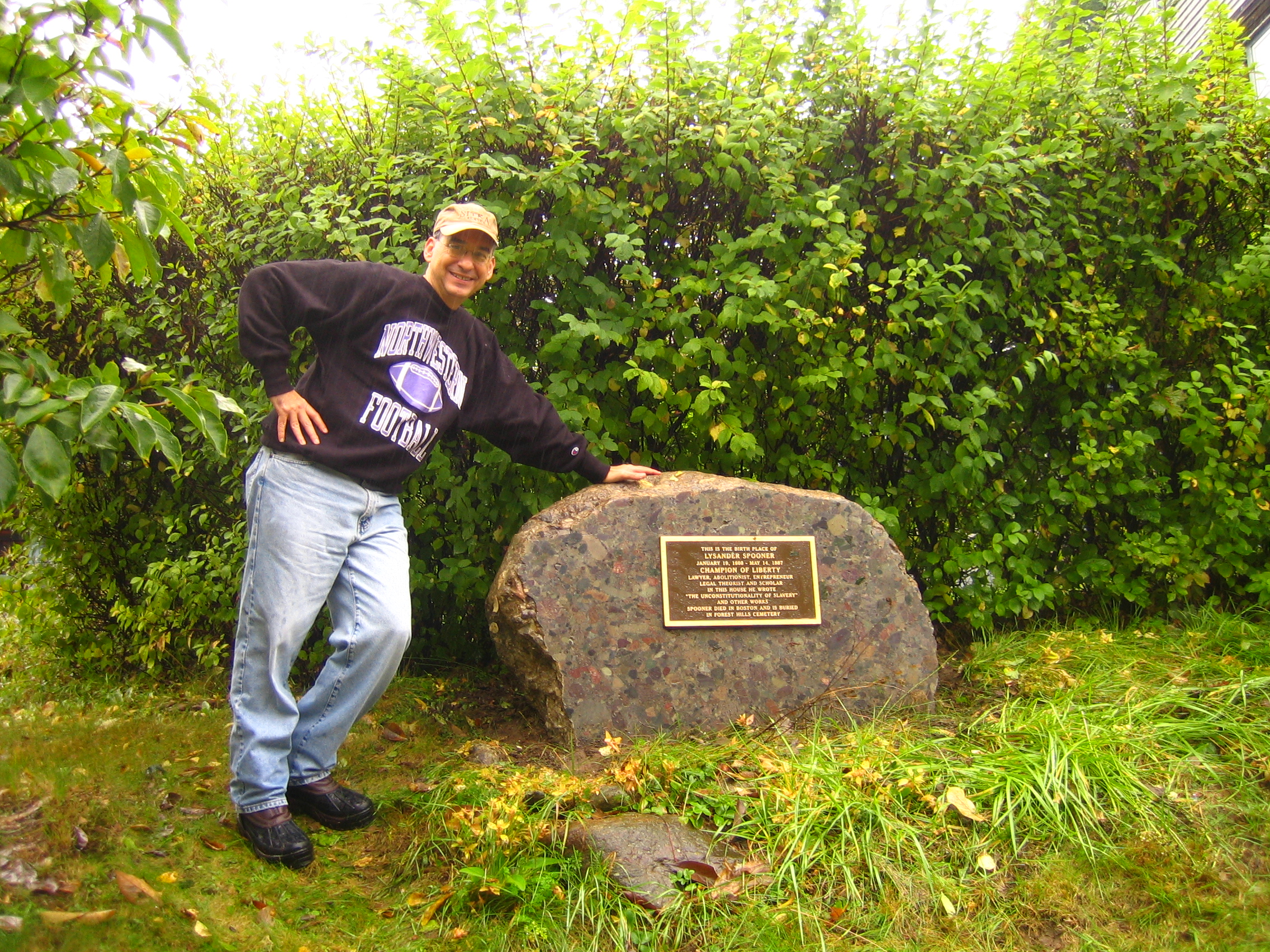
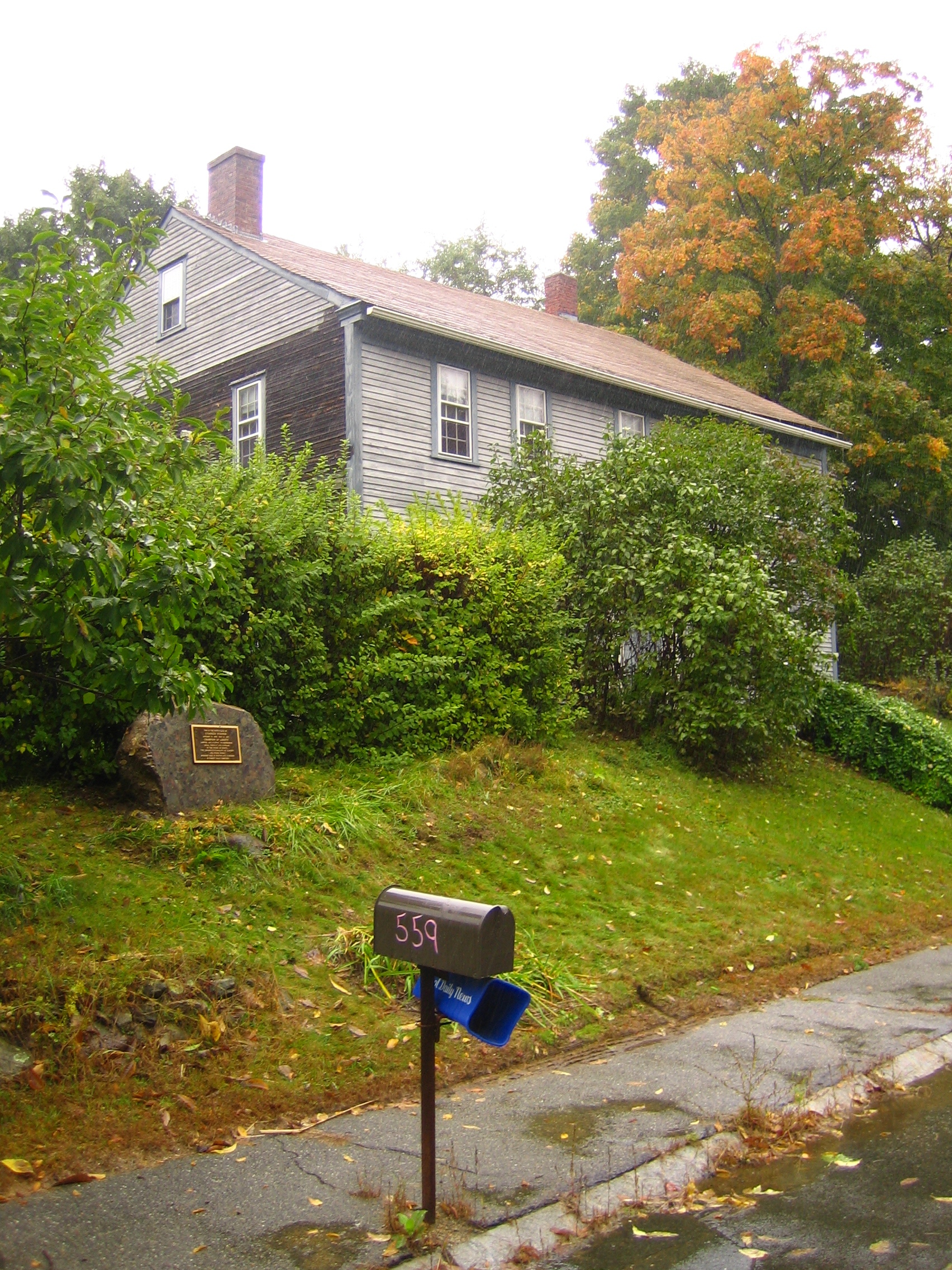
Despite a steady rain here in New England, a marker was installed today commemorating the birthplace of Lysander Spooner. On January 19, 1808, Spooner was born in this house in Athol, Massachusetts (about 75 miles west of Boston)[click to enlarge photo], and in it he later wrote The Unconstitutionality of Slavery.

Lysander Spooner's Birthplace


Ever since I first saw the house about ten years ago, I have wanted to arrange a marker to note its historical significance. Thanks to a generous gift by a fan of Spooner named Tom McGovern, the cooperation of the home owner Elsa Paton, the efforts of my BU research assistant Nathan Speed, and the really nice people at the A. Monti Granite Company in Quincy, MA, that day finally came, and I am thrilled.

The stone is "puddingstone" and the bronze marker is 18" x 12." Here is a closer view of the stone (click on the image to read the plaque and see the coloration of the stone):

The Spooner Marker


Click hidden text to view more pics of the installation.
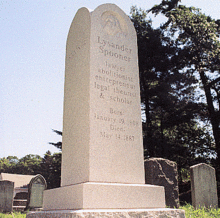
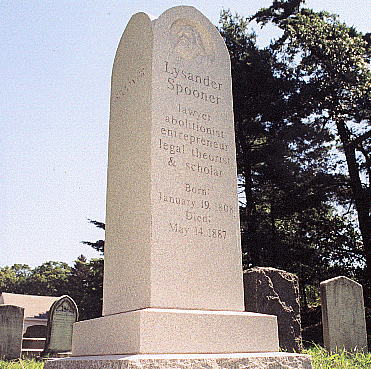
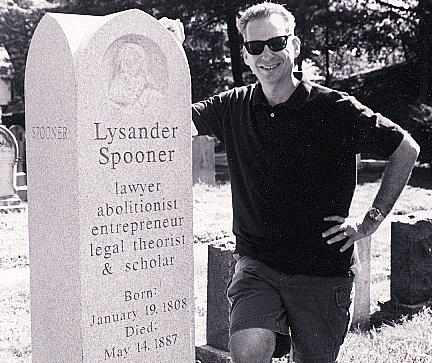
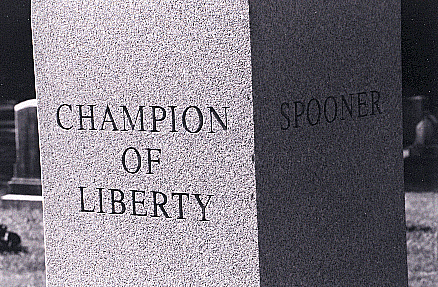
Update: For those who have not seen it, I thought I would upload some photos of the monument we had put on Spooner's grave at Forest Hills in Boston a few years ago.

Spooner's Grave Monument


For directions to Spooner sites in and around Boston click here. For more pics of Spooner's gravesite monument click here:
Kazinski:
Congratulations Randy.

I have nothing but admiration for your project, it recognizes an under appreciated American, and it didn't need an appropriation on the highway bill, or the local town council to 'Kelo' the house.
10.15.2005 5:16pm
Tom Tildrum:
This isn't the Spooner that said all those funny things, is it?
10.15.2005 5:50pm
Justin (mail):
The unconstitutionality of slavery? Not an originalist, I take it.
10.15.2005 5:59pm
Randy Barnett (mail) (www):
Whether or not he was correct about slavery, Justin, Spooner was indeed an originalist--though he rejected originalism based on the intentions of the framers. In other words he favored original public meaning originalism over original framers intent originalism. Those who are interested can read Randy E. Barnett, Was Slavery Unconstitutional Before the Thirteenth Amendment?: Lysander Spooner's Theory of Interpretation, 28 Pacific Law Journal 977 (1997).
10.15.2005 10:08pm
Justin (mail):
To think that slavery was unconstitutional before the 13th amendment under "a theory of originalism" is evidence of what nonoriginalists have already figured out: that Originalism provides little guidance to constitutional interpretation and can excuse results even more fanciful than conservatives attack liberals for using structuralist intepretations.
10.15.2005 11:40pm
Jeff_M:
All that substantial constitutional hoo-ha aside, that is a really attractive rock.
10.16.2005 12:32am
Randy Barnett (mail) (www):
Justin,

Comments such as yours strongly suggest that many nonoriginalists are simply not familiar with the position they publicly and so confidently attack, and they prefer to keep it that way.

PS: And to be clear, I did not say that Spooner's originalist argument was successful, but I do know what his argument was.
10.16.2005 8:55am
Dan Simon (mail) (www):
Comments such as yours strongly suggest that many nonoriginalists are simply not familiar with the position they publicly and so confidently attack, and they prefer to keep it that way.

Possibly so--but then, if one were to encounter an approving allusion by a prominent originalist to an originalist argument for a flat earth, one wouldn't need to know much about it to infer that originalism is an unreliable guide to empirical matters. I gather Justin is making a similar point.
10.16.2005 2:41pm
Shelby (mail):
So Lysander was a founder of the Constitution-in-Exile movement? Paging Cass Sunstein...
;-)
10.16.2005 4:28pm
Robert McNamara (mail):
As I recall, the bulk of the work that Spooner needed to do involved the argument that the Constitution sanctions slavery (which, as I recall, he does quite plausibly). If the Constitution doesn't affirmatively PROTECT slavey, then the argument that a slave could be freed through, e.g., a writ of habeas corpus is not an especially far bridge. My point is not so much to defend Spooner as it is to suggest that critics would do best to read his arguments (or Prof. Barnett's article about said arguments) before sniping.
10.16.2005 7:40pm